
What is the role of urea in NPK granulation?
Urea plays a triple role in the granulation process of NPK compound fertilizer: nitrogen nutrient carrier, liquid-phase binder, and granulation solubilizer. Its unique physicochemical properties—high nitrogen content (46.2%), easy hygroscopic solubility, and low melting point (132.7 degrees Celsius)—make it the most active component in the drum granulation process. Understanding the mechanism of urea’s action is key to controlling granulation rate and granule quality.
Liquid-Phase Bridging: The Chemical Engine for Granule Agglomeration
Inside the drum granulator, when steam raises the material temperature to 55-65 degrees Celsius, the surface of the urea granules begins to soften and partially dissolve, forming a high-concentration urea liquid film. This liquid film encapsulates solid particles such as monoammonium phosphate and potassium chloride, and during the rolling process, capillary forces bind the fine powder together to form a core. For every 5% increase in urea addition, the liquid phase content of the material increases by approximately 8% to 12%, resulting in a corresponding increase in granulation rate of 6 to 10 percentage points. When the urea proportion reaches 25% to 35% of the total formulation, the liquid phase content is sufficient to cover the entire particle surface, and the granulation rate can exceed 80%. However, exceeding 40% leads to excess liquid phase, causing particles to clump together and reducing the yield. The optimal ratio window is 20% to 35%, which needs to be dynamically adjusted according to the fineness of the raw materials.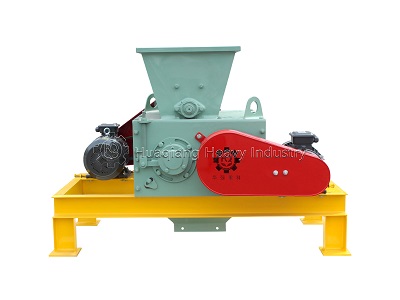
Thermal Effect Control: A Substitute for Steam Consumption
The urea dissolution process is endothermic—approximately 240 kilojoules of heat are absorbed for every 1 kilogram of urea dissolved. This characteristic creates a delicate temperature buffer during granulation: when the steam injection rate is high and the material temperature approaches 70 degrees Celsius, the endothermic effect of urea dissolution prevents premature phosphate reaction or potassium salt crystal transformation caused by localized overheating. Simultaneously, urea and monoammonium phosphate form a eutectic mixture in the liquid phase, lowering the melting point to approximately 110 degrees Celsius, thus expanding the granulation temperature window from the conventional 60-70 degrees Celsius to 50-75 degrees Celsius. This means operators can maintain stable production over a wider temperature range, with a tolerance for steam pressure fluctuations increased by approximately 30%. For every 10 percentage point increase in the urea content per ton of formulation, steam consumption can be reduced by 5% to 8%.
Pore Structure Shaping: An Accelerator of Solubility
Urea granules are not uniformly distributed after granulation but are embedded in the granular framework in a microcrystalline form. When the finished product is applied to the soil and encounters water, urea preferentially and rapidly dissolves, leaving numerous microporous channels within the granules. These channels expose phosphate and potassium ions to water molecules, accelerating the overall nutrient release. Experimental data shows that NPK granules containing 30% urea completely dissolve in approximately 6 to 8 minutes, while granules of the same formulation without urea require 12 to 15 minutes. For fertigation applications, the presence of urea nearly doubles the granule disintegration rate, significantly reducing the risk of clogging in drip irrigation systems.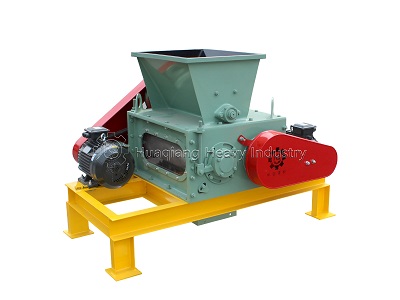
Process Risks and Control Boundaries The activity of urea in granulation is a double-edged sword. Its strong hygroscopicity lowers the critical relative humidity of the formulation—the critical relative humidity for an NPK mixture containing 30% urea is approximately 55%, lower than the 65% of formulations without urea. This means that in environments with humidity exceeding 55%, the granule surface is prone to absorbing moisture and clumping. Countermeasures include: strictly controlling the finished product moisture content below 1.5%; using aluminum foil composite bags or woven bags lined with PE film for packaging; and ensuring the storage and transportation temperature does not exceed 30 degrees Celsius. Furthermore, directly mixing urea and superphosphate will trigger an addition reaction that releases moisture, causing the material to thin and become unsuitable for granulation. The two must be indirectly combined using monoammonium phosphate.
In high-nitrogen formulations (nitrogen content above 20%), urea is an irreplaceable nitrogen source and granulation aid, with a recommended proportion of 25% to 35%. In medium-nitrogen formulations (nitrogen content around 15%), urea can be used in combination with ammonium nitrate to reduce the risk of hygroscopicity. In low-nitrogen, high-potassium formulations, the urea content can be reduced to 10% to 15%, supplemented with organic binders such as sodium humate to replenish the liquid phase. For extrusion granulation processes, since there is no steam heating stage, the binding effect of urea is weakened; it is recommended to use molten urea spray granulation or add bentonite to assist molding. Mastering the liquid phase control rules of urea is an important step for NPK granulation to move from experience-based operation to data-driven operation.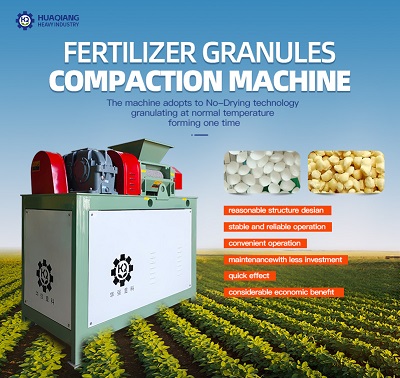
In conclusion, urea’s multifunctional role as liquid-phase binder, thermal buffer, and pore-forming agent makes it indispensable across diverse NPK granulation technologies. In the rotary drum granulator, urea’s hygroscopic dissolution at 55–65°C creates the capillary bridges essential for fertilizer granules compaction, enabling granulation rates exceeding 80% when its proportion is optimized between 25% and 35%. For high-nitrogen formulations within a complete npk fertilizer production line, urea’s endothermic dissolution effect reduces steam consumption by 5–8% per 10% formulation increase, while expanding the operational temperature window to 50–75°C. When extrusion processes are employed, the fertilizer compactor and double roller extrusion granulator rely on urea’s binding capacity at elevated pressures, though supplemental bentonite or molten urea spraying becomes necessary to compensate for the absence of steam-induced liquid phases. Alternatively, the disc granulator machine offers a lower-shear environment where urea’s controlled dissolution facilitates gentler agglomeration, particularly suitable for heat-sensitive formulations. Post-granulation, integrating a fertilizer coating machine with polymer or sulfur barriers mitigates urea-driven hygroscopicity, maintaining critical relative humidity thresholds above 55% during tropical storage. Finally, the automatic fertilizer packaging machine must operate within dehumidified conditions to prevent moisture absorption during bagging. For markets requiring rapid deployment without full granulation investment, a bulk blending (BB) fertilizer line provides an interim solution, though urea’s liquid-phase benefits are forfeited. Ultimately, mastering urea’s physicochemical behavior—its liquid-phase dynamics, thermal buffering, and moisture sensitivity—transforms NPK manufacturing from empirical art into precision-engineered, data-driven production.