
What are Steam Granulation and Cold Granulation?
Steam granulation is a wet process where saturated steam is introduced into a granulator to heat and increase the moisture content of the material, promoting particle agglomeration. Cold granulation, on the other hand, refers to a technology that uses mechanical pressure to directly shape materials under ambient or low-temperature conditions. This mainly includes roller extrusion granulation and disc granulation (without steam). The two processes differ significantly in energy consumption, particle quality, and investment costs.
I. Forming Mechanism and Energy Consumption Comparison
Steam granulation utilizes two functions of steam: first, it raises the material temperature to 50-70 degrees Celsius, increasing the solubility of salts and forming a liquid film on the surface; second, the condensation of steam releases latent heat (approximately 2260 kJ of heat energy per kilogram of steam), further promoting capillary bridging between particles. In actual production, each ton of material requires 80-120 kg of saturated steam, equivalent to approximately 180,000-270,000 kcal of thermal energy. In addition, an industrial boiler and its water treatment system are required.
The roller extrusion process in cold granulation relies solely on a linear pressure of 150 to 250 MPa to rearrange the material particles and induce plastic deformation and adhesion. No water or heat energy is required throughout the process. The power consumption of a single machine is 20 to 35 kWh per ton of material, equivalent to approximately 17,000 to 30,000 kcal, representing only 10% to 20% of the energy consumption of steam granulation. While disc granulation (without steam) requires a small amount of water spraying (8% to 12% of the material), it requires no drying or only a short period of sun-drying, resulting in significantly lower overall energy consumption compared to steam granulation.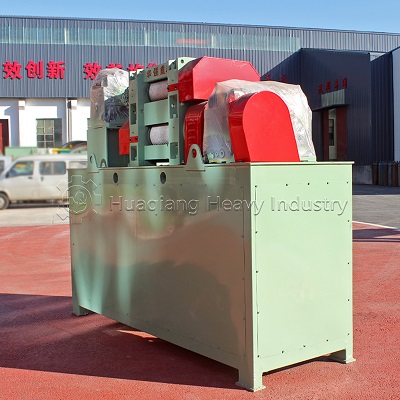
II. Particle Quality and Market Acceptance
Steam granulation produces spherical particles with a smooth surface and high roundness, achieving a compressive strength of 15 to 25 Newtons. These spherical particles have good flowability, making them suitable for mechanized application, and their appearance is similar to imported high-end compound fertilizers, allowing them to command a 10% to 20% premium in the retail market. Its disadvantages include the potential for residual microcracks within the granules after drying, making them prone to pulverization under extreme humidity conditions.
Roller extrusion granulation produces irregularly shaped, multifaceted or lentil-like granules with higher compressive strength (20-30 Newtons) and a pulverization rate of less than 3%. However, its appearance score is lower than spherical granules, making it more difficult to promote in the retail market where “appearance” is important. Disc granulation (cold state) produces spherical granules with an appearance similar to steam granulation, but with lower strength (8-12 Newtons), and a pulverization rate of approximately 8%-12% during transportation and spreading.
III. Raw Material Adaptability and Process Stability
Steam granulation has the highest tolerance for raw materials—it can handle highly hygroscopic urea-based formulations, high-phosphorus formulations with insufficient viscosity, and return mixtures containing some fine powder. The presence of steam makes the granulation process less susceptible to instability due to batch fluctuations in raw materials, maintaining a stable granulation rate between 75% and 85%.
Cold granulation has stricter requirements regarding the moisture content and particle size distribution of the raw materials. Roller extrusion requires raw material moisture content to be below 12% and a fineness of 95% passing through an 80-mesh sieve; otherwise, the granulation rate drops sharply. Disc granulation requires moisture content control within a narrow window of 30% to 35%, and operators need to adjust the disc inclination angle and rotation speed in real time based on material properties. Therefore, the cold-state process is more suitable for large-scale production scenarios with stable raw material properties.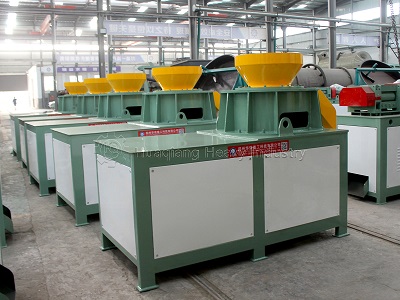
IV. Investment and Operating Cost Comparison
Based on a capacity of 5 tons per hour, the equipment investment for a steam granulation line is approximately US$150,000 to US$250,000, mainly including: a drum granulator, steam boiler and piping system, rotary drying drum, cooling drum, and supporting dust collector. Fuel (coal, biomass, or natural gas) accounts for a large proportion of operating costs, with energy costs of approximately US$15 to US$25 per ton of product.
In the cold-state granulation line, the investment for the roller extrusion scheme is US$80,000 to US$150,000, eliminating the need for a boiler and drying drum, significantly simplifying the process. Energy costs per ton of product are approximately US$3 to US$6. The investment for disc granulation (cold extrusion) falls between the two (US$100,000 to US$180,000), but it requires drying equipment (due to the addition of moisture during the granulation process). Overall, the payback period for cold extrusion granulation is typically 1 to 2 years shorter than that for steam granulation.
The divergence between steam and cold granulation reflects a fundamental trade-off in fertilizer production machine technology: thermal energy input versus mechanical pressure, spherical aesthetics versus irregular strength, and high capital intensity versus lean process simplicity. Within the organic fertilizer granulator series, a rotary drum granulator with steam injection delivers premium spherical pellets that command retail premiums, but demands boiler infrastructure and fuel-consuming drying trains. Conversely, fertilizer granules compaction via roller extrusion eliminates thermal stages entirely, producing dense, high-strength pellets at 10–20% of steam granulation’s energy cost—making it the economically rational choice for bulk compound fertilizers and price-sensitive markets. A specialized poultry manure pellet machine or flat die extrusion unit within the broader fertilizer granulator machine family offers comparable cold-process advantages for organic waste streams with elevated fiber content. Ultimately, the optimal route is not determined by technology alone but by the intersection of raw material stability, energy pricing, target market aesthetics, and the producer’s appetite for capital deployment—ensuring that every granule produced aligns with both agronomic function and commercial viability.