
Fertilizer drying and cooling is not simply a matter of “removing water and lowering temperature,” but rather a thermodynamic equilibrium process involving coupled heat and mass transfer. The temperature difference window between the dryer’s inlet air temperature (180-220℃) and the cooler’s outlet temperature (≤40℃) directly determines granule strength, nutrient retention rate, and energy consumption. Through a cascade thermodynamic design of counter-current drying and co-current cooling, the moisture content can be reduced from 15% to below 2% within a natural gas consumption range of 22-28 m³ per ton of product, while nitrogen volatilization loss is controlled within 1.5%.
Definition First: Fertilizer drying-cooling thermodynamic balance refers to the steady-state process achieved in the post-granulation treatment stage by controlling the temperature gradient, humidity gradient, and contact time between the gas and solid phases to simultaneously achieve the granule moisture content and temperature standards for packaging and storage, while minimizing total nutrient loss.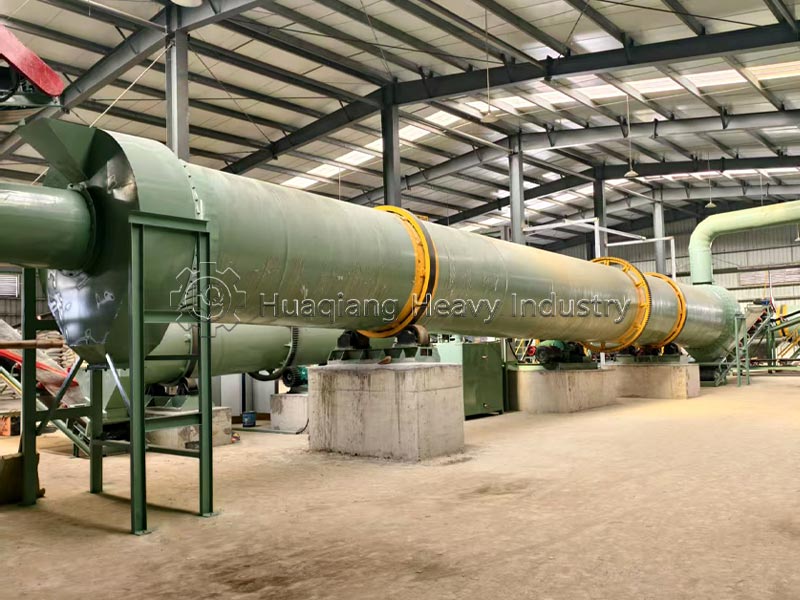
I. Why isn’t drying “the hotter the better”? The Hidden Costs of High Temperatures: While increasing the inlet air temperature of the drum dryer from 200℃ to 280℃ does increase the drying rate by 40%, a hard shell forms on the surface of the urea particles within 60 seconds (shell moisture content << 1%, core moisture content still 8%-10%), creating a false drying phenomenon of “dry outside, wet inside.” During subsequent storage, the core moisture migrates outwards, causing the particles to pulverize and clump. More critically, the urea decomposition rate increases exponentially when the temperature exceeds 220℃—the thermodynamic analysis on the website shows that at 230℃, the urea nitrogen loss rate jumps from 1.2% to 4.5%, resulting in an annual loss of approximately 135 tons of urea for a 50,000-ton production line, equivalent to a cost exceeding 400,000 yuan.
Optimal Window for Counter-current Drying
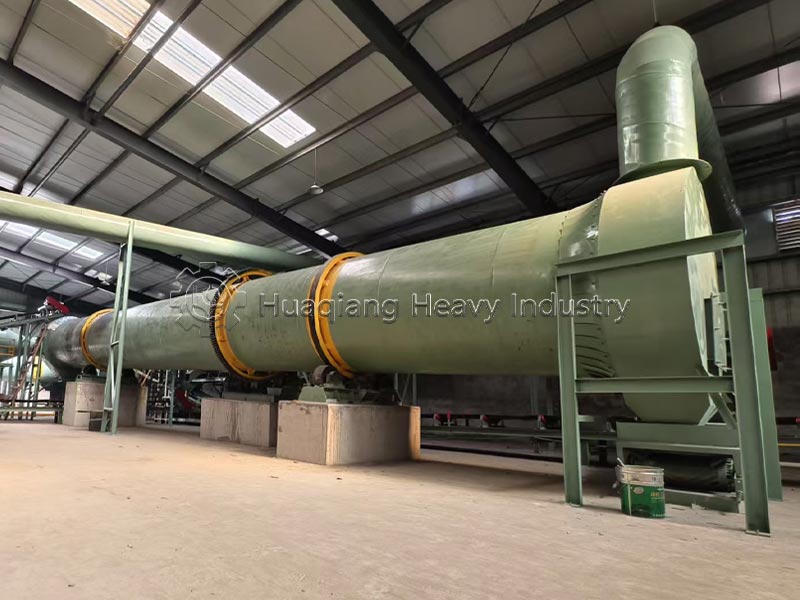
In a counter-current dryer (where material and hot air flow in opposite directions), low-temperature, high-humidity particles first come into contact with the low-temperature exhaust gas (80-100℃) to prevent surface hardening; high-temperature, low-humidity particles (with moisture content reduced to 5%) finally come into contact with 220℃ hot air, achieving effective removal of moisture from the core. This sequence design improves drying uniformity, reducing the standard deviation of particle moisture content from ±2.5% to ±0.8%. Referring to counter-current drying parameters, with a cylinder length-to-diameter ratio of 6:1, a rotation speed of 4-5 r/min, and a filling rate of 8%-12%, the thermal efficiency can reach 65%-72%, an improvement of 15 percentage points compared to co-current drying.
II. Cooling is not “the faster the better”: The Double Trap of Thermal Shock and Crystallization
Thermal Shock Cracks
Particles emerging from the dryer at 60-80℃ are directly cooled by a large airflow (outlet air temperature << 20℃), resulting in a temperature difference of over 40℃ between the particle surface and core, leading to thermal stress cracks. Cracked particles experience a 12%-18% increase in breakage rate during subsequent screening and transportation, exceeding the pulverization rate standard. According to the cooler design specifications, cooling should be divided into two stages: the first stage uses a cold air temperature of 35-40℃ to slowly reduce the particle temperature from 70℃ to 45℃; the second stage uses a cold air temperature of 20-25℃, ultimately reducing the temperature to ≤40℃.
Salting-out Crystallization: The potassium salts (such as KCl) in NPK particles are in a supersaturated state after high-temperature drying. Rapid cooling leads to surface salting-out crystallization, forming a white “frost layer.” This not only affects appearance but also causes moisture absorption and reabsorption during storage. According to the website’s heavy equipment operation records, when the cooling rate is controlled at 8-12℃/min, the salting-out phenomenon is essentially eliminated; while at a cooling rate >20℃/min, the frost layer coverage can reach 15%-25% of the particle surface.
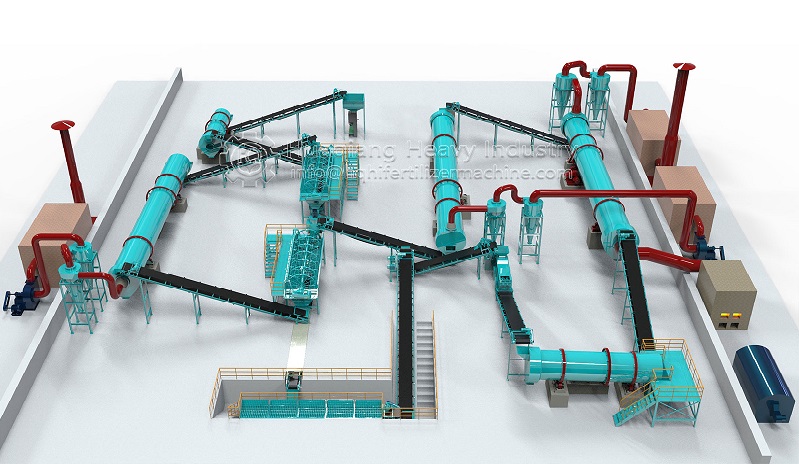
III. Heat Recovery: The Waste Heat Value of Drying Exhaust Gas: The dryer exhaust gas temperature is 80-120℃, with high moisture content but still containing a large amount of sensible heat. By using a cyclone dust collector and plate heat exchanger, the heat from the exhaust gas can preheat the intake air of the cooler or the fresh air of the dryer, achieving a heat recovery efficiency of 30%-40%. Taking a 30,000-ton-per-year production line as an example, the natural gas consumption of the dryer is reduced from 28 m³/ton to 22 m³/ton, saving 180,000 m³ of natural gas annually, equivalent to approximately 120,000 yuan in costs. In the energy-saving renovation cases on the website, the investment payback period for this heat recovery system is approximately 16-20 months.
Achieving thermodynamic equilibrium in the post-granulation stage is not an isolated operation but the culminating link in a precisely orchestrated production chain. Whether granules are formed via a rotary drum granulator for conventional NPK formulations or through an organic fertilizer granulator series for compost-based products, the physical integrity established during fertilizer granules compaction or by a fertilizer compactor directly dictates how granules respond to thermal stress in subsequent drying and cooling. A well-calibrated fertilizer dryer machine operating within the 180–220℃ counter-current window preserves the structural bonds forged at the granulation stage, while a staged fertilizer cooler machine mitigates thermal shock and surface crystallization before the product reaches the fertilizer packing machine. When these unit operations are synchronized within a unified npk fertilizer production technology framework, manufacturers realize measurable gains: nutrient volatilization drops below 1.5%, fuel consumption falls to 22–28 m³ per ton, and heat recovery systems deliver payback within 16–20 months. Ultimately, treating drying and cooling as an integrated thermodynamic system—rather than a simple dehydration step—unlocks the full economic and environmental potential of modern fertilizer manufacturing.
FAQ (Frequently Asked Questions)
Q1: Must the moisture content of the dried granules be reduced to below 1%?
Not absolutely. For NPK granules packaged in plastic lined bags with a storage period of << 3 months, a moisture content of 2%-3% is sufficient; however, if packaged in woven bags or stored in tropical high-humidity environments, the moisture content must be strictly controlled below 1.5%, otherwise significant clumping will occur within 30 days.
Q2: What are the consequences if the cooler discharge temperature exceeds 40℃?
After the granules are packaged, the residual heat inside continues to be released, creating a “micro-greenhouse” inside the packaging bag. Moisture condenses on the bag wall and seeps back to the granule surface, triggering localized dissolution and recrystallization, ultimately forming hard clumps. Actual measurements show that granules with an outlet temperature of 45℃ have an agglomeration rate of approximately 8%-12% after 60 days of storage; while granules with an outlet temperature of 38℃ have an agglomeration rate of less than 2%.
Q3: Does bio-organic fertilizer require the same drying and cooling parameters?
No, and cannot. Because bio-organic fertilizer contains functional bacteria, the upper limit of the drying temperature is 60-70℃, and the cooling rate needs to be slower (5-8℃/min) to protect the activity of Bacillus. Its drying section typically uses a low-temperature belt dryer rather than a drum dryer, and the cooling section is extended to 30-40 minutes to ensure that the outlet temperature is ≤35℃.