
Factors Determining Mixing Uniformity
In organic fertilizer production, mixing uniformity directly affects fermentation efficiency, granulation effect, and the nutrient consistency of the final product. Horizontal mixers are currently one of the most widely used mixing equipment in the organic fertilizer industry. They employ a U-shaped cylinder with an inner and outer double-layer spiral ribbon stirring structure. The material undergoes both axial convection and radial tumbling motion within the cylinder, theoretically achieving a high degree of mixing uniformity. However, in actual operation, whether truly uniform mixing can be achieved depends on the proper coordination of several factors.
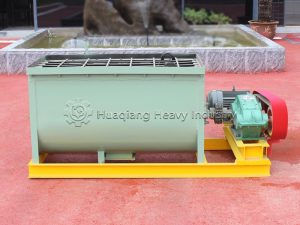
Working Principle and Structural Features
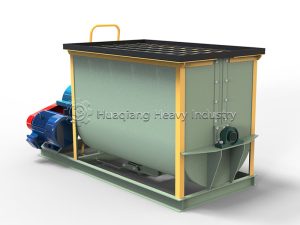
The working process of a horizontal mixer is not complex. A motor drives the main shaft to rotate via a reducer. The main shaft is welded with inner and outer spiral ribbons. The inner spiral ribbon pushes the material from one end of the cylinder to the other, while the outer spiral ribbon pushes the material back in the opposite direction, forming a circulating convection. Simultaneously, the shearing action of the spiral ribbons causes the material to continuously tumble and disperse, achieving uniform distribution at the microscopic level.
The advantages of this design are fast mixing speed and no dead zones. Common organic fertilizer raw materials (such as fermented chicken manure, cow manure, straw powder, etc.) can achieve a homogeneity of over 95% after mixing for 3-5 minutes. The top of the drum is equipped with an inspection door and a spray device, while the bottom has a pneumatic or manual discharge door for convenient operation.
Key Points for Achieving Uniform Mixing
To ensure the horizontal mixer performs optimally, the following operational points are important:
Controlling the Filling Rate: The drum should not be overfilled. The optimal filling rate is 40%-70%, meaning the highest point of the material just covers the mixing shaft. Too low a filling rate will reduce production efficiency, while too high a rate will result in poor material flowability, increased mixing resistance, and potential motor overload.
Managing Mixing Time: Longer mixing does not necessarily lead to greater uniformity. For most organic fertilizer raw materials, 3-5 minutes is sufficient to achieve homogeneity. Continuing to mix may cause excessive material breakage or re-separation. It is recommended to use a “stop and sample” method to test samples at different mixing times to determine the optimal mixing time for your plant’s raw materials.
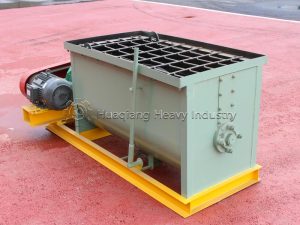
Note the feeding sequence: If the formula contains multiple raw materials, it is recommended to add the heavier materials (such as mineral powder and phosphate fertilizer) into the drum first, followed by the lighter materials (such as fermented organic materials). This prevents the lighter materials from floating on the surface and being difficult to mix. Liquids (such as bacterial agents and water) should be added evenly through a spray device during the mixing process; never pour them into the drum all at once.
Regular maintenance of mixing components: The screw ribbon and main shaft are the core working components. After long-term use, the edges of the screw ribbon will wear and become blunt, affecting the mixing effect. It is recommended to check the wear of the screw ribbon every 500-1000 tons of production, and repair or replace it promptly if the wear is severe.
Selection recommendations: Horizontal mixers have a single batch processing capacity ranging from 0.5 cubic meters to 10 cubic meters. Small organic fertilizer plants can choose a 1-2 cubic meter model with an hourly output of 2-4 tons; medium-sized production lines are recommended to use a 3-5 cubic meter model with an hourly output of 6-10 tons. Regarding materials, stainless steel is recommended for parts in contact with materials to avoid corrosion from the acidic environment of organic fertilizer. For high-moisture materials, a thickened ribbon and wear-resistant liner design can be selected to extend service life.
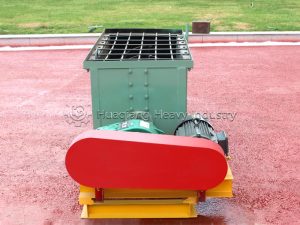
The fertilizer horizontal ribbon mixer is a key component of organic fertilizer production equipment. Its mixing uniformity directly affects fermentation, granulation, and final product quality. After uniform mixing, the material is ready for the granulation stage. The prepared material is then fed into a granulator—a new type two in one organic fertilizer granulator, a disc granulator, or other machines in the organic fertilizer granulator series. For an organic fertilizer disc granulation production line, a disc granulator is used to produce spherical granules. The half-wet material crusher machine is used for raw material preparation. Key factors for mixing uniformity: filling rate (40%-70%), mixing time (3-5 minutes for most materials), feeding sequence (heavier materials first, then lighter materials, liquids added via spray), and maintenance of mixing components (check ribbon wear every 500-1000 tons). Selection recommendations: batch capacity from 0.5 to 10 m³, with small plants choosing 1-2 m³ (2-4 t/h) and medium lines choosing 3-5 m³ (6-10 t/h). Stainless steel contact parts are recommended for corrosion resistance. For high-moisture materials, a thickened ribbon and wear-resistant liner can extend service life. Proper operation and maintenance of the horizontal mixer are essential for efficient organic fertilizer production granulation. The combination of a high-quality mixer with the right granulator ensures a consistent, high-quality final product. Understanding the role of each piece of organic fertilizer raw material processing equipment is key to a successful production line.