
The 2026 fertilizer market is shifting toward “Zero-Waste” and “Smart-Dosing” ecosystems. Equipment manufacturers can achieve a 30% increase in ROI by transitioning from traditional high-heat processing to automated cold-press granulation and integrating real-time nutrient analytical sensors into their production lines.
The Evolution of Global Fertilizer Production Standards
As we approach 2026, the industry is moving away from energy-intensive manufacturing. The focus has sharpened on three critical pillars: Energy Decoupling, Granule Precision, and Modular Scalability.

Key Technological Shifts for 2026:
From Steam to Precision Dry Granulation:
Traditional wet granulation often wastes excessive energy in the drying phase. The new industry benchmark utilizes the high-pressure roller press granulator specification, which eliminates the need for water-binding agents, reducing total energy consumption by nearly 40%.
Carbon-Neutral Processing:
The implementation of Carbon Border Adjustment Mechanisms (CBAM) means that energy-saving fertilizer equipment is no longer optional. Modern plants are now integrating biomass-powered heat exchangers within their industrial rotary drum dryer systems to offset operational carbon footprints.
Smart Organic Integration:
With the global push for soil health, the demand for bio-organic hybrids is soaring. Manufacturers are now prioritizing specialized organic fertilizer fermentation technology that preserves microbial activity while maintaining a consistent 2-4mm granule size for mechanized farming.
Operational Efficiency Parameters
To maintain a competitive edge, new equipment installations should meet the following 2026 technical benchmarks:
Automation Level: Full PLC integration with remote diagnostic capabilities.
Material Durability: Transitioning to 316L stainless steel for all contact parts to handle the corrosive nature of high-concentration NPK fertilizer production formulas.
Dust Recovery: Closed-loop air filtration systems achieving 99.8% particulate capture, turning waste back into raw material.
To ensure your plant meets the upcoming durability standards, consult the latest heavy-duty fertilizer crusher maintenance guide.
Developers looking to minimize initial capital expenditure should review our optimized low-cost NPK fertilizer production line layout.
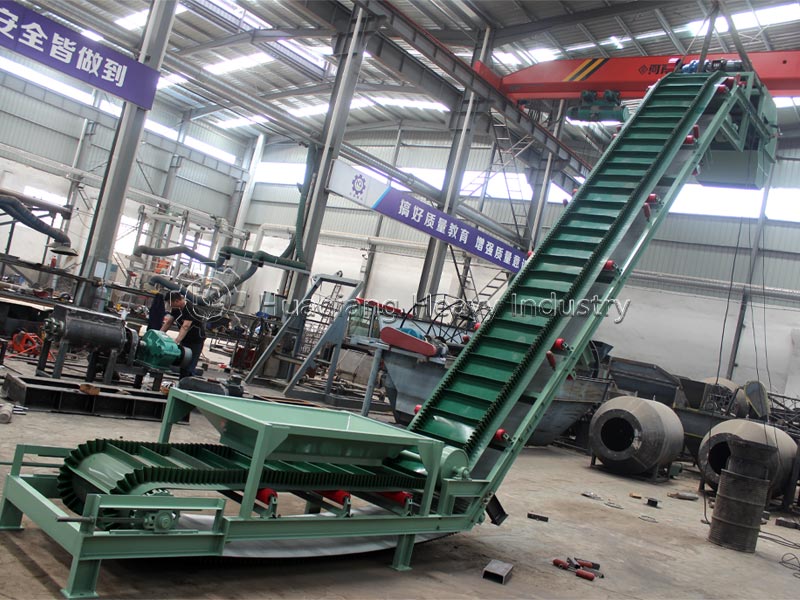
Engineering the 2026 Zero-Waste Fertilizer Plant
The transition to 2026-grade fertilizer manufacturing demands a fully integrated equipment ecosystem rather than standalone machine upgrades. A modern npk fertilizer line should anchor on a roller press granulator production line for dry compaction, eliminating energy-intensive wet processing while delivering dense, durable granules with crushing strength above 15 Newtons. Downstream, an efficient fertilizer cooler machine stabilizes discharge temperatures at 28-30°C, preventing thermal shock and moisture migration that trigger crystal bridge caking. A precision rotary drum screening machine then classifies oversized and undersized fractions for closed-loop recycling back to the crusher, ensuring 99.8% material utilization. For bio-organic formulations, a dedicated bio organic fertilizer production line integrates low-temperature fertilizer dryer machine stages—operating below 60°C—to preserve microbial viability while achieving the mandated moisture ceiling of 30%. Finally, an automated fertilizer packing machine with gravimetric dosing and nitrogen flushing seals each bag with ±0.1% weight accuracy and oxidative protection. Manufacturers that architect this end-to-end, PLC-orchestrated workflow—from compaction and cooling through screening, drying, and intelligent packaging—will not only satisfy CBAM carbon benchmarks and government procurement standards but also capture premium market positioning in the era of precision agriculture and soil health stewardship.