
For small and medium-sized farms, agricultural cooperatives, or start-up fertilizer companies, large-scale production lines with an annual output of 100,000 tons are neither realistic nor economical. A small-scale organic fertilizer production line (2-12 tons/hour) with a small footprint and low investment is a more pragmatic choice. This article outlines a standard configuration solution for you.
Suitable Scenarios: Core Needs of Small and Medium-Sized Plants
This capacity range primarily serves the following scenarios:
Farm Support: Farms with 50,000-100,000 laying hens or 2,000-5,000 pigs, producing approximately 5-15 tons of fresh manure per day, can achieve self-production and self-sales with a small-scale production line.
Regional Organic Fertilizer Plants: Serving planting bases within a 10-20 km radius, with an annual output of 10,000-30,000 tons.
Compound Fertilizer Plants Expanding Business: Utilizing existing sites and packaging systems to add organic fertilizer product lines.
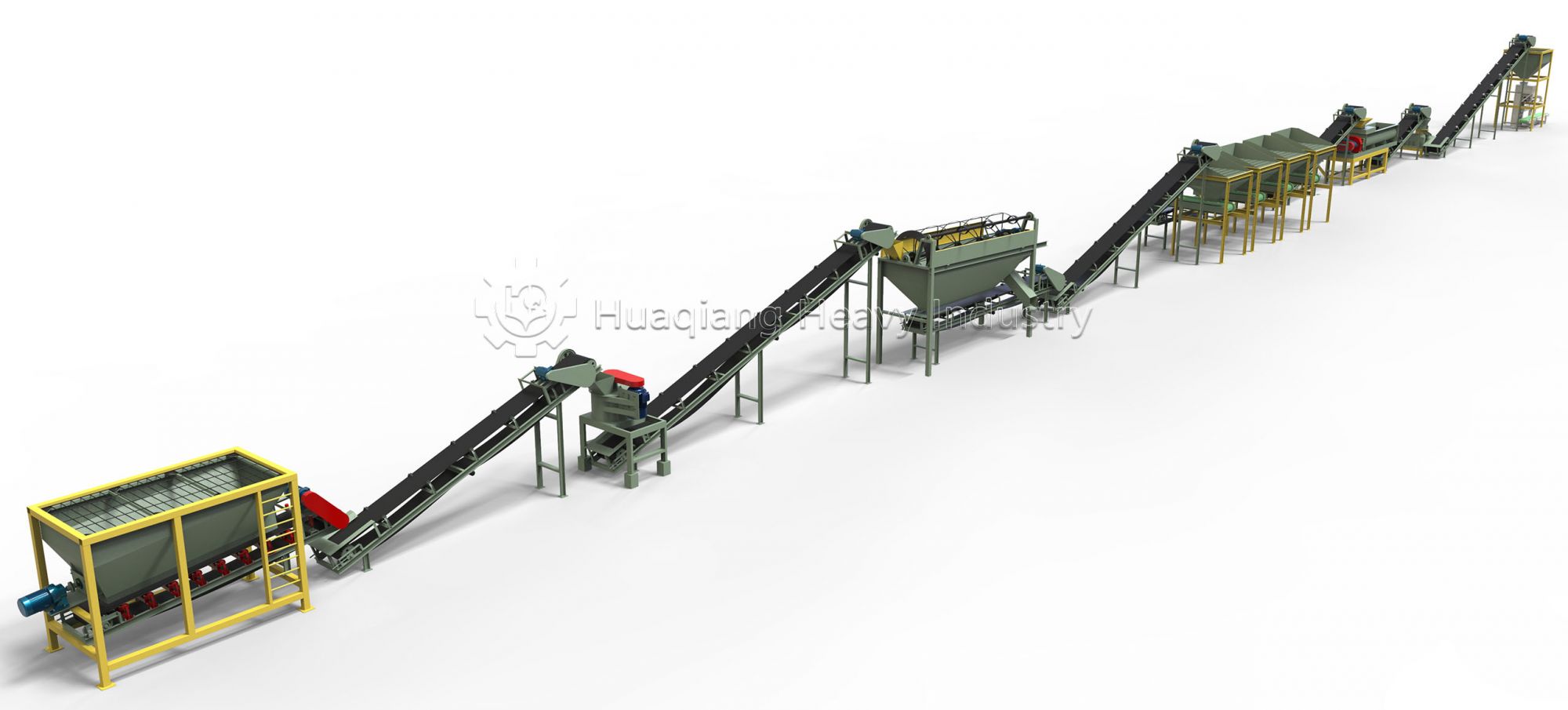
Standard Configuration: Four-Stage Process Flow
A complete small-scale production line covers the four core stages from raw materials to finished products:
1. Crushing and Batching Stage
Equipment: Semi-wet crusher (processes pre-fermentation materials with a moisture content not exceeding 60%) + horizontal batching scale (or simple manual feeding hopper)
Function: Mixes and disperses manure and auxiliary materials (straw powder, rice husks, etc.) in proportion, creating uniform material conditions for fermentation. A model with a power of 18.5-30kW is recommended, with a processing capacity of 5-10 tons/hour.
2. Fermentation Stage (Core Investment Area)
Equipment: Tank fermentation system (including cement tank, trough turner, aeration fan, deodorization spray tower)
Configuration Points: Fermentation tank width 3-4 meters, length 30-50 meters, capable of holding approximately 100-200 tons of material. The turner is crucial; a hydraulically driven type is recommended for smooth movement and a turning depth of 1.2-1.5 meters. Aeration pipe spacing should not exceed 1 meter to ensure uniform oxygen distribution.
Supporting equipment: Simple biological filter or water-washing spray tower for tail gas treatment, investment approximately 30,000-50,000 RMB.
3. Granulation and Screening Section
Equipment Selection: Two routes are available.
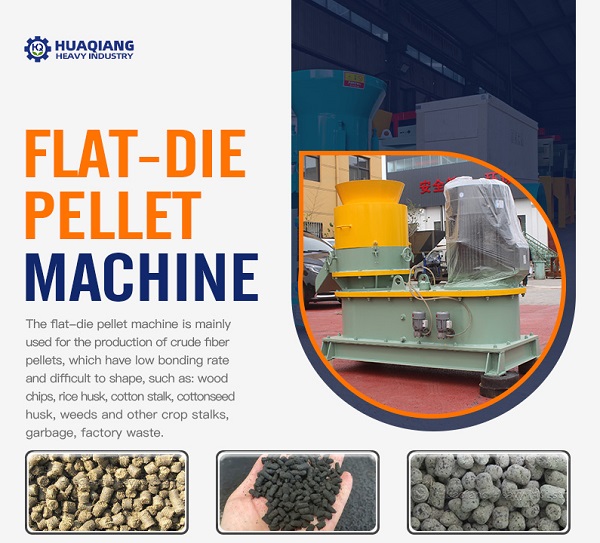
Route A (Recommended): Roller extrusion granulator – no drying required, direct molding, suitable for small to medium scale, equipment investment approximately 80,000-150,000 RMB, finished granules are lentil-shaped or irregular flakes.
Route B: Disc granulator + small rotary dryer – requires a heat source (biomass or natural gas), but finished granules are spherical, with a higher market price. Investment approximately 200,000-300,000 RMB.
Auxiliary equipment: Drum screen (2-4mm finished product aperture), vertical crusher (for recycled material crushing)
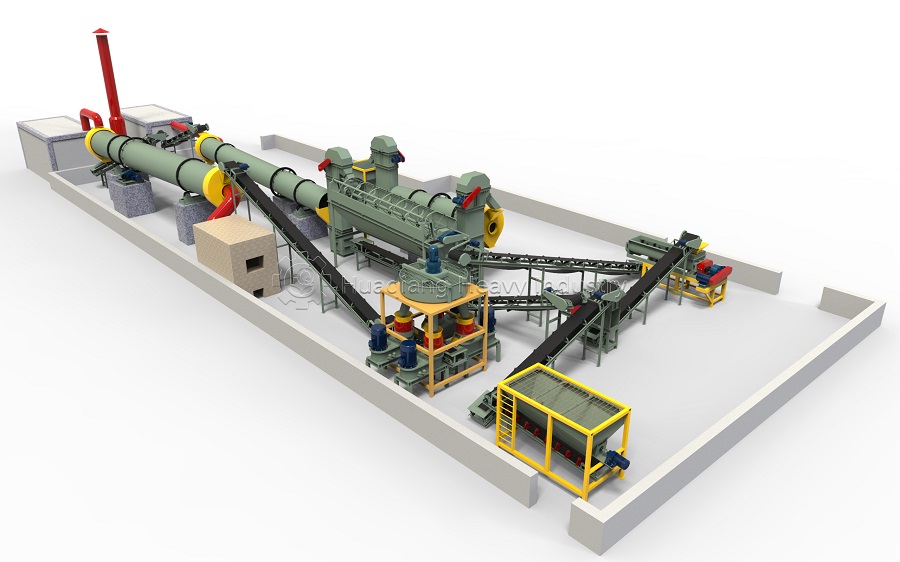
4. Packaging Section
Equipment: Automatic quantitative packaging scale (single or double station, accuracy ±0.2kg/bag) + bag sewing machine or heat sealing machine
Capacity matching: 4-8 bags/minute can meet the output demand of 2-12 tons/hour. Reference Configurations for Different Production Capacities:
Entry-level (2-5 tons/hour) (10,000-20,000 tons/year):
Fermentation Zone Area: 150-200 square meters
Turning Machine: Single-trough type, power 25-37kW
Granulation: Medium-sized roller extrusion granulator
Estimated Total Equipment Investment (excluding civil engineering): 300,000-450,000 RMB
Standard-level (6-12 tons/hour) (30,000-60,000 tons/year):
Fermentation Zone Area: 300-400 square meters (can be designed as a double-trough parallel system)
Turning Machine: Large hydraulic trough type, power 45-55kW
Granulation: Disc granulator + drying and cooling system (or large roller extrusion machine)
Estimated Total Equipment Investment (excluding civil engineering): 600,000-900,000 RMB
Two Core Advantages: Small footprint, low investment
Flexible Land Use: The entire production line (including the fermentation zone) requires only 800-2000 square meters and can be converted from existing idle land in farms. The plant height must not exceed 6 meters. Quick return on investment: Taking an entry-level configuration with a capacity of 5 tons per hour as an example, the equipment investment is approximately 400,000 yuan + a simple factory building of 200,000 yuan, totaling 600,000 yuan. Based on an annual output of 15,000 tons and a net profit of 150 yuan per ton, the investment can be recovered in 8-10 months.
Selection and Implementation Recommendations:
First, determine the raw material supply: Based on a daily processing capacity of 10 tons of fresh manure, calculate the required fermentation tank volume (approximately 150 cubic meters), then determine the target hourly production capacity (2-4 tons/hour recommended).
Prioritize the fermentation process: Do not excessively cut budgets for the turning machine and aeration blower; these are crucial for product compliance.
Packaging can be simplified: Initially, manual bagging and semi-automatic weighing can be used, saving approximately 50,000-80,000 yuan in investment.
Leave space for future expansion: Leave space at one end of the fermentation tank for adding a second production line later.
The core idea for investing in a small-scale organic fertilizer production line is “sufficient equipment, smooth process, and compliant emissions.” Starting small and gradually expanding is the starting path for many successful organic fertilizer companies. For a more detailed plan tailored to your raw materials and site, we recommend contacting the equipment supplier for an on-site survey.
The recommended configuration for a small-scale (2-12 t/h) organic fertilizer line emphasizes a practical, cost-effective approach. The organic fertilizer fermentation process is managed by a chain compost turning machine (trough system) or a large wheel compost turning machine (for windrows), with aeration and deodorization. A double screws compost turning machine offers gentle, deep turning for high-fiber materials. After fermentation, the material is crushed and then granulated. For granulation, several options exist within the organic fertilizer granulator series. Route A (recommended): a flat die pelleting machine or a new type two in one organic fertilizer granulator for dry, no-dryer-required production, saving energy and investment. Route B: a rotary drum granulator (for drum granulation) with a dryer/cooler system, producing spherical granules with a higher market price but requiring a heat source. For entry-level (2-5 t/h, 10,000-20,000 t/year), a medium-sized roller extrusion granulator is recommended. For standard-level (6-12 t/h, 30,000-60,000 t/year), a disc granulator plus drying/cooling system (or a large roller extrusion machine) is suitable. The key to successful organic fertilizer production granulation for small-scale lines is matching the granulator to the product goals and investment budget. A flat die or two-in-one granulator offers low investment (80,000-150,000 RMB) and no drying, ideal for cost-sensitive operations. A disc granulator with a dryer offers spherical granules but at higher cost. The choice depends on market demand for granule appearance versus energy savings. Understanding the trade-offs in the organic fertilizer granulator series is essential for building a profitable small-scale production line.