
Rotary drum granulators, disc granulators, and extrusion granulators are the three mainstream pieces of equipment in fertilizer granulation, corresponding to wet rolling granulation, wet disc pelletizing, and dry extrusion molding, respectively. In NPK fertilizer production lines and organic fertilizer granulator series, choosing the right model directly determines the pelleting rate, granule strength, and operating costs.
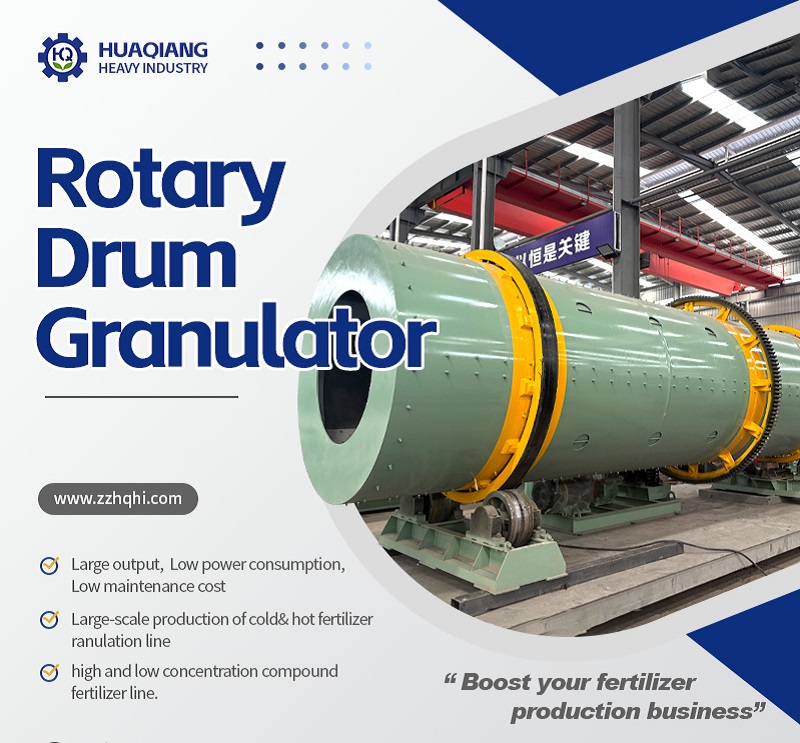
I. Rotary Drum Granulator – The First Choice for Large-Scale Continuous Production
Rotary drum granulators rely on the rotation of the drum to tumble the material inside, using steam or water for humidification and agglomeration into pellets. A single machine can produce 8–15 tons per hour, suitable for NPK fertilizer production lines with an annual output of over 50,000 tons. Advantages include high capacity, high granule strength, high automation, and the ability to operate continuously for 24 hours. Disadvantages include high equipment investment (80,000–200,000 RMB per unit), the need for supporting steam, drying, and cooling systems, and high requirements for controlling operating parameters. If the moisture content of the material fluctuates greatly, it is prone to sticking to the walls and forming large lumps.
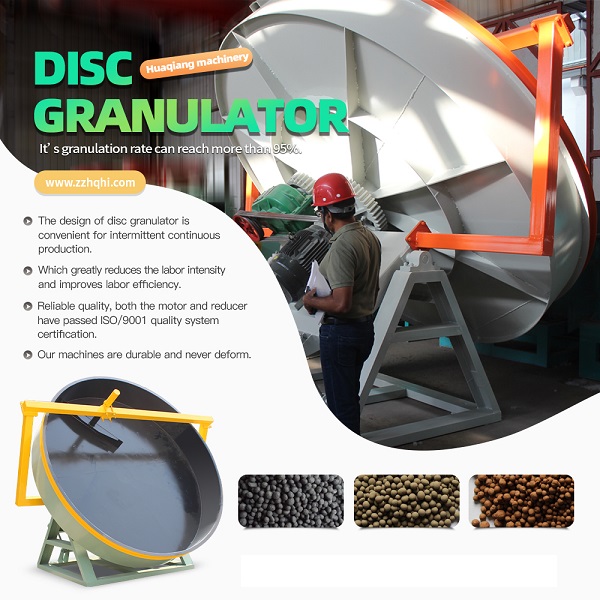
II. Disc Granulator Machine – A Flexible Choice for Small to Medium-Scale Production Disc granulators utilize the rolling friction of an inclined disc and atomized spraying to form powder into pellets. A single machine can produce 1–5 tons per hour, suitable for organic fertilizer or compound fertilizer lines with an annual production capacity of 10,000–30,000 tons. Advantages include low investment, intuitive operation, and rounded pellets; the particle size can be flexibly adjusted by the tilt angle and rotation speed. Disc granulators are a common configuration in organic fertilizer granulator series. Disadvantages include relatively low capacity, complex management when multiple machines are connected in parallel, and sensitivity to material moisture content; a moisture content exceeding 35% can easily lead to sticking to the walls and clogging the screen.
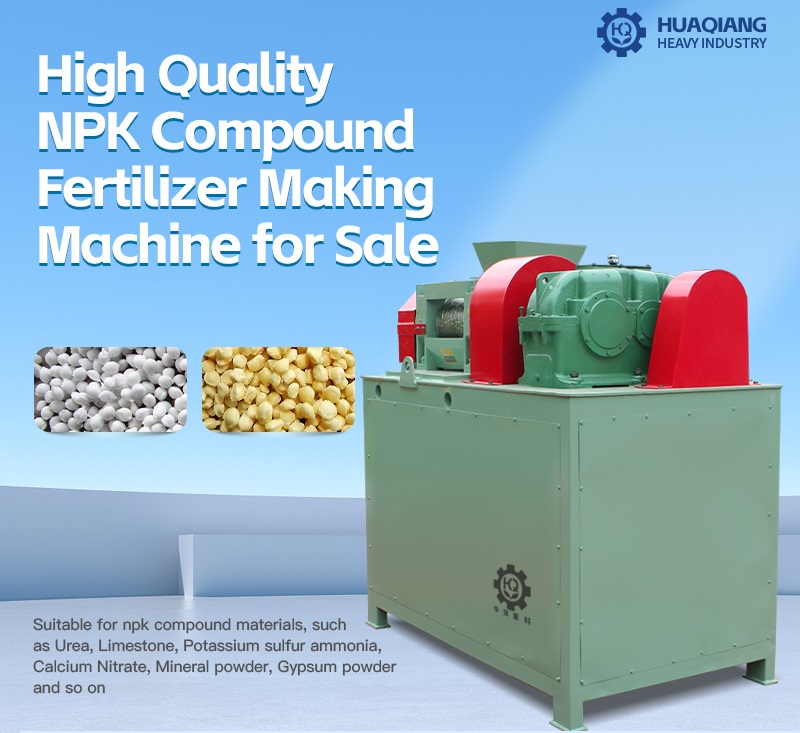
III. Fertilizer Compactor / Fertilizer Flat Die Pellet Machine – Dry Anhydrous Granulation Extrusion granulators use double rollers or flat dies to directly compress dry powder materials into pellets under high pressure, belonging to the fertilizer granules compaction process. The advantages are that it requires no water addition or drying, has low energy consumption, and a short process, making it suitable for dry powder materials with a moisture content of 2%–4% and heat-sensitive formulations. Granule shapes can be customized into pillow, flat spherical, or rod shapes. The disadvantages are that the granule shape is not as round as that of wet processing, it requires high material fineness (usually 80–120 mesh), and the mold needs to be replaced after wear. Fertilizer flat die pellet machines are commonly used in small-scale organic fertilizer lines.
IV. Comprehensive Comparison and Selection Recommendations In terms of production capacity, rotary drum > disc > extrusion; in terms of investment, extrusion < disc < rotary drum; in terms of granule appearance, disc is the roundest, followed by rotary drum, and extrusion is the most irregular; in terms of energy consumption, extrusion is the least energy-efficient, and rotary drum is the most energy-efficient. If large-scale continuous production is desired and the budget is sufficient, choose a rotary drum granulator; for small to medium-scale, multi-variety production with a limited budget, choose a disc granulator machine; for a variety of powder materials that do not require water addition or drying, choose a fertilizer compactor. Actual selection should also consider raw material characteristics, finished product requirements, and plant conditions, and small-scale trials may be necessary.