
Structure and Working Principle: The rotary drum granulator is the most common large-scale granulation equipment in compound fertilizer and organic fertilizer production lines. Its main body is a slightly inclined rotating cylinder with multiple lifting plates distributed along the circumference of the inner wall. During operation, material enters from the higher end of the cylinder. As the cylinder rotates, the material is lifted and thrown down by the lifting plates, forming a material curtain. Simultaneously, steam, water, or binder is evenly sprayed onto the tumbling material through spray pipes inside the cylinder, causing the fine particles to gradually adhere and agglomerate into spheres.
The rotational speed and tilt angle of the cylinder can be adjusted, thereby controlling the residence time of the material inside the cylinder, typically 3 to 8 minutes. As the granules grow and reach a certain strength, they are automatically discharged from the lower end of the cylinder.
High Capacity and Stable Operation: The core advantage of the rotary drum granulator lies in its high single-machine processing capacity. A rotary drum granulator with a diameter of 2.2 meters and a length of 8 meters can produce 15 to 20 tons per hour; while larger machines with a diameter of 3.2 meters or more can produce over 30 tons per hour, making them ideal for large-scale continuous production.
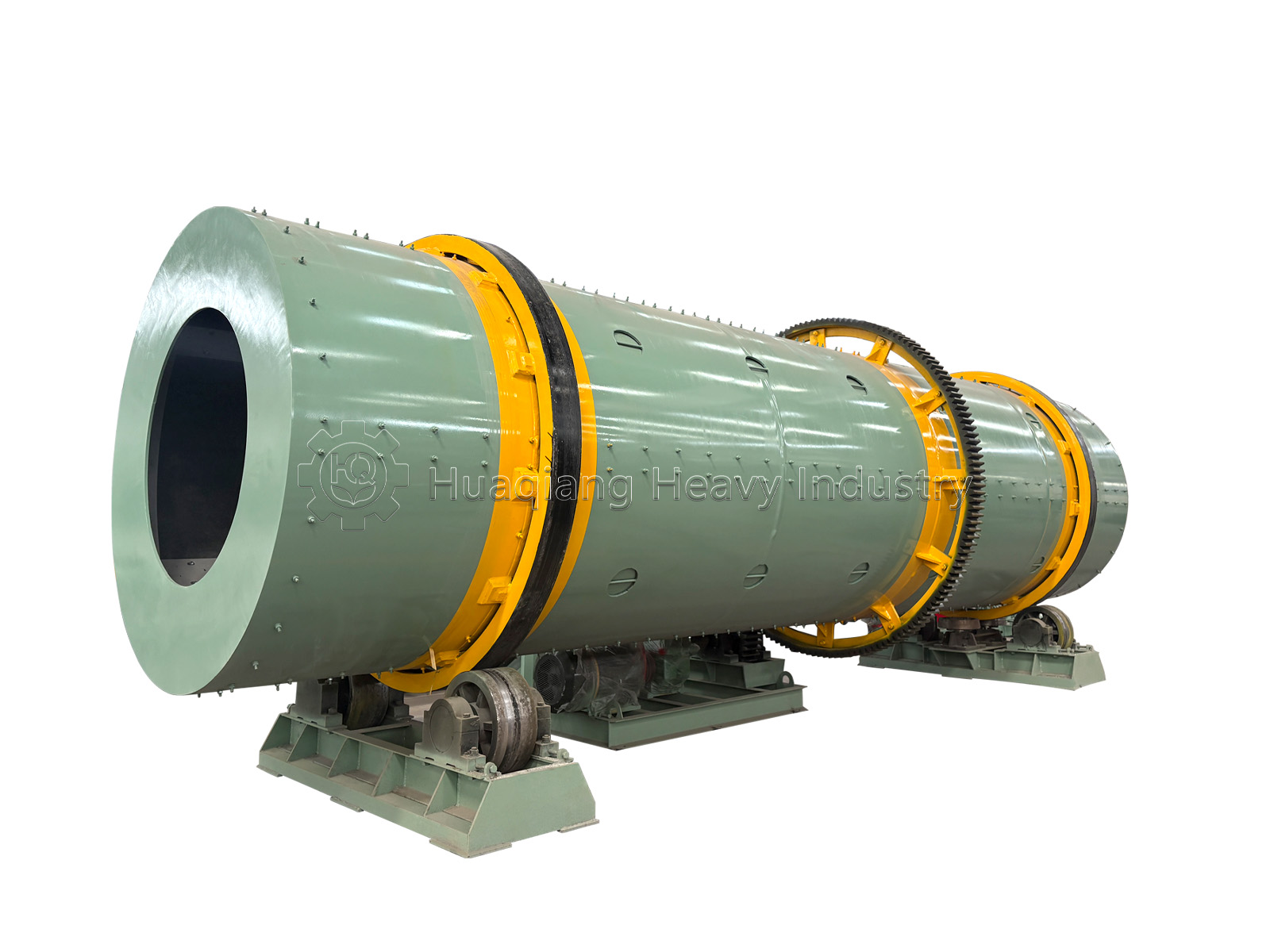

In terms of operational stability, the rotary drum granulator employs a heavy-duty roller support structure and a reliable gear transmission system, resulting in smooth drum operation and minimal vibration. Due to its relatively low rotational speed (typically 10-18 rpm), wear and tear on the equipment is relatively slow, leading to longer maintenance cycles. As long as the feed ratio and steam addition remain stable, the equipment can operate continuously for several weeks without interruption.
Furthermore, the rotary drum granulator is adaptable to a wide range of raw materials, including high-nitrogen compound fertilizers, organic-inorganic compound fertilizers, and simple organic fertilizers (such as materials from fermented livestock and poultry manure), all of which can be successfully pelletized. Particle size can be controlled by adjusting the drum rotation speed and material filling rate, resulting in round, high-strength finished particles.
Application in Compound Fertilizer Production Lines
In a complete compound fertilizer production line, the rotary drum granulator is typically located after ingredient mixing and before drying and cooling. Its coordination with upstream and downstream equipment is crucial: Upstream Coordination: The batching system and mixer must ensure that the material entering the granulator has a uniform nutrient distribution and suitable fineness. Material that is too coarse will make pelleting difficult, while material that is too fine may generate excessive dust.
Downstream Connection: The wet granules exiting the granulator fall directly into the drying drum. The hot air temperature is typically controlled at 300-400 degrees Celsius, reducing the granule moisture content from 8%-10% to below 2%-3%, before entering the cooler for further cooling.
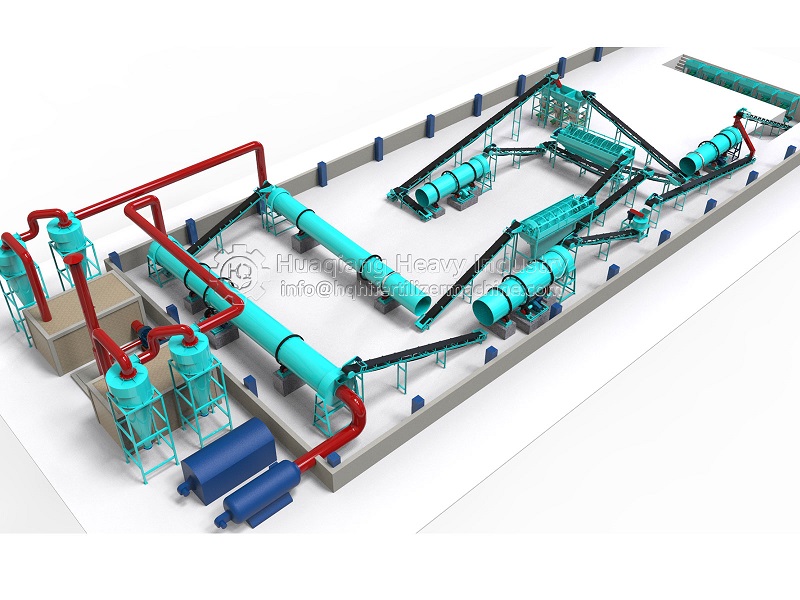
Typical applications include large-scale NPK compound fertilizer plants, large-scale organic fertilizer production enterprises, and waste composting projects. For users who need to balance output and granule quality, the rotary drum granulator is a proven and reliable choice. For smaller production lines or those requiring frequent formula changes, other options such as disc granulators or roller extrusion granulators can also be explored. Contact us for customized compactor selection and production line configuration solutions. We can also provide raw material samples and offer free trial runs to demonstrate the results firsthand.
The rotary drum granulator (or drum granulator) is the workhorse of large-scale NPK and compound fertilizer production. It is a core member of the organic fertilizer granulator series for high-volume applications. A complete rotary drum granulation production line centers on this machine, integrated with dryers, coolers, screens, and packers. This wet agglomeration process is ideal for producing high-quality spherical granules. For smaller-scale or organic-focused organic fertilizer production granulation, a disc granulator is often preferred due to its lower investment and flexibility. For very small-scale or specialty applications requiring cylindrical pellets, a flat die pelleting machine provides a low-cost entry point. The rotary drum granulator’s key advantage is its high single-machine capacity (15-30 t/h) and ability to operate continuously for weeks. Its adaptability to a wide range of raw materials—from high-nitrogen NPK to fermented manure—makes it versatile. The choice between a rotary drum granulator, a disc granulator, or a flat die pelleting machine depends on production scale, raw material characteristics, and desired product form. For large-scale, continuous production of spherical granules, the rotary drum granulator is the proven, reliable choice. Understanding the unique strengths of each machine in the organic fertilizer granulator series is key to building an efficient and profitable production line.