
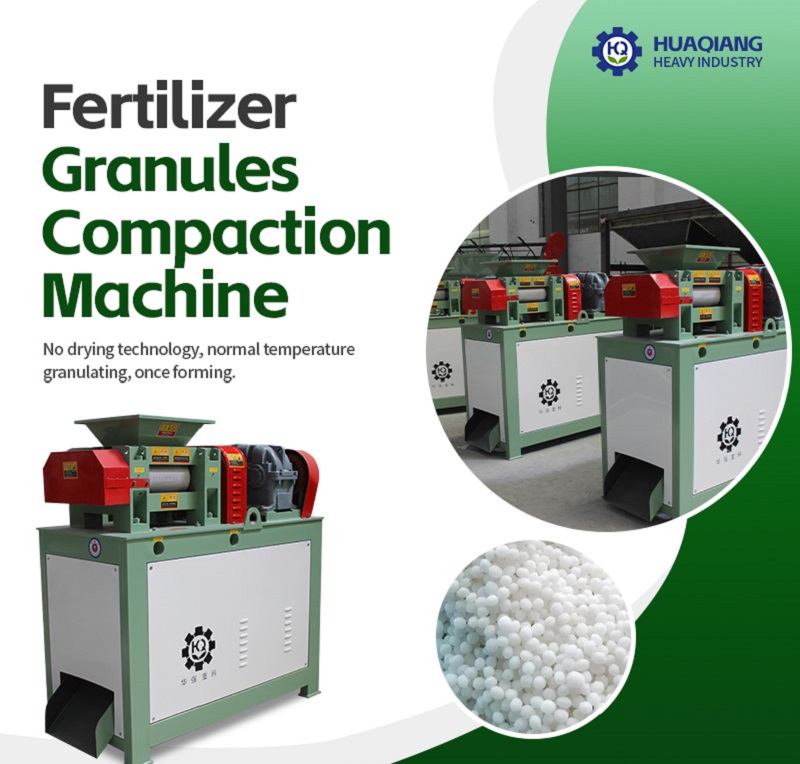
Fertilizer pellet compaction is the process of combining powdery raw materials into pellets with a certain strength and density through mechanical force. Whether dry extrusion or wet agglomeration, compaction quality directly determines the storage and transportation performance, application effect, and fertilizer utilization rate of the pellets. This article analyzes the core principles, influencing factors, and key points of quality control throughout the entire process of compaction technology.
Compaction Principles: Extrusion, Agglomeration, Forming
Fertilizer pellet compaction mainly relies on two mechanisms. Dry extrusion (roller granulation) uses high pressure to cause plastic deformation of the material particles, reducing the distance between molecules. Van der Waals forces and crystal bridging effects tightly bind the particles together. This process does not add moisture, increasing particle density by 1.5-3 times, and compressive strength can reach 20-30N. Wet agglomeration (drum/disc granulation) relies on liquid bridging. Appropriate moisture creates capillary forces between particles, which, combined with rolling or stirring, causes small particles to gradually grow, and then dry and solidify to form a stable structure.
Key Factors Affecting Compaction Quality
Pressure is a crucial parameter in dry compaction. For every 5 MPa increase in roller pressure, particle compressive strength increases by approximately 3-5 N. However, exceeding 30 MPa leads to increased equipment wear and a sharp rise in energy consumption; therefore, an optimal value must be set based on raw material characteristics. Moisture acts as a bridging element in wet granulation, with the highest granulation rate at 20%-25% moisture content. Below 15%, agglomeration is difficult, and above 30%, particles easily stick together. Raw material fineness should be 80-120 mesh; excessive coarseness results in insufficient contact area between particles and weak bonding; excessive fineness increases energy consumption. High organic matter content in the formulation leads to greater material elasticity, requiring higher compaction pressure to achieve the target strength.
Particle Strength, Density, and Non-agglomeration Control
Particle strength is a core indicator of compaction. Roller extrusion products can reach 20-30 N, while drum extrusion products require 10-15 N. High-strength particles have a low pulverization rate during storage and transportation, but excessive strength may affect the disintegration rate of fertilizer in the soil; a balance must be struck based on crop requirements. Particle density directly affects slow-release performance; high-density particles have a longer nutrient release period. The key to preventing clumping lies in thorough drying (moisture content ≤5%) and cooling (≤40℃) after compaction, and spraying a 1%-2% anti-caking agent before packaging.
The linkage between screening, drying, and cooling: Compacted particles must undergo a combined screening-drying-cooling process to become a qualified product. The screening process separates fine powder from oversized particles; the former is returned to the compactor for reprocessing, while the latter is crushed and reused, forming a closed loop. The drying process uses low-temperature, high-volume airflow (≤60℃) to reduce the particle moisture content from 15%-25% to below 5%, while avoiding high-temperature nutrient damage. The cooling process rapidly cools to ambient temperature to prevent residual heat from causing condensation inside the packaging bags. The production capacity of the three processes needs to be matched in a 1:1.1:1 ratio, with buffer silos set up to mitigate fluctuations.
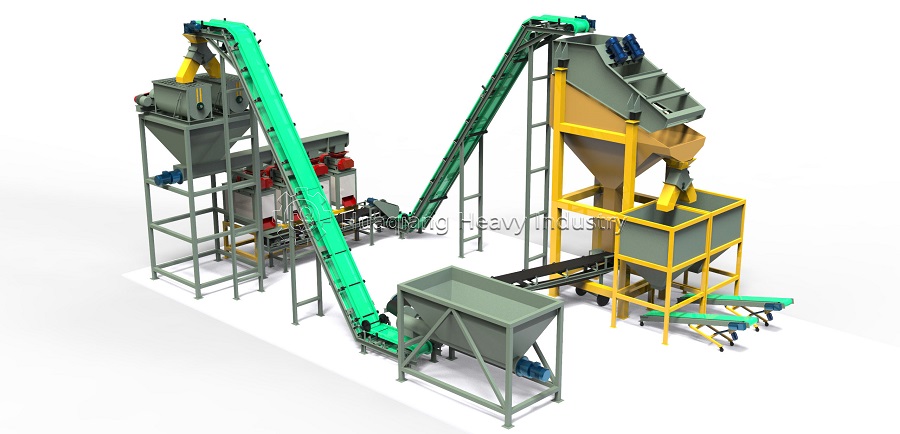
From powder to high-strength particles, compaction technology is a core component of the fertilizer production line. With precise control of three key parameters—pressure, moisture, and fineness—and efficient linkage with sieving, drying, and cooling processes, your granules will withstand the dual tests of storage, transportation, and application.
The principles of dry extrusion and wet agglomeration form the foundation of fertilizer production machine technology. A fertilizer compactor, such as a double roller press granulator, is the core of a dry compaction line, achieving high fertilizer granules compaction through mechanical pressure. This contrasts with a rotary drum granulator, which relies on a wet agglomeration process. For a complete npk fertilizer production line, the choice between these technologies is a strategic decision within npk fertilizer production technology. A rotary drum granulator is ideal for large-scale, continuous production of spherical granules using a wet process. However, for applications demanding high-density, high-strength granules, or for processing heat-sensitive materials, the dry compaction method of a fertilizer compactor is superior. This technology also integrates into the organic fertilizer granulator series when producing organic-inorganic blends. Understanding the key factors—pressure, moisture, and fineness—and the critical linkage between compaction, screening, drying, and cooling is essential for optimizing any fertilizer production machine technology. Whether using a rotary drum granulator for its high capacity or a fertilizer compactor for its energy efficiency, mastering these principles ensures a high-quality final product.