
An interesting phenomenon exists in the field of fertilizer processing: some stages demand zero tolerance for error, while others require the active “tolerance” of imperfection. The multiple-silo single-weigh static batching system, the double-roller press granulator, and the bio-organic fertilizer production line exemplify three distinct process characteristics: the first pursues absolute precision; the second seeks a balance between precision and tolerance; and the third elevates “tolerance” itself to a core process principle.
The process characteristic of the multiple-silo single-weigh static batching system can be summarized as “non-negotiable.” Multiple silos discharge material sequentially into a single weigh hopper; the weight is recorded after each material is dispensed, and the complete batch is then transferred to the mixing stage. The key to the precision of this “cumulative” weighing method lies in the fact that the material remains completely stationary during weighing—unaffected by fluctuations in conveying speed or material impact, with the sensors bearing a stable load. For materials with uniform particle size and good flowability, the proportioning error can be controlled within ±0.2%. However, this precision comes at a cost: each silo must complete a “discharge-weigh-confirm” cycle in sequence, meaning the more silos involved, the longer the time required for a single batch. In other words, the system trades speed for the impeccable figures specified in the formulation.
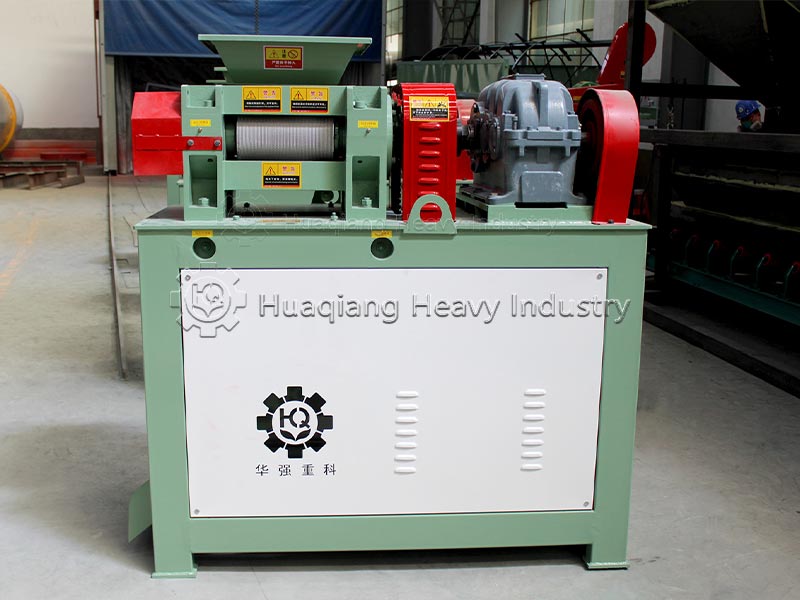
The process characteristic of the double-roller press granulator falls somewhere between precision and tolerance. Its core principle is straightforward: two counter-rotating, high-pressure rollers instantly compress dry powder material into a dense sheet, which is then crushed and screened to produce granules. Yet, what truly distinguishes it from wet granulation is its zero tolerance for water. The entire process involves no added water and no temperature increase, requiring the material’s moisture content to be kept below 5%. The bonding force between granules arises from natural molecular-level attractions—such as van der Waals forces, adsorption, crystal bridges, and interlocking connections—rather than from external binders. However, it demonstrates a remarkable tolerance for temperature; the equipment is fitted with water-cooled rollers to manage the rise in material temperature, specifically to counteract the frictional heat inevitably generated during extrusion. This characteristic—demanding regarding water yet forgiving of heat—makes extrusion granulation virtually the only viable option for processing urea-based formulations that are prone to deliquescence upon contact with water.
The process characteristics of the bio-organic fertilizer production line are uniquely distinctive; “tolerance” is practically woven into every step of the workflow. Raw materials—such as livestock manure, crop stalks, and distillery grains—vary wildly in moisture content, fiber levels, and granular structure, meaning no single set of parameters can suit every batch. The fermentation stage requires accommodating the slow pace of microbial metabolism, with turning frequencies adjusted based on pile temperature rather than a fixed schedule. Granulation demands tolerance for the natural fluctuations in material properties, requiring operators to make real-time, minute adjustments to the disc’s tilt angle and water input based on how the material tumbles. The drying stage presents a more fundamental challenge regarding tolerance: the core value of bio-organic fertilizer lies in its live functional bacteria. Excessive drying temperatures kill these bacteria, while insufficient heat leaves too much moisture, leading to mold and clumping during storage. Consequently, industry practice dictates strict control of drying temperatures between 65°C and 80°C—a delicate balancing act between ensuring thorough drying and preserving bacterial viability.