
What is Poultry Manure Fertilization Treatment?
Poultry manure fertilization treatment refers to a systematic solution that uses specialized pretreatment, fermentation, and granulation machinery to convert manure generated during the raising of poultry such as chickens, ducks, and geese into commercial organic fertilizer. Unlike natural composting, mechanized treatment can shorten the processing cycle from 60-90 days to 15-20 days, while significantly reducing ammonia emissions, killing pathogens, and producing organic fertilizer that meets national standards. Poultry manure (especially laying hen manure) is characterized by high moisture content (70%-80%), high nitrogen content (2%-4%), fine fibers, and easy putrefaction, placing special requirements on equipment selection.
Solid-Liquid Separation and Impurity Removal Module
Poultry manure often contains feathers, feed residue, eggshell fragments, and grit during collection. A drum screen (6-10 mm mesh) effectively separates feathers and coarse residue, achieving a removal rate of over 80%. The undersize material enters a screw extrusion solid-liquid separator, where the moisture content is reduced from 75-80% to 55-65% under high pressure. The separated solid material is reduced in volume by 40-50%, facilitating subsequent fermentation; the liquid portion (high ammonia nitrogen concentration) can be used to produce biogas in an anaerobic digester or treated in a multi-stage oxidation pond to meet standards before irrigating farmland.
Auxiliary Material Proportioning and Mixing Module: Poultry manure has a low carbon-to-nitrogen ratio (approximately 10:1 for chicken manure and 12:1 for duck/goose manure), requiring the addition of high-carbon auxiliary materials to adjust to a suitable range (25:1 to 30:1). An automatic batching system precisely controls the amount of auxiliary materials added. Recommended ratio: 80-120 kg of chopped straw or 40-60 kg of rice husks per ton of wet chicken manure. A twin-shaft paddle mixer thoroughly mixes poultry manure with auxiliary materials for 3 to 5 minutes, requiring a uniformity coefficient of variation of less than 10%. After mixing, the moisture content of the material should be reduced to 55% to 65%, and the carbon-to-nitrogen ratio should be increased to above 25:1.
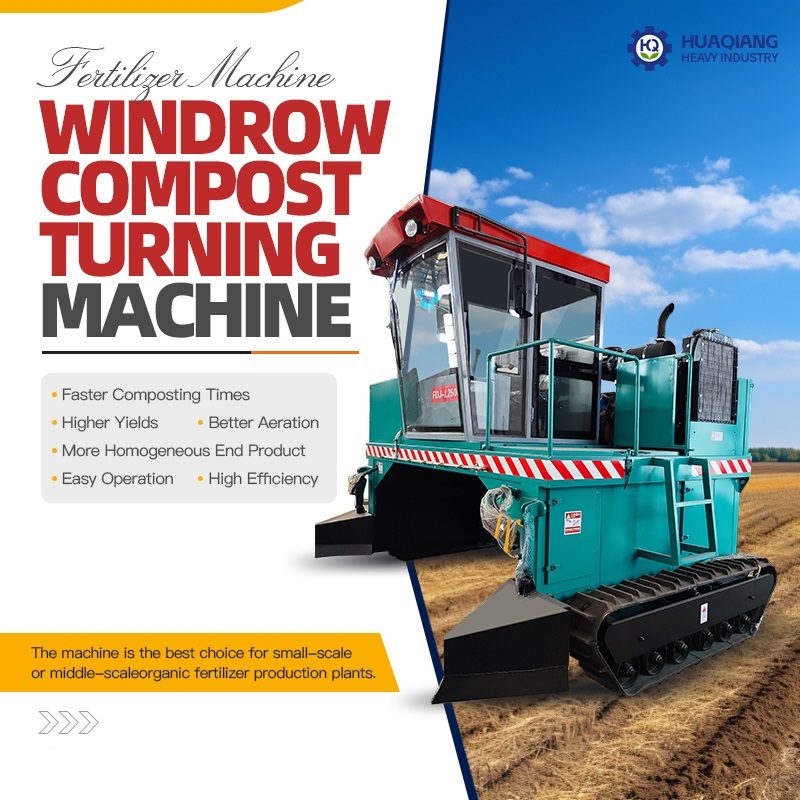
III. Tank-type Aerobic Fermentation Module: The mixed materials enter the tank-type fermentation system. The fermentation tank is 3 to 5 meters wide and 1.2 to 1.5 meters high, with PVC perforated pipes at the bottom for forced ventilation (airflow rate of 0.3 to 0.6 cubic meters per minute per cubic meter of material). A track-mounted turner turns the pile every 1 to 2 days, raising the pile temperature to 55 to 65 degrees Celsius within 48 hours and maintaining this temperature for 10 to 12 days to kill avian influenza virus, coccidia oocysts, and E. coli. The fermentation cycle for chicken manure is 18 to 25 days, while for duck and goose manure, due to its slightly coarser fibers, it requires an extended period of 22 to 28 days. After fermentation, the material is dark brown, odorless, and loose in texture.
Aging, Crushing, Granulation, and Packaging Module The fermented material requires aging for 7 to 10 days to stabilize pH and moisture content. After aging, the material is crushed in a semi-wet material crusher (90% fineness passing through a 3mm sieve), and then impurities are removed by a drum screener (2 to 4mm sieve openings). For granulation production, a roller extrusion granulator is recommended—the granules produced from fermented poultry manure can achieve a strength of 12 to 20 Newtons, allowing for packaging without drying, thus eliminating the energy-intensive drying process. The finished product is automatically packaged into 25kg or 50kg bags.
From Poultry Waste to Standardized Organic Input
Mechanized poultry manure treatment represents a transformative leap from artisanal composting to industrial-grade organic fertilizer production, compressing processing cycles from months to weeks while eliminating pathogens and capturing nitrogen value. At the heart of this fertilizer manufacturing process lies advanced fermentation composting turning technology, whether deployed through a precision animal manure compost turner in trough-type systems or scaled up via wheel-based solutions for massive operations. A dedicated chicken manure fertilizer machine workflow—encompassing solid-liquid separation, C:N ratio adjustment, forced-ventilation fermentation, and roller extrusion granulation—addresses the unique challenges of high-moisture, high-nitrogen poultry streams, delivering dark brown, odorless, pathogen-free output in 15–20 days. The same mechanical principles extend naturally to other livestock categories: a cow manure fertilizer machine configuration adapts the fermentation parameters and mixing ratios to bulkier, lower-nitrogen dairy waste, while maintaining the same systematic discipline of moisture control, thermophilic sterilization, and dry-process pelletization. By treating poultry manure not as a disposal burden but as a calibrated feedstock within a continuous production pipeline, operators convert environmental liability into a revenue-generating soil amendment that meets national organic fertilizer standards and commands premium market positioning.