
Have you noticed that your soil is becoming increasingly compacted after years of farming? Are your fruits and vegetables not as sweet as before? The root of these problems likely lies in your fertilizer choice. Today, we’ll discuss the differences between organic and chemical fertilizers to help you find the right fertilization plan for your crops.
Chemical Fertilizer: Quick-Acting but Unsustainable Chemical fertilizers are chemically synthesized inorganic salts, their biggest characteristic being “quick-acting”—they dissolve rapidly after being applied to the soil, allowing crops to absorb them quickly, resulting in a significant increase in yield in the short term. This is why chemical fertilizers have long dominated the market.
However, chemical fertilizers also have significant drawbacks. Long-term, sole use of chemical fertilizers will gradually lead to soil compaction, acidification, decreased organic matter content, and reduced soil microbial activity. Crops become increasingly dependent on chemical fertilizers, with usage increasing year by year, yet the effects diminish. Furthermore, chemical fertilizers only provide a few elements such as nitrogen, phosphorus, and potassium, leaving essential micronutrients like calcium, magnesium, iron, and zinc unavailable, resulting in poorer taste and weaker flavor in fruits and vegetables.
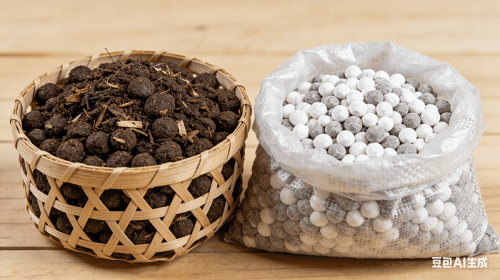
Organic Fertilizer: A Long-Term Choice for Soil Improvement
Organic fertilizer is derived from the fermented and decomposed remains of plants and animals. Its advantage lies in its “gentle and long-lasting” effect—the fertilizer release is slow but lasts a long time, without impacting crop roots. More importantly, organic fertilizer is rich in organic matter and humic acid, which can improve soil structure, increase soil aggregates, and make compacted soil loose and breathable again.
Soil using organic fertilizer long-term exhibits significantly enhanced water and fertilizer retention capacity, more active soil microorganisms, and smoother nutrient cycling. Crops develop well-developed root systems, have increased resistance to adverse conditions, and produce fruits with higher sugar content, richer flavor, and better storage life. This is precisely why high-quality fruits, vegetables, and organic agricultural products are highly favored by the market.
Cost Comparison: Balancing Short-Term and Long-Term Costs
From a single-use perspective, chemical fertilizers are relatively cheaper, ranging from tens to hundreds of yuan per acre. Organic fertilizer requires a larger amount per acre (500-1000 kg), making the single-use cost seem higher. However, the long-term benefits are different: soils that rely heavily on chemical fertilizers require continuously increasing application rates to maintain yields, while also incurring costs for soil improvement; conversely, soils that rely heavily on organic fertilizers become increasingly fertile, allowing for a gradual reduction in fertilizer usage later on. In terms of quality premiums, fruits and vegetables grown with organic fertilizers typically command 20%-50% higher prices than conventionally grown products, making it a more cost-effective approach.
Scientific Selection: Optimal Utilization of Strengths and Weaknesses
So, which should be chosen? The answer is “combination.” A scientific fertilization plan uses organic fertilizer as a base and chemical fertilizer as a supplement. Apply 500-1000 kg of organic fertilizer per acre as a base fertilizer to enrich the soil and improve its fertility; during critical growth periods, apply appropriate amounts of chemical fertilizer as top dressing to supplement readily available nutrients. This “organic + inorganic” combination ensures sufficient nutrients for crops in the early stages while maintaining long-term soil health.
The specific ratio can be adjusted according to the crop type: leafy vegetables require a large amount of fertilizer, so the proportion of chemical fertilizer can be appropriately increased; melons and fruits emphasize quality, so the proportion of organic fertilizer should be higher; perennial crops such as fruit trees, tea, and Chinese medicinal herbs should mainly use organic fertilizer.
The benefits of organic fertilizer for long-term soil health are clear, and producing high-quality organic fertilizer begins with a reliable production process. The organic fertilizer fermentation process transforms raw waste into a stable, mature base. This material is then prepared for the organic fertilizer production granulation stage using essential organic fertilizer raw material processing equipment, such as a half-wet material crusher machine. Within the organic fertilizer granulator series, several options exist to create the final, easy-to-apply product. For producing high-quality, spherical granules, a complete organic fertilizer disc granulation production line is a classic and effective choice. For operations seeking a compact, efficient solution, a new type two in one organic fertilizer granulator can combine the final stages of conditioning and initial granulation. This integrated approach to organic fertilizer production equipment ensures that the final product is not only rich in organic matter and beneficial microbes but also physically stable and convenient to apply. When this high-quality, well-decomposed organic fertilizer is used in a scientific combination with chemical fertilizers—organic as a base for soil health and chemical as a top dressing for rapid nutrition—it allows growers to achieve both high yields and long-term soil fertility, proving that the right production process is the foundation for the right fertilization strategy.