
In organic fertilizer production, raw material pretreatment is the “first hurdle” determining subsequent fermentation efficiency and granulation quality. Livestock manure, straw, sludge, and other raw materials often have high moisture content, long fibers, and many impurities. Without scientific treatment, they can lead to uneven fermentation or even damage to equipment. A complete raw material processing solution, encompassing four major stages—crushing, impurity removal, dehydration, and mixing—can transform the originally messy waste into a uniform and loose fermentation substrate.
Core Equipment: Four Machines Working Together, Each Performing Its Duty
The raw material pretreatment line consists of four types of core equipment. The half-wet material crusher is specifically designed to process sticky and wet materials with a moisture content of 25%-55%, such as fresh chicken manure, fresh cow manure, and kitchen waste. It adopts a dual-shaft shearing structure, with blades forged from high-wear-resistant alloys, which can crush wet and sticky materials to 5-15mm while avoiding clogging. For fibrous raw materials such as straw and rice husks with low moisture content (≤20%), chain crushers are more suitable. A high-speed rotating chain crushes the material, breaking long fibers to 2-5mm. A drum screen removes impurities such as stones, nails, and plastic pieces; the screen aperture can be selected according to requirements (8-15mm). A horizontal twin-shaft mixer mixes different raw materials at a carbon-to-nitrogen ratio (C/N) of 25-30:1, adding microbial agents and auxiliary materials, and stirring for 3-5 minutes until homogeneous.
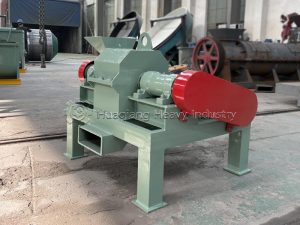
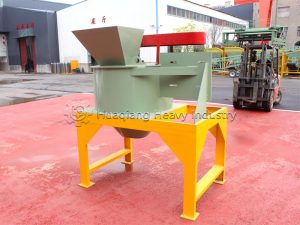
Dedicated Crushing Solution for 25%-55% Moisture Content: High-moisture materials are a challenge in organic fertilizer pretreatment. Materials with a moisture content exceeding 55%, such as fresh cow manure (over 80%), need to be first dewatered by a screw extruder to reduce the moisture content to below 60% before entering a semi-wet crusher. Materials with a moisture content of 25%-55% can be directly fed into a semi-wet pulverizer. Its cutter shaft speed is relatively slow (approximately 80-120 r/min), the blade gap is larger than the material passage size, and a self-cleaning scraper is installed to effectively prevent wet material adhesion. For raw materials with large fluctuations in moisture content, an online moisture meter can be installed at the front end of the pulverizer to automatically adjust the feeding speed and cutter shaft speed.
Impurity removal, dewatering, mixing, and C/N ratio adjustment are all interconnected pretreatment steps. Impurity removal uses a combination of a permanent magnet drum and a vibrating screen to first adsorb ferrous metals and then screen out large impurities, protecting the safety of subsequent equipment. Dewatering is mainly for high-moisture manure; a screw extrusion dewatering machine can reduce the moisture content from 85% to about 60%, resulting in a loose material. Mixing is not just about mixing, but more importantly, adjusting the C/N ratio—high-nitrogen raw materials (chicken manure) need to be combined with high-carbon auxiliary materials such as rice husks and straw to achieve an ideal C/N ratio of 25-30:1. The mixer can simultaneously spray water or microbial agents to adjust the moisture content to 55%-60%.
Pretreatment directly affects granulation rate. The fineness of raw material pretreatment directly determines the success or failure of subsequent granulation. Materials with a particle size ≤5mm allow for more complete oxygen penetration and more thorough decomposition during fermentation; after entering the granulation stage, the particles are more tightly bound, increasing the pelleting rate of disc granulation from 60% to over 85%, and the forming rate of roller extrusion can reach 95%. Conversely, if the raw material contains stones or nails, it will directly damage the granulator rollers or molds; excessively long fibers will cause the particles to be loose and cracked. Statistics show that equipment failures and quality problems caused by inadequate raw material pretreatment account for more than 60% of the total losses in organic fertilizer production.
From wet, sticky manure to uniform powder, from messy straw to standard base material, a scientific raw material pretreatment scheme is the fundamental guarantee for stable operation, efficient granulation, and high-quality products in organic fertilizer production lines. Please provide your raw material list to obtain a customized pretreatment equipment configuration plan.
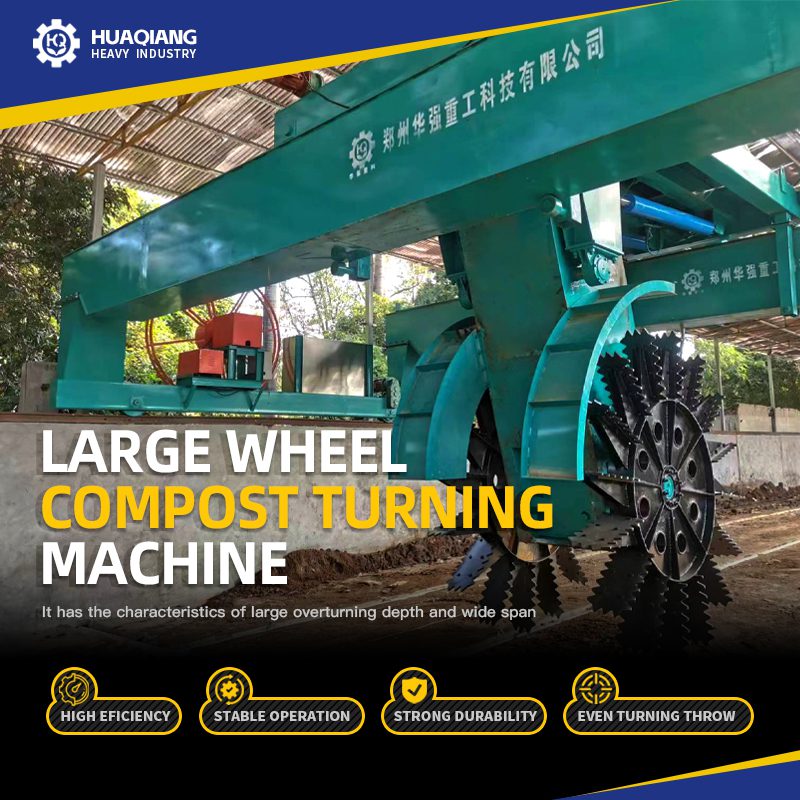
The four-stage pretreatment system—crushing, impurity removal, dewatering, and mixing—is the foundation of a successful fertilizer granulation technology process. However, the quality of the final organic fertilizer depends on the entire production chain, starting with efficient composting. The equipments required for biofertilizer production for this stage include various turners. A large wheel compost turner or a windrow composting machine is the workhorse for open-air windrow operations, offering flexible and powerful aeration. For more controlled environments, trough-type aerobic fermentation composting technology is employed, utilizing a trough-type compost turner or a robust chain compost turning machine that moves along fixed rails. A self propelled compost production machine provides excellent mobility for smaller or more dispersed sites. These machines are all implementations of fermentation composting technology. The well-composted, stable material produced by this phase is then perfectly prepared for the fertilizer granulation technology stage. The synergy between effective pretreatment, robust composting, and precise granulation is the key to transforming raw organic waste into a high-value, market-ready product. Without proper pretreatment, even the best fertilizer granulation technology cannot compensate for inconsistent or contaminated feedstock.