
The Value of the Coating Process
In organic fertilizer production lines, coating is often the final “finishing touch” after granulation, drying, cooling, and screening. Its task is not to alter the fertilizer’s internal nutrients, but to form a protective film on the granule surface, thereby significantly improving the granules’ appearance, storage properties, and application performance. A high-performance coating machine can make organic fertilizer granules stand out in the market.
Working Principle of the Coating Machine
Organic fertilizer coating machines typically employ a rotary drum structure. A slightly inclined cylinder rotates at a constant speed driven by a motor, and organic fertilizer granules enter from the higher end of the cylinder. Inside the cylinder, a special lifting plate structure continuously lifts and drops the granules, forming a uniform material curtain. Simultaneously, the coating liquid (such as anti-caking oil, amino acid solution, humic acid solution, or microbial agent suspension) is evenly sprayed onto the tumbling granule surface through high-pressure atomizing nozzles. The granules rub against each other during rolling, allowing the coating liquid to be evenly applied and naturally dried, forming a thin and dense protective film.
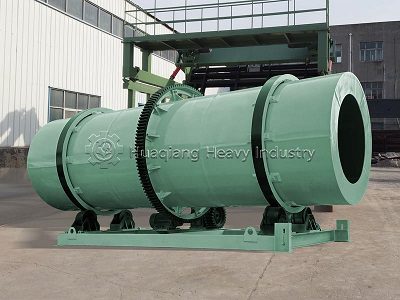
The entire process relies on physical coating, involving no chemical reactions and having no negative impact on fertilizer nutrients.
Four Ways to Improve Pellet Quality:
Preventing Caking: Organic fertilizers are prone to absorbing moisture and clumping during storage and transportation, affecting the user experience. The anti-caking oil or powdered release agent sprayed by the coating machine forms a hydrophobic layer on the granule surface, effectively reducing hygroscopicity. Coated organic fertilizers stored at 80% humidity for three months show a caking rate reduction of over 50%.
Improving Appearance: The coating layer fills in tiny depressions and cracks on the granule surface, making the granules more rounded and smooth. Adding an appropriate amount of colorant can also ensure uniform color, improving marketability.
Enhancing Functionality: Adding functional ingredients to the coating solution is an effective means of developing bio-organic fertilizers and specialty fertilizers. For example, spraying a suspension of phosphate-solubilizing bacteria, potassium-solubilizing bacteria, or Bacillus subtilis during the coating stage can prevent the bacteria from being inactivated during the high-temperature drying process; adding trace elements or plant growth regulators can achieve targeted nutrient enhancement.
Controlled Nutrient Release: By selecting specific coating materials (such as resin, sulfur, or biodegradable polymers), slow-release fertilizers can be produced. The coating layer acts as a physical barrier, controlling the rate of water penetration and nutrient dissolution, extending the fertilizer’s effectiveness from 30 days for ordinary fertilizers to 60-90 days.
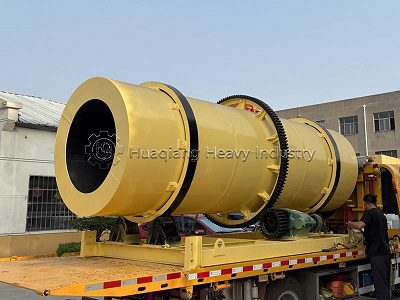
Operating Points and Maintenance: The effectiveness of the coating machine depends on the matching of several key parameters: the cylinder rotation speed should be controlled at 10-15 rpm; too low a speed results in uneven coating, while too high a speed leads to particle breakage; the coating liquid temperature is generally controlled at 50-60℃, and the atomization pressure at 0.3-0.5 MPa; the nozzles should be cleaned regularly to prevent clogging; the filling rate should be maintained at 20%-30%, ideally forming a continuous curtain of particles within the cylinder without accumulation.
For daily maintenance, the nozzle atomization effect should be checked weekly, residual material at the cylinder outlet should be cleaned every shift, and the wear of the lifting plates should be checked monthly. When the machine is not in use for an extended period, the material inside the cylinder should be emptied and rinsed thoroughly with water to prevent the coating liquid from drying and hardening.
Selection Recommendations: For small and medium-sized organic fertilizer plants (annual production below 5,000 tons), a coating machine with a diameter of 1.2 meters and a length of 4 meters is recommended, as it involves low investment and is easy to operate. For large and medium-sized production lines (annual production above 10,000 tons), a machine with a diameter of 1.5-1.8 meters and a length of 6-8 meters is recommended. Combined with an automatic liquid supply system and PLC control, continuous and stable production can be achieved. Regarding materials, 304 stainless steel is recommended for parts in contact with materials to withstand the weak acid corrosion of organic fertilizer.
The organic fertilizer coating machine is the final step in an organic fertilizer manufacturing system. Before coating, the production line includes organic fertilizer raw material processing equipment like a half-wet material crusher machine, followed by granulation using a machine from the organic fertilizer granulator series, such as a organic fertilizer disc granulation production line or a new type two in one organic fertilizer granulator. The integrated system of organic fertilizer production equipment culminates in the coating machine. This machine forms a protective film on the granule surface, preventing caking, improving appearance, and enabling functional enhancements like adding microbial agents or trace elements. For bio-organic fertilizers, coating is the ideal stage to add heat-sensitive microbes, avoiding inactivation during drying. The coating machine’s rotary drum structure ensures even application, with key parameters like rotation speed (10-15 rpm), coating liquid temperature (50-60°C), and atomization pressure (0.3-0.5 MPa) needing precise control. Regular maintenance—cleaning nozzles and checking lifting plate wear—is essential. For small to medium-scale plants, a 1.2m x 4m coating machine is sufficient; for large-scale production, a 1.5-1.8m x 6-8m machine with PLC control is recommended. Although a small step in the organic fertilizer manufacturing system, the coating machine significantly upgrades product quality, enhancing both appearance and functionality, and making the final product stand out in the market.
Although coating is a small step, it represents a significant opportunity to upgrade the quality of organic fertilizer. A suitable coating machine, combined with a reasonable coating formula, can enhance both the appearance and the nutritional value of ordinary organic fertilizer.