
NPK 15-5-20 is a high-potassium compound fertilizer with a total nutrient content of 40%, of which potassium content reaches 20%, significantly higher than nitrogen and phosphorus. This formula is suitable for potatoes, tobacco, sugar beets, fruit trees, and root and tuber crops, and has a significant effect on improving fruit quality and enhancing stress resistance. When producing the high-potassium formula, due to the large amount of potassium chloride or potassium sulfate used and the poor material flowability, special requirements are placed on weighing, mixing, and preventing caking. The following is a complete process analysis of a standardized production line with an annual output of 50,000 tons.
I. Raw Material Weighing: Precise Feeding for High-Potassium Formulas
Common raw materials for producing 15-5-20 include: urea (N≥46%), monoammonium phosphate (11-44-0 or 10-50-0), potassium chloride (K₂O≥60%) or potassium sulfate (K₂O≥50%), and a small amount of fillers (such as clay, diatomaceous earth). Example Formulation (per ton of product, using potassium chloride): Approximately 326 kg urea, approximately 114 kg monoammonium phosphate (11-44-0), approximately 333 kg potassium chloride, approximately 190 kg filler, plus 25-35 kg bentonite as a binder.
Weighing Equipment: Use a multi-compartment static electronic scale or a loss-in-weight belt scale, with a dynamic cumulative error ≤ ±0.5%. Due to the poor flowability of potassium chloride and its tendency to bridging, the weighing compartment must be equipped with a vibratory arch breaker or an air hammer.
Calibration Requirements: Calibrate the sensors once per shift, focusing on monitoring the potassium content deviation to be no more than ±0.5%.
II. Mixing: Preventing Segregation and Uniformity High-potassium formulations have a high potassium salt specific gravity, which easily leads to sedimentation and segregation during mixing. A high-uniformity mixer must be selected.
Equipment Selection: A twin-shaft paddle mixer (mixing time 2-3 minutes) or a twin-ribbon mixer (3-4 minutes) is recommended, with a uniformity coefficient of variation (CV) < 10%. Key Operating Points: First add the filler and monoammonium phosphate, then add urea and potassium salt, and finally spray a small amount of anti-caking agent (0.1%-0.2% inert powder). The mixed material should be of uniform color and free of potassium salt agglomeration.
III. Granulation: Adaptability of Steam Drum Granulation to Potassium Salt
High-potassium formulations are more difficult to granulate than high-nitrogen formulations. Potassium salts do not melt at high temperatures, but they are highly hygroscopic, easily causing rough particle surfaces. A steam drum granulator is recommended.
Equipment Parameters: Drum diameter 2.2-2.5m, rotation speed 12-15 rpm, filling rate 18%-22%. Introduce 0.3-0.5MPa saturated steam to raise the material temperature to 60-65℃ (high-potassium requires a slightly higher temperature to increase the liquid phase).
Pelletizing Characteristics: The output particle size is concentrated between 2-4.5mm, with a granulation rate of approximately 65%-70%. If the particles are loose, the binder ratio can be increased or the steam volume can be appropriately increased.
Anti-sticking measures: Potassium salts do not stick to the drum walls, but powder accumulation on the inner wall needs to be cleaned regularly.
IV. Drying and Cooling: Gentle Dehydration to Maintain Strength High-potassium granules have a long moisture evaporation path during drying, requiring a medium-temperature, long residence time strategy.
Dryer: Counter-current rotary drum, inlet hot air temperature 150-170℃ (not exceeding 180℃ to prevent urea decomposition), outlet temperature ≤65℃, moisture content reduced from 4%-5% to below 2% after drying. A lifting type is recommended for the internal lifting plates to increase the heat exchange area of the material curtain.
Cooler: Rotary cooler, using ambient air or cold air to cool to ≤40℃. High-potassium granules show a significant increase in hardness after cooling; insufficient cooling can lead to moisture absorption and softening after packaging.
Screening: Double-layer grading sieve (upper layer 4.5mm, lower layer 2mm), qualified particles 2-4.5mm. Oversized particles are crushed by a chain crusher and returned to the granulator along with the fine powder.
.jpg)
V. Coating and Packaging: Preventing Moisture Absorption and Agglomeration
Potassium salts are highly hygroscopic, making anti-agglomeration treatment of the finished product crucial.
Coating Machine: A small rotary drum with built-in high-pressure atomizing nozzles, spraying 0.3%-0.5% liquid anti-caking agent (mineral oil-based or vegetable oil-based recommended).
Packaging Materials: Double-layer woven bags lined with PE moisture-proof film, heat-sealed and then sewn shut. For potassium sulfate products, moisture protection requirements are even higher; it is recommended to add an outer film-coated woven bag.
Storage Instructions: Products should be stored in a well-ventilated and dry warehouse, with a stacking height not exceeding 8 layers.
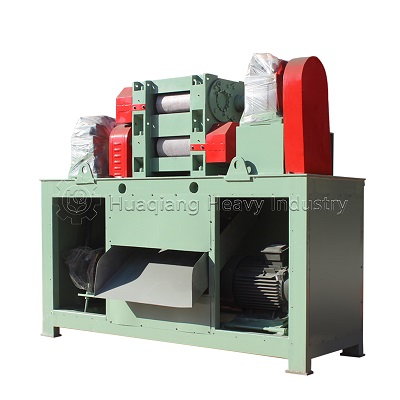
The production of NPK 15‑5‑20 high‑potassium fertilizer demands a comprehensive strategy that integrates precise npk fertilizer formula processing with strict moisture control at every stage. The core of the npk fertilizer production process relies on a rotary drum granulator with optimized steam and temperature settings (60‑65°C) to handle the poor flowability and hygroscopic nature of potassium salts. This granulation step is embedded within a complete npk fertilizer production line that also includes medium‑temperature drying (≤170°C), gentle cooling, and double‑layer screening to produce uniform 2‑4.5 mm granules. For producers seeking alternative approaches, a fertilizer compactor (roller press) or a disc granulator machine can be used, though steam drum granulation remains the most versatile for high‑potassium formulations. To further enhance granule integrity, fertilizer granules compaction during the drying and cooling stages is carefully controlled to achieve compressive strength ≥13N. The finished product, with its low moisture content (≤2%), is perfectly suited not only for direct bagging but also for downstream bulk blending (BB) fertilizer line applications, where uniform particle size and density prevent segregation during blending. By integrating these technologies – from formula calculation and steam granulation to drying, coating, and packaging – manufacturers can consistently produce premium high‑potassium fertilizer that resists caking, flows freely, and delivers reliable nutrient performance, even in humid storage conditions.
Summary: The core of the NPK 15-5-20 production line lies in “high-potassium precise weighing—powerful mixing—medium-temperature drying—double moisture protection.” Strictly controlling the finished product moisture content ≤2%, particle strength ≥13N, and potassium content deviation ±0.5% ensures stable production of high-quality high-potassium compound fertilizer. We specialize in the research and development and manufacturing of complete production lines for high-potassium compound fertilizers. Our NPK 15-5-20 formula is a mature solution—from precise weighing of potassium salts to powerful mixing, medium-temperature drying, and double moisture-proof coating, we provide one-stop supply of equipment for the entire process, ensuring your production line meets standards immediately upon commissioning.