
In organic fertilizer production, the granulation rate directly determines production efficiency and operating costs. For every 10 percentage point increase in granulation rate, the amount of recycled material decreases by approximately 15%, and energy consumption decreases by 8%-10%. However, many producers face the problems of low granulation rate, loose granules, and recycled material accumulation. The root cause often lies in the inaccurate control of key process parameters. This article will analyze the four core parameters affecting organic fertilizer granulation, helping you increase the granulation rate to over 90%.
Parameter 1: Raw Material Fineness – The Foundation of Granulation
Raw material fineness directly affects the bonding force between particles. Fermented and decomposed organic materials must be pulverized, with the particle size controlled at 80-120 mesh (approximately 0.12-0.18 mm). If the fineness is too coarse (>0.5 mm), the contact area between particles is small, resulting in insufficient bonding force and a 10%-15% decrease in granulation rate; excessively fine fineness increases pulverization energy consumption. Disc granulators and rotary drum granulators have relatively lenient requirements for fineness (≤0.3mm is sufficient), while roller extrusion granulators have stricter requirements (≥100 mesh). It is recommended to install a screen after the pulverizer, with the material on the screen returned for re-grinding to ensure the fineness meets the standard.
Parameter Two: Moisture Content – The “Binder” of Granulation
Moisture is the core medium for granulation. The ideal moisture content for disc and rotary drum granulators is 20%-25%, judged by the feel of “forming a clump when squeezed but crumbling when dropped.” Below 18% moisture content, the powder is difficult to agglomerate, and the granulation rate drops sharply to below 60%; above 28%, the material sticks to the equipment, and the granules are easily deformed. Roller extrusion granulators, on the other hand, require a moisture content ≤8%. Excessive moisture content will cause the material to stick to the rollers and fail to form granules. It is recommended to install an online moisture meter before the granulator to monitor in real time and automatically adjust the spray volume or add dry powder.
Parameter Three: Granulation Equipment Parameters – Precise Control
Disc granulators require adjustment of the tilt angle and rotation speed according to the characteristics of the raw materials. Adjustable tilt angle (35°-55°): A smaller tilt angle results in longer material residence time in the pan and larger particles; a larger tilt angle results in faster discharge and smaller particles. Rotation speed (10-20 r/min): Higher rotation speed increases centrifugal force and makes particles denser, but excessive speed can cause material splashing. General rule: For large particles (4-6mm), choose a small tilt angle and low rotation speed; for small particles (2-3mm), choose a large tilt angle and medium-high rotation speed.
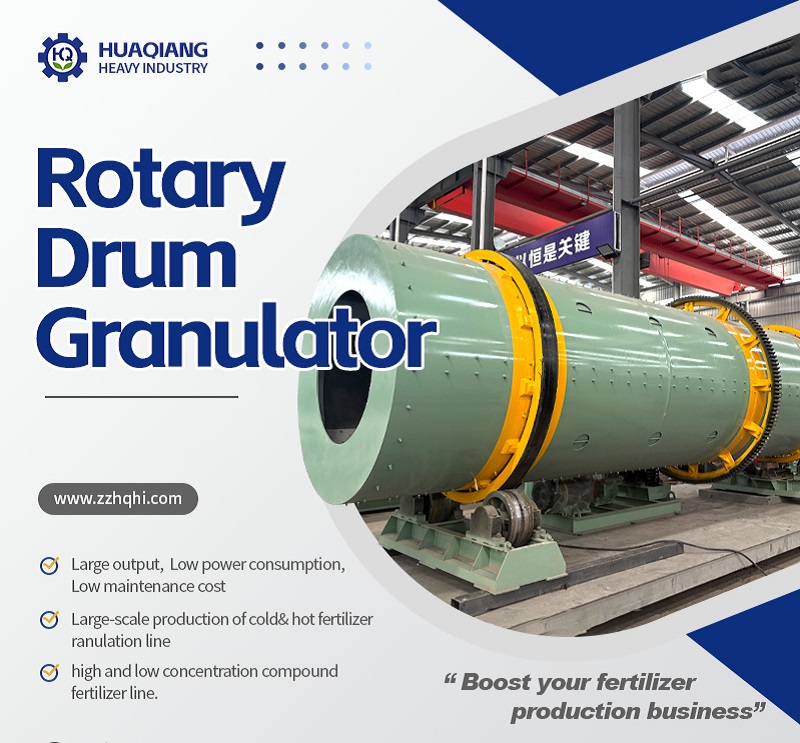
The key parameters for a rotary drum granulator are steam pressure and drum rotation speed. Steam pressure should be 0.2-0.4 MPa; too low a pressure results in insufficient plasticization of the material, while too high a pressure leads to excessive moisture and adhesion. Rotation speed should be 12-18 r/min, combined with a tilt angle of 2°-4°, controlling the material residence time to 3-5 minutes.
The core of a double-roller press granulator is roller pressure and roller gap. Adjustable pressure: 10-25 MPa. Materials with high organic matter content (>60%) require increased pressure to 20-25 MPa; formulations with high inorganic content can be reduced to 10-15 MPa. Roller gap: 0.5-2 mm. Larger gaps result in thicker particles and increased compressive strength, but also increase the proportion of recycled material.
Parameter 4: Binder Addition – A “Booster” for Auxiliary Forming
For raw materials difficult to granulate (such as high-fiber, high-oil materials), a suitable amount of binder can be added. Adding 3%-5% bentonite can improve particle strength; adding 2%-4% humic acid provides both binding and synergistic effects; adding 1%-2% starch is suitable for food-grade organic fertilizer. Binders should be added evenly during mixing to avoid localized over-addition.
Parameter 5: Recycled Material Ratio – Key to System Steady State
The recycled material ratio (fine powder screened out and large particles after crushing) should ideally be controlled at 20%-30%. Insufficient return material leads to insufficient material in the granulator, resulting in a decreased granulation rate; excessive return material increases the system load and causes uneven particle density. It is recommended to install variable frequency speed control on the return material conveyor to automatically adjust the return material amount based on granulator current feedback.
Improving the granulation rate is not simply about optimizing a single parameter, but rather a systemic balance of fineness, moisture content, equipment parameters, binder, and return material ratio. By calibrating these five parameters one by one, your organic fertilizer granulation line can stabilize the granulation rate above 90%, achieving the dual goals of cost reduction and efficiency improvement. Please contact us for personalized parameter adjustment guidance.
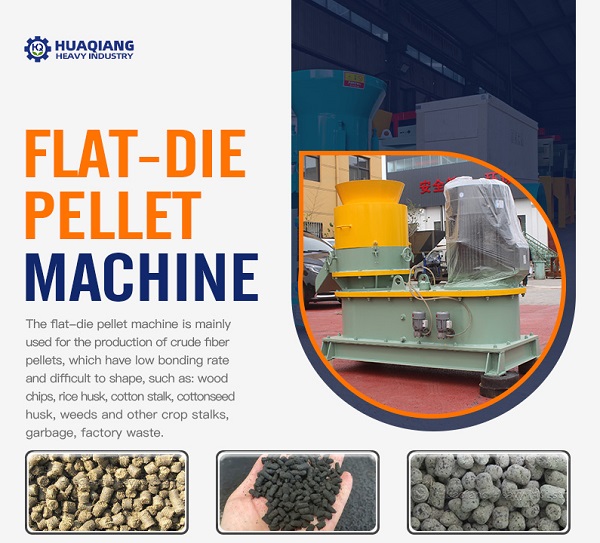
The optimization of the four core parameters—fineness, moisture, equipment settings, and binder addition—applies across the organic fertilizer granulator series. However, the success of granulation begins long before the material reaches the granulator. The organic fertilizer fermentation process, managed by equipment like a windrow composting machine or a large wheel compost turning machine, determines the consistency of the feedstock. A chain compost turner is another effective option for ensuring uniform decomposition. After fermentation, a half-wet material crusher machine is essential for reducing the material to the ideal particle size, especially for high-moisture feedstocks. This prepared material then enters the granulation stage. For drum granulation, a rotary drum granulator is the core machine, with its performance tuned by steam pressure and rotation speed. For producing spherical granules on a smaller scale, a disc granulation production line using a disc granulator is an excellent choice. For very small-scale or specialty applications, a flat die pelleting machine offers a simple, low-cost entry point. The key takeaway is that a high granulation rate is not achieved by adjusting a single machine, but by mastering the entire process chain—from effective composting and precise crushing to the accurate control of the chosen granulator’s parameters. This holistic approach ensures a consistent, high-quality feedstock and optimal equipment performance.