
When it comes to organic fertilizer granulation, flat die pelleting machines and ring die pelleting machines are two widely used options, especially for small and medium-sized fertilizer plants. While both machines serve the same core purpose—converting fermented organic materials into uniform particles—they differ significantly in structure, performance, and application scenarios. Understanding these differences is key to choosing the right equipment for your organic fertilizer production needs.
The flat die pelleting machine is a versatile and cost-effective choice for small-scale production. It features a simple structure with a flat die and a set of pressing rollers, making it easy to operate and maintain. This machine excels at producing cylindrical organic fertilizer particles, and it can also be used to make feed particles, adding value to your production line. With a compact design and small footprint, it’s ideal for plants with limited space or startups with tight budgets. Its low energy consumption and easy cleaning further reduce operational costs, making it a popular pick for small-batch production.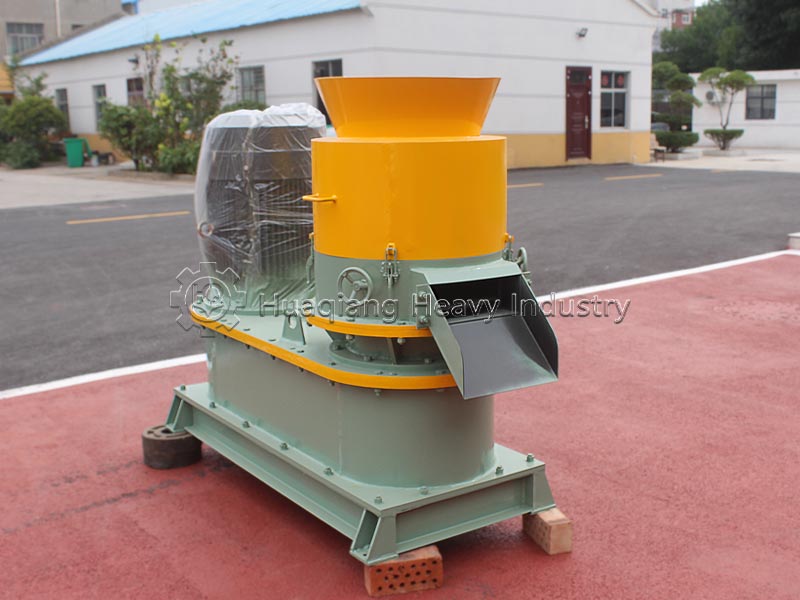

On the contrary, the ring die pelleting machine is designed for higher efficiency and larger-scale production. It has a cylindrical ring die with holes and internal pressing rollers, enabling continuous granulation with a higher output rate. Compared to flat die models, it produces more uniform particles with better density and fluidity, which is ideal for large-scale mechanical sowing. Additionally, it handles a wider range of raw materials, including those with slightly higher moisture content, and offers more stable performance during long-term operation.
The key differences also lie in their maintenance and cost. flat die pelleting machines have fewer moving parts, so maintenance is simpler and less frequent—usually limited to checking the die and rollers for wear. ring die pelleting machines, however, require more regular maintenance of the ring die and internal components, which may increase long-term operational costs. In terms of initial investment, flat die models are more affordable, while ring die pelleting machines cost more but offer higher productivity.
The comparison between flat die and ring die pelleting machines highlights two important members of the organic fertilizer granulator series. Both are used for columnar fertilizer granulation technology, achieving organic fertilizer production granulation through extrusion. However, it’s important to understand their place in the broader technology landscape. A rotary drum granulator is the workhorse of large-scale NPK production, using a wet agglomeration process. A fertilizer compactor (such as a double roller press granulator) uses dry compaction for high-density granules. The flat die pelleting machine is ideal for small-scale, versatile production, offering a low-cost entry point for organic fertilizer. The ring die pelleting machine is designed for higher efficiency and larger-scale continuous operation, producing more uniform cylindrical pellets. The choice between a flat die pelleting machine and a ring die pelleting machine is a strategic decision for any organic fertilizer producer. A flat die model is perfect for startups or small plants with limited space and budget. A ring die model is better suited for large-scale production where higher output and consistent pellet uniformity are the primary goals. Both are specialized tools within the diverse organic fertilizer granulator series, each optimized for a specific production scale and efficiency level.
To sum up, choose a flat die pelleting machine if you run a small plant, need versatility, or have a limited budget. Opt for a ring die pelleting machine if you aim for large-scale production, higher efficiency, and more uniform particles. Both machines are high-quality options from Huaqiang, a professional organic fertilizer equipment manufacturer, ensuring reliable performance and custom solutions to fit your production needs.