
Essential Differences Between the Two Technologies:
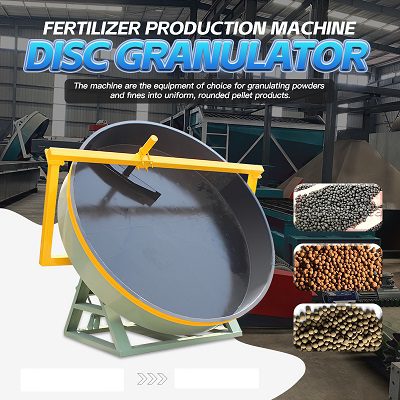
Disc granulation production lines use a wet process, rolling materials into pellets within a disc using water or steam. Subsequent drying and cooling equipment is required to remove moisture.
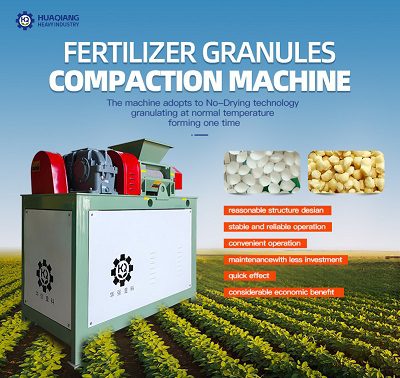
Roller extrusion production lines, on the other hand, use a dry process, directly pressing powder into flakes under high pressure, followed by crushing and sieving into granules, completely eliminating the drying and cooling steps. These fundamental differences determine their varying investment costs, operating costs, and product positioning.
Initial Investment Comparison:
Disc granulation production lines require more equipment: in addition to the disc granulator, they need a rotary drying drum, hot air furnace, cooling drum, and a dust removal system. For a production capacity of 50,000 tons per year, the total investment for the entire system is approximately 2 to 3 million RMB.
Roller extrusion production lines eliminate the need for drying and cooling equipment, resulting in a shorter equipment chain. For the same scale, the investment is approximately 1.5 to 2.2 million RMB, 15%-25% lower than that of disc granulation lines. Furthermore, the extrusion granulation line eliminates the need for hot air furnaces and drying drums, and avoids the construction of large equipment foundations, reducing plant construction costs by approximately 30%.
Operating Cost Comparison: The difference in operating costs is even more significant. After disc granulation, the material moisture content is approximately 8%-12%, requiring substantial heat energy to dry to below 3%. Using a coal-fired hot air furnace, approximately 30-40 kg of coal is consumed per ton of finished product. Adding the electricity consumption of the induced draft fan and drum, the drying cost per ton of fertilizer is approximately 50-70 yuan.
The roller extrusion production line requires no heat source at all; the main energy consumption comes from the extruder and crushing/screening equipment. The comprehensive electricity consumption per ton of fertilizer is approximately 25-35 kWh. Based on an industrial electricity price of 0.8 yuan/kWh, the energy cost per ton of fertilizer is only 20-28 yuan. Additionally, disc granulation requires the addition of binders such as bentonite, increasing the auxiliary material cost per ton of fertilizer to approximately 30-50 yuan; extrusion granulation eliminates this binder cost entirely. In summary, the operating cost per ton of fertilizer for a double-roller extrusion line is 60-80 yuan lower than that of a disc granulation line.
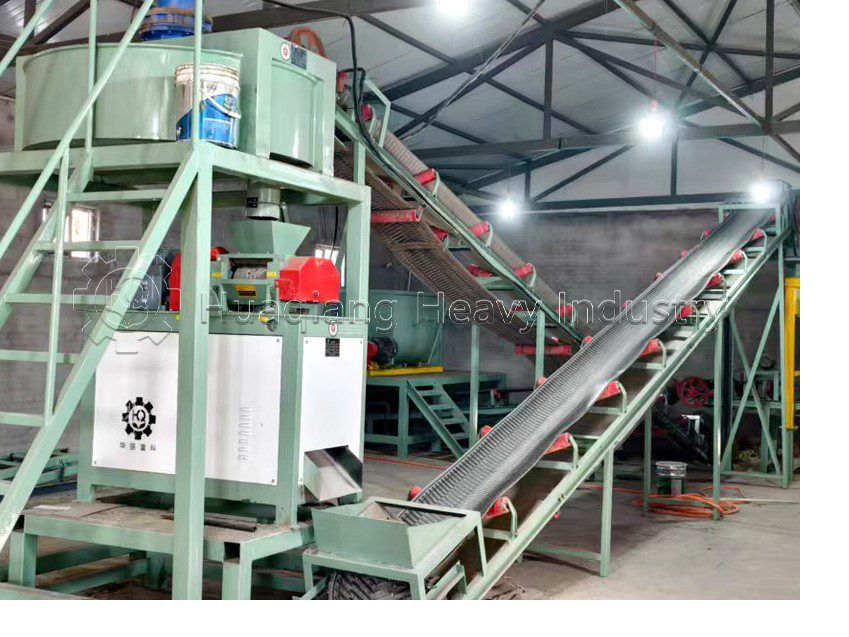
Hidden Costs and Benefit Differences: The main wear parts in extrusion granulation are the textured layer on the roller surface, with a service life of approximately 3000-5000 hours. Replacing a pair of rollers costs approximately 30,000-80,000 yuan (depending on specifications), averaging about 8-15 yuan per ton of product for spare parts. While the disc body of a disc granulator wears more slowly, the lifting plates of the drying drum and the grate of the hot air furnace are also wear parts, with similar spare parts costs for both.
In terms of product profitability, disc granulation produces spherical pellets with a rounded appearance, which can fetch 50-100 yuan more per ton in the retail market compared to the irregular pellets produced by extrusion granulation. If the product is sold to farmers, the improved appearance of the disc granulation line can offset its higher production costs.
Selection Recommendation: From a purely production cost perspective, the double-roller extrusion granulation line has a greater advantage—lower investment, lower energy consumption, and lower operating costs. However, if your product is positioned in the high-end retail market and customers have high requirements for the appearance of the pellets, the added value brought by the spherical pellets from disc granulation will incur higher costs. It is recommended that users make decisions based on their target customer group and sales channels: choose an extrusion line if targeting agricultural wholesale channels and pursuing profit per ton; choose a disc line if targeting end-user retail and prioritizing brand image.
The choice between a disc granulation line (wet process) and a roller extrusion line (dry process) has significant implications for bio organic fertilizer production lines and npk fertilizer lines. For a bio-organic fertilizer production line for pig manure, the dry process of a roller press granulator production line offers advantages in preserving microbial activity, as it eliminates the high-temperature drying step. For an npk fertilizer line, both processes are used, but the dry process offers lower operating costs. A disc line requires a fertilizer dryer machine and fertilizer cooler machine, increasing energy costs (50-70 yuan/ton for coal). A roller press line eliminates these, with energy costs of only 20-28 yuan/ton (25-35 kWh). Additionally, disc lines require binders (30-50 yuan/ton), while roller lines do not. Total operating cost savings for a roller line are 60-80 yuan/ton. However, disc lines produce spherical pellets that can fetch 50-100 yuan/ton more in retail markets. The post-granulation process for a disc line includes a rotary drum screening machine and fertilizer packing machine. For wholesale channels prioritizing profit per ton, the roller line is superior. For retail markets where appearance commands a premium, the disc line may be justified despite higher costs. The key decision factors are target customer group (wholesale vs. retail) and product positioning. For bio-organic fertilizers, the dry process’s ability to preserve microbes is a critical advantage. Understanding these trade-offs is essential for selecting the optimal production line for your specific market and product requirements.