
Many organic fertilizer producers struggle with the choice between three mainstream granulation methods: disc granulators, drum granulators, and double roller press granulators. What are their respective advantages and disadvantages? Which one is suitable for my raw materials? This article clarifies your decision-making process by comparing processes, scenarios, and costs.
Process Characteristics: The Essential Differences Between the Three Granulation Methods
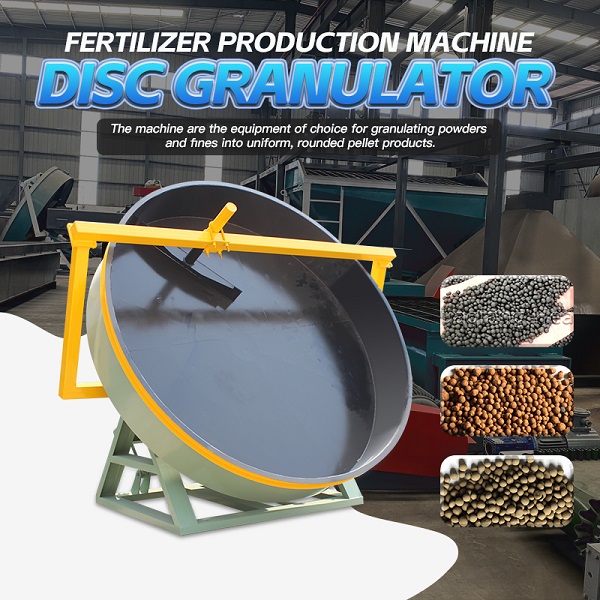
Disc Granulator: The rotating motion of an inclined disc causes moist powder to roll into spheres under the combined action of centrifugal force and friction. Key process points include controlling the disc inclination angle (40°-50°), rotation speed (15-25 rpm), and liquid spray volume. It produces well-rounded granules but requires subsequent drying.
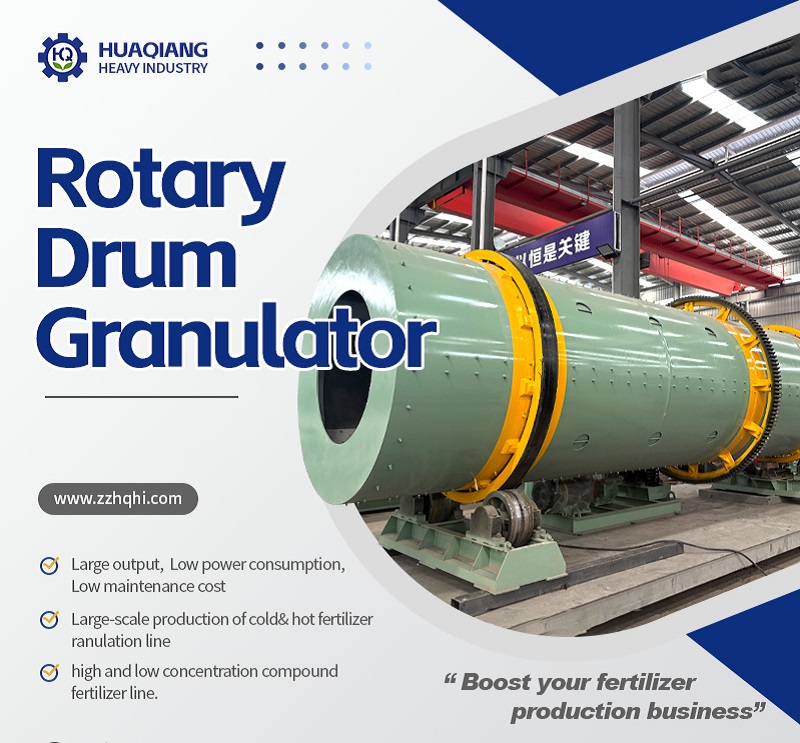
Drum Granulator: A slightly inclined large cylinder where materials tumble and agglomerate. It is usually used in conjunction with steam or water spraying to bind the granules into spheres under humid and hot conditions. High throughput, with single units reaching over 20 tons/hour, but the overall equipment is bulky and requires a drying and cooling system.
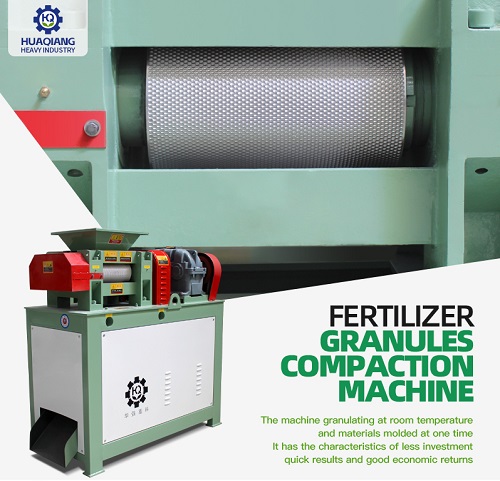
Roller extrusion granulator: Relying on two counter-rotating high-pressure rollers to directly press dry powder into thin sheets, which are then crushed and screened to obtain granules. It uses no water or steam, therefore producing no wastewater and eliminating the need for hot air drying. The finished granules are mostly lentil-shaped or irregularly shaped flakes with high strength.
Applicable scenarios and raw material matching:
Disc granulator is suitable for:
Small-batch, multi-formulation production scenarios (e.g., 10,000-30,000 tons/year), with convenient changeover and cleaning;
Medium-to-high concentration compound fertilizers and organic-inorganic compound fertilizers (organic matter ratio 30%-50%);
The moisture content of the raw materials can be flexibly adjusted (controlled at 25%-35% via a spray system).
Unsuitable scenarios: Pure organic fertilizer (poor adhesion, difficult pelletizing), high urea formulations (over 30% easily sticks to the disc).
Rotary drum granulators are suitable for: Large-scale, continuous production (annual capacity 50,000-300,000 tons); Pure compound fertilizer or compound fertilizer with organic matter content below 30%; High requirements for granule appearance (round and smooth, suitable for blending).
Unsuitable for: Wet materials with high moisture content, heat-sensitive raw materials (such as bio-organic fertilizer containing active bacteria, high-temperature drying will kill the bacteria).
Double roller extrusion granulators are suitable for: Areas with strict energy-saving and environmental protection requirements (no hot air emissions, no process wastewater); Small and medium-sized factories with limited investment budgets (saving on large investments in boilers, dryers, etc.); Pure organic fertilizer or materials with organic matter content above 50% (fermented and decomposed, then pulverized to a fineness ≤0.5mm); Heat-sensitive raw materials (such as bio-organic fertilizer with added functional bacteria, room temperature molding does not kill the active bacteria).
Unsuitable for: Raw materials with moisture content exceeding 12% (cannot be pressed into flakes), containing coarse fibers or hard particles (damages the rollers). Cost-Benefit Comparison
Investment Costs (based on a production capacity of 5 tons per hour):
Disc Granulation Line (including drying and cooling): Approximately 400,000-600,000 RMB
Drum Granulation Line (including drying and cooling): Approximately 600,000-900,000 RMB
Roller Extrusion Granulation Line (no drying required): Approximately 250,000-400,000 RMB
Operating Costs (per ton of product):
Disc Line: Overall energy consumption approximately 35-50 kWh (including hot air furnace)
Drum Line: Overall energy consumption approximately 40-60 kWh
Extrusion Line: Overall energy consumption approximately 25-35 kWh (electricity consumption only)
Particle Strength (Compressive Strength, Newtons):
Disc/Drum: 8-15 N
Extrusion: 20-35 N (significant advantage)
From the perspective of process principles, applicable scenarios, and cost analysis, the three granulation methods each have their own focus. A disc granulator is flexible and economical, producing spherical particles, making it the first choice for small and medium-sized production lines; a rotary drum granulator is powerful and produces a high yield, making it the best choice for large-scale factories; a roller extrusion granulator (a type of fertilizer compactor) is energy-saving and environmentally friendly, producing high-strength particles, making it very suitable for producing pure organic fertilizers and bio-organic fertilizers.
If you are starting a new organic fertilizer project, you can make a choice based on the following principles: for an annual output of 30,000 tons or less, with diverse raw materials and a need for flexible formulation changes, a disc granulator is recommended; for an annual output of over 50,000 tons, pursuing large-scale, stable production of NPK compound fertilizers, a rotary drum granulator is the standard configuration; if you have strict requirements for energy conservation and environmental protection, are producing high-strength particles, or are working with heat-sensitive materials (such as microbial agents), a fertilizer compactor (roller extrusion granulator) is the best choice. For very small-scale or specialty applications requiring simple cylindrical pellets, a flat die pelleting machine provides a low-cost entry point within the organic fertilizer granulator series.
Whether you prioritize particle roundness (disc/drum) or prioritize energy savings and particle strength (extrusion), or need an efficient and energy-saving solution for your npk fertilizer production line, understanding the distinct roles of each technology is key to building a cost-effective, efficient production system. For new investors, it is recommended to first clarify the raw material characteristics (moisture content, fineness), target capacity, and product positioning (market demand for particle appearance), and then consult with equipment manufacturers to conduct small-scale raw material tests. Based on actual test results, select the most suitable fertilizer granules compaction technology. Only in this way can you achieve a balance between investment and long-term operating costs, producing competitive organic fertilizer products.