
Large-scale NPK complexes can slash total energy consumption by 22-28% without replacing core reactors by implementing a cascaded waste heat recovery architecture. The highest ROI strategy combines a two-stage flue gas scrubbing-condensation unit (recovering 45-55°C low-grade heat for raw material pre-drying), variable frequency drives on granulation exhaust fans tied to real-time moisture sensors, and a steam pipeline insulation retrofit using aerogel blankets. These three interventions typically achieve full capital payback within 14-18 months while reducing Scope 1 emissions proportionally.
Where the Energy Actually Leaks
Conventional energy audits on fertilizer lines often focus narrowly on the ammonia reaction loop, yet field measurements reveal that over 60% of avoidable thermal loss occurs downstream. The pipe reactor and rotary drum granulator discharge exhaust streams at 90-110°C directly to wet scrubbers, dissipating valuable enthalpy. Simultaneously, large exhaust fans on the dryer circuit run at fixed speeds regardless of actual moisture load, and uninsulated steam distribution manifolds radiate continuously. Addressing these three leakage points transforms the energy balance without touching the chemical synthesis core.
Intervention 1: Cascaded Flue Gas Heat Recovery
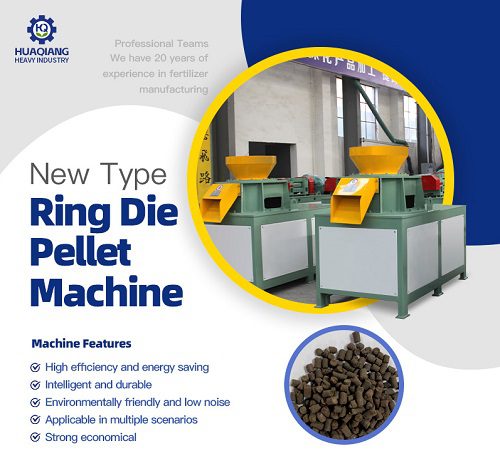
A two-stage condensation economizer installed after the dryer cyclone captures thermal energy that standard single-stage systems miss. The first stage preheats combustion air for the hot blast furnace, while the second stage uses a low-temperature corrosion-resistant heat exchanger to warm raw material entering the granulator. This configuration recovers an additional 12-15% of flue gas enthalpy without causing acid dew point corrosion. Plants integrating this with a high-pressure roller press granulator specification for compacted NPK lines see even greater savings, as the mechanical pressing step eliminates the drying energy burden entirely for that portion of output.
Intervention 2: Moisture-Driven Fan Speed Control
Retrofitting the granulation dryer exhaust fan with a variable frequency drive linked to an in-line near-infrared moisture sensor allows air flow to modulate based on actual evaporation demand rather than running at full capacity. When granule surface moisture drops below target, the PLC ramps fan speed down proportionally. Operators report fan energy reductions of 35-40% during low-load production windows, with zero impact on product quality parameters.
Intervention 3: Steam System Aerogel Retrofit
Replacing mineral wool insulation on high-temperature steam headers and condensate return lines with silica aerogel blanket material delivers thermal conductivity as low as 0.015 W/m·K—roughly half that of conventional insulation at equivalent thickness. This retrofit is particularly impactful on outdoor pipe bridges exposed to wind chill. Paired with a steam trap audit and failed-open trap replacement program, total steam distribution losses decline by approximately 18%.
Full steam system heat integration, when combined with intelligent dryer air management and direct granulation via high-compression pelletizing, achieves a 22-28% site-wide energy reduction. The granular level of control enabled by distributed node-based metering architectures, as discussed in dynamic NPK blending systems, further ensures that energy savings never come at the cost of nutrient ratio accuracy.
Energy Recovery Across the Full Production Spectrum
The 22-28% energy reduction achieved through flue gas cascading, moisture-driven fan control, and aerogel steam insulation represents only the thermal optimization potential within compound fertilizer synthesis. For operations integrating organic waste streams, the same systems-thinking applies upstream. Advanced fermentation composting turning technology—whether deployed via a high-capacity large wheel compost turner for expansive windrow sites, a precision trough-type compost turner for channel-based systems, or a mobile windrow composting machine for seasonal flexibility—accelerates thermophilic decomposition while minimizing anaerobic energy losses. Once stabilized compost reaches maturity, modern fertilizer granulation technology transforms this feedstock into marketable product: a disc granulation production line produces spherical granules for premium horticulture markets, while low-shear alternatives preserve microbial viability. Throughout this organic-to-granule workflow, the fertilizer dryer machine remains the critical thermal node—its exhaust streams, whether from organic or compound lines, should be integrated into the same cascaded heat recovery architecture to capture enthalpy that conventional plants simply vent. By treating energy not as a per-process cost but as a site-wide circulatory system—recovering heat from composting exhaust, dryer flue gas, and steam condensate alike—manufacturers build a unified thermal infrastructure that serves both organic and NPK production circuits, maximizing ROI while minimizing Scope 1 emissions across every product line.
FAQ: Energy Optimization in Fertilizer Plants
Q1: Can heat recovery be retrofitted to a running plant without a shutdown?
Yes. Flue gas economizers and steam insulation upgrades install on external ductwork and piping while the process continues. The only brief tie-in involves diverting flue gas through the new heat exchanger during a planned maintenance window, typically requiring under 8 hours.
Q2: Does reducing dryer air flow risk product caking or moisture non-compliance?
Not if closed-loop control is properly implemented. The near-infrared sensor provides a continuous moisture signal to the VFD controller, maintaining a safe margin above the critical moisture threshold. The system automatically increases air flow if granule moisture spikes due to raw material variability or throughput changes.
Q3: How does high-pressure roller compaction save energy compared to traditional granulation?
Mechanical compaction granulation produces finished particles through direct inter-particle bonding without the evaporation phase required in slurry-based drum or pan granulation. This eliminates the single largest thermal load in the plant—the dryer burner—achieving 40-50% lower specific energy per tonne of finished NPK compared to conventional steam granulation trains.