
What is Cow Manure Pellet Fertilizer?
Cow manure pellet fertilizer is produced by processing fresh or well-rotted cow manure through dehydration, fermentation, crushing, granulation, drying, and screening. This process transforms the manure into uniformly sized, easily stored, transported, and applied commercial organic fertilizer pellets. Compared to bulk cow manure directly returned to the field, granular fertilizer offers more stable nutrient release, increasing the added value per unit weight by 2 to 3 times.
I. Raw Material Pretreatment: Dual Control of Moisture and Impurities
Fresh cow manure typically has a moisture content between 75% and 85%. Direct granulation results in soft pellets and a surge in drying energy consumption. The core task of the pretreatment stage is to reduce the moisture content to 50% to 60%. A solid-liquid separator is crucial in this process—through screw extrusion, the moisture content of cow manure can be reduced to approximately 65%, while the separated liquid can be recycled as a liquid fertilizer raw material. For already fermented dry cow dung, a drum screen is needed to remove stones, plastics, and other debris. A screen aperture of 6-8 mm is recommended, and the impurity removal rate should reach over 95%.
II. Fermentation and Maturation: The Inevitable Path to Harmlessness and Stabilization Directly granulating insufficiently fermented cow dung will lead to secondary fermentation during storage and transportation, causing packaging bloating and even spontaneous combustion. Tank-type aerobic fermentation is the most mature process: pre-treated cow dung is spread into a fermentation tank, 3-5 meters wide and 1.2-1.5 meters high, and turned every 2-3 days using a turning machine. According to process standards, the fermentation temperature must be maintained at 55-65 degrees Celsius for at least 7 days to kill insect eggs and weed seeds. The overall fermentation cycle is approximately 15-20 days in summer and 25-35 days in winter. Three simple indicators for judging complete fermentation: the pile temperature is close to ambient temperature, there is no ammonia odor, and it feels soft and elastic to the touch.
III. Crushing and Ingredient Adjustment Although the fermented cow manure is loose, it still contains a small amount of fibrous clumps and needs to be processed by a semi-wet material crusher. The output fineness should be at least 95% passing through a 3 mm sieve. At this stage, functional components can be added according to the needs of the target crop, such as humic acid, trace elements, or microbial agents mixed in during crushing. It is important to note that the uniformity of mixing is a hidden threshold at this stage—the coefficient of variation should be controlled within 10%, otherwise uneven nutrient distribution in the finished granules will affect fertilizer efficacy evaluation.
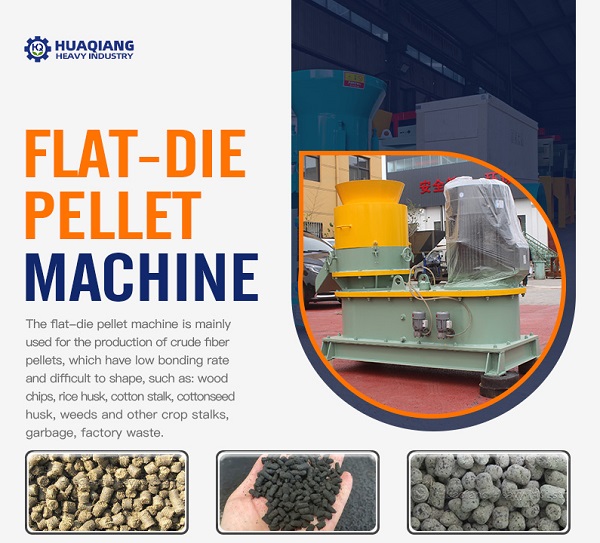
IV. Granulation and Molding: Selection of Core Process Considering the high fiber characteristics of cow manure, the three granulation methods each have their advantages and disadvantages. The flat die extrusion granulator is most suitable for small to medium-scale production, directly extruding fermented cow manure with a moisture content of 40% to 45% into cylindrical granules. The granule diameter is typically 4 to 6 mm, with high strength and low pulverization rate, and the unit price is the most economical. The roller extrusion granulator produces lentil-shaped granules, with an appearance closer to chemical fertilizers, but requires strict control of the raw material moisture content below 35%, necessitating an additional pre-drying process. Disc granulators produce spherical pellets with the best marketability, but require skilled operation experience to control the inclination angle and rotation speed. The pelleting rate is relatively low, with a return material ratio reaching 25% to 30%.
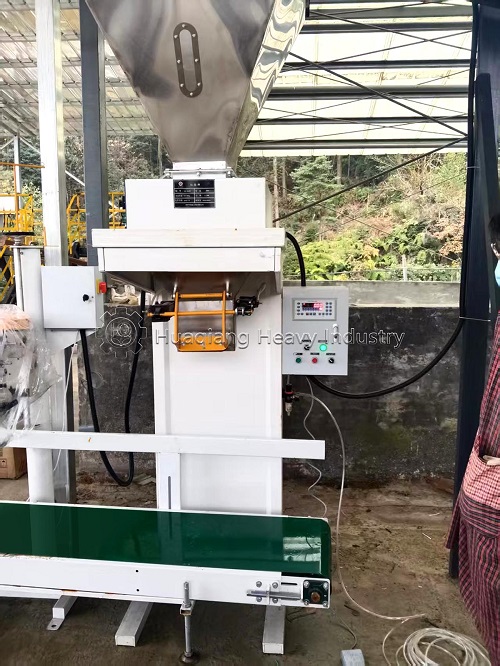
V. Drying, Screening, and Packaging Freshly formed cow dung pellets still have a moisture content between 30% and 35%. They need to enter a rotary dryer to reduce the moisture content to below 15% to meet the standards for commercial organic fertilizer. The dryer inlet temperature is controlled at 300 to 350 degrees Celsius, and the outlet material temperature should not exceed 60 degrees Celsius; excessive heat will damage the activity of the organic matter. The dried pellets undergo two-stage screening—the upper screen removes oversized particles (for return crushing and reuse), and the lower screen removes powder (for return to the granulator for re-forming). Qualified finished products are then automatically packaged and typically sealed in 25 kg or 50 kg woven bags.
Inter-process parameters: These five processes are not independent; strict parameter constraints exist between them. The moisture content entering the granulator determines the granulation rate, which directly affects the energy consumption and return ratio of the drying process. The return ratio, in turn, affects the load on the crushing process. A smoothly operating cow manure granulation production line typically requires the moisture content of the fermentation output to be stable between 40% and 45%, with fluctuations not exceeding ±3 percentage points—this is the golden control point connecting the pretreatment and granulation processes.
Mastering the Granulation Process for Dairy Waste Valorization
Converting cow manure into commercial pellet fertilizer exemplifies the disciplined integration of biological stabilization and mechanical precision that defines modern granulation process in fertilizer industry. The journey from 75–85% moisture raw material to sub-15% shelf-stable pellets hinges on selecting the optimal platform within the organic fertilizer granulator series. A disc granulator machine delivers spherical pellets with premium marketability, commanding higher retail prices through superior aesthetics, while a rotary drum granulator achieves industrial-scale throughput via steam-assisted agglomeration for large dairy cooperatives. For small to medium operations, a poultry manure pellet machine or flat die extrusion unit—often repurposed as a versatile cow manure fertilizer machine—processes high-fiber fermented substrate at the most economical capital threshold. Regardless of the fertilizer granulator machine deployed, the golden control point remains inter-stage moisture discipline: stabilizing fermentation output at 40%–45% with ±3 percentage point precision ensures seamless flow through drying, screening, and ultimately the automatic fertilizer packaging machine, where uniform pellet quality captures the 2–3× value premium that separates commodity waste from premium soil amendments.
We provide complete equipment solutions and process debugging services for cow manure granulated fertilizer, from solid-liquid separation and tank fermentation to granulation and drying. We can also customize moisture control and granulator matching solutions free of charge based on your raw material characteristics, helping you efficiently convert cow manure into high-value-added commercial organic fertilizer.