
What is Fertilizer Production Cost?
Fertilizer production cost refers to the total expenditure across the entire supply chain, from raw material procurement, crushing and batching, granulation and drying, screening and packaging to warehousing and logistics. It is typically broken down into three main components: raw material costs (accounting for 50% to 70% of total costs), energy costs (15% to 25%), and labor and maintenance costs (10% to 20%). Understanding this structure is the first step in systematic cost reduction.
Raw Material Substitution and Formula Optimization
Raw materials are the largest cost variable. Three paths to reduce raw material costs are: bulk purchasing and long-term agreements—increasing single purchase quantities from 10 tons to 50 tons can reduce average transportation costs by 15% to 20%; unconventional raw material substitution—while ensuring fertilizer efficiency, partially replacing potassium sulfate with cheaper potassium chloride, or partially replacing diammonium phosphate with monoammonium phosphate, can reduce formulation costs by 8% to 12%; and internal material recycling—fine powder recycled from granulation and screening should not be simply reused, but a recycling rate monitoring index should be established to reduce the recycling ratio from 30% to below 20%, which can directly reduce the consumption of new raw materials.
Potential for Improving Energy Consumption and Thermal Efficiency The drying and cooling processes consume more than 60% of the production line’s energy. According to actual process measurement data, for every 10-degree Celsius decrease in the exhaust gas temperature at the dryer outlet, thermal efficiency increases by approximately 5%. Common improvement measures include: adding a thermal insulation layer to the rotary dryer, reducing heat consumption by 8% to 10%; replacing coal with biomass pellets, although the fuel’s calorific value is slightly lower, the cost of biomass in markets such as India, Africa, and Southeast Asia is only 50% to 70% of that of coal; and installing frequency converters to control the induced draft fan speed, matching airflow with material volume, which can reduce power consumption by 12% to 18%.
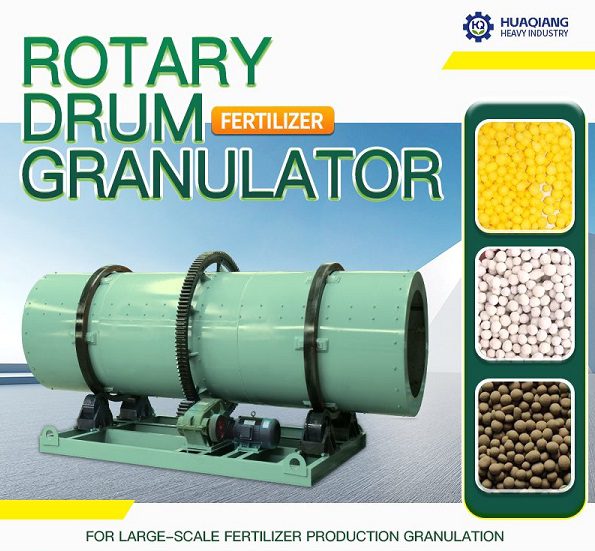
III. Lean Control of Process Parameters Cost reduction can be achieved through parameter optimization alone, without relying on additional investment. In the pelletizing process, stabilizing the steam pressure of the drum pelletizer in the range of 0.2 to 0.3 MPa and controlling the material temperature in the range of 60 to 70 degrees Celsius can increase the pelletizing rate from 70% to 85%, reduce the amount of returned material by nearly half, and simultaneously reduce the drying load. In the screening process, setting the screen aperture appropriately—if the upper screen aperture is too large, the finished product will contain fine powder; if the lower screen aperture is too small, the amount of returned material will increase—requires calibrating the screen state every two weeks according to the target particle size distribution.
Shift in Equipment Maintenance Strategy The strategy shifts from “repairing when it breaks” to “preventative maintenance,” reducing annual downtime per unit from 200 hours to below 80 hours, indirectly improving capacity utilization. Specific measures include: checking the wear of the anti-stick lining of the rotary granulator every 500 hours of operation, cleaning clogged holes in the extrusion granulator dies every 300 hours, and establishing a minimum inventory warning line for vulnerable parts (screens, belts, bearings)—production interruptions due to spare parts shortages often result in losses exceeding the value of the spare parts themselves.
Physical Assessment of Cost Reduction Priorities The focus of cost reduction differs for factories of different sizes. Small production lines (below 5 tons per hour) should prioritize raw material substitution and control of the return material ratio, as these require almost no additional investment. Medium-sized production lines (5 to 15 tons per hour) should focus on improving the thermal efficiency of the drying system, with an investment payback period typically not exceeding one year. Large-scale production lines (15 tons/hour or more) should consider waste heat recovery systems—using the 150°C exhaust gas from the dryer to preheat the mixture before granulation can further improve overall thermal efficiency by 10% to 12%.
Three Easily Overlooked Hidden Costs
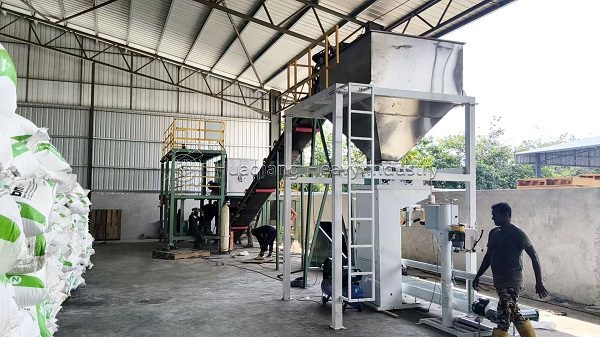
Besides explicit expenses, three hidden costs are often underestimated: fluctuations in raw material moisture content cause a surge in drying energy consumption—for every 5% increase in feed moisture, fuel consumption in the drying drum increases by 15% to 20%; screen blockage leads to fine powder mixing into the finished product, causing customer returns and brand damage; and frequent start-ups and shutdowns of the production line result in additional energy consumption—the gas consumption of a single cold start is equivalent to 30 to 40 minutes of normal production. Incorporating these variables into daily statistics reveals a more substantial potential for cost reduction than expected.
Aligning Cost Control with Production Line Architecture
Systematic cost reduction in fertilizer manufacturing demands not only process discipline but also strategic alignment between cost-levers and the specific fertilizer equipment architecture deployed. For producers operating a bio organic fertilizer production line, raw material moisture management and fermentation cycle optimization yield the highest returns with zero capital outlay. In compound fertilizer operations, selecting the right fertilizer granulator machine platform—whether a steam-assisted disc granulation production line for spherical premium products, a roller press granulator production line for energy-efficient dry compaction, or an automatic fertilizer packing machine integrated with precision batching—directly determines both capital intensity and operating economics. The fertilizer screening equipment aperture calibration, performed biweekly against target particle distributions, prevents fine powder contamination that triggers costly customer returns. While industrial fertilizer machine price remains a critical budget variable, the most impactful savings often emerge from parameter optimization—stabilizing steam pressure at 0.2–0.3 MPa, matching induced draft fan speed to material volume via VFDs, and reducing cold starts—transforming existing assets into higher-yield, lower-cost production systems without incremental equipment investment.
We provide end-to-end cost reduction solutions, from raw material formulation optimization to waste heat recovery systems, as well as rapid supply of vulnerable parts and remote diagnostic services for preventative maintenance, helping you achieve quantifiable efficiency improvements at every cost level.