
In organic fertilizer production, the fermentation stage accounts for 40%-60% of the total operating cost of the production line, and the choice of turning equipment directly determines the level of this expenditure. From energy consumption, labor, raw material utilization rate to operation and maintenance costs, every penny of cost is closely related to equipment performance. This article will analyze how to achieve a realistic goal of reducing fermentation costs by 30% through scientific equipment selection and process optimization.
Organic Fertilizer Fermentation Cost Composition
The operating cost of the fermentation stage mainly consists of four parts: equipment energy consumption (electricity/fuel) accounts for approximately 30%-40%, labor costs account for 20%-30%, raw material waste (fermentation loss) accounts for 15%-20%, and equipment maintenance and replacement of vulnerable parts account for 10%-15%. This means that the core of cost reduction lies in “saving electricity, saving labor, saving materials, and saving repairs.”
Equipment Selection for Cost Reduction: Matching to Capacity, Avoiding Over-Equipping
Improper equipment selection is the primary cause of cost overruns. For small to medium-sized production lines with an annual output of 10,000-30,000 tons, using large wheeled compost turners not only increases equipment investment by 2-3 times but also results in significant energy waste during daily operation. Conversely, for large-scale bases with an annual output of over 50,000 tons, using small chain-plate compost turners requires multiple units operating in parallel, multiplying labor and maintenance costs.
The scientific selection principle is “production capacity determines machine type, site conditions determine specifications.” For small to medium-scale operations with a daily processing capacity of 50-100 tons, chain-plate compost turners are the most cost-effective choice—equipment investment of $30,000-$50,000, with energy consumption of only 2.5-3.5 kWh per ton. For large-scale bases with a daily processing capacity of over 300 tons, large wheeled compost turners offer significant advantages—a single machine can handle thousands of tons per day, reducing the cost per ton by 40%-50% compared to smaller machines.
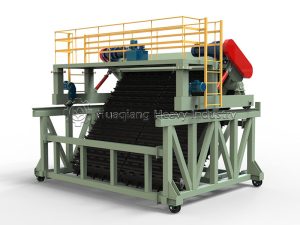
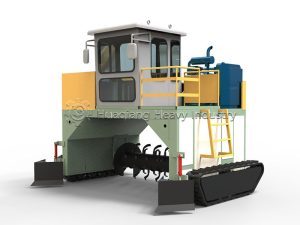
Process optimization reduces costs: shortening the composting cycle and improving site turnover. The fermentation cycle directly determines capital occupation and site efficiency. Traditional natural composting requires 60-90 days, while using a high-efficiency compost turner can compress the cycle to 20-30 days. This means that under the same site conditions, the annual processing capacity can be increased by 2-3 times. Studies have shown that turning the compost every two days increases the organic matter degradation rate by 15%-20% and shortens the composting time by 30% compared to turning it once a week.
Optimizing the turning process is equally crucial. Increasing the turning frequency during the high-temperature period (55-65℃) can accelerate the inactivation of pathogens and the decomposition of organic matter; appropriately extending the interval during the cooling period reduces heat loss. Using variable frequency speed control technology to automatically adjust the speed according to the material load can further reduce ineffective energy consumption.
Energy Consumption Control Techniques: Energy-Saving Equipment and Intelligent Control
The main energy consumption of compost turning equipment lies in the driving and turning power. Modern energy-saving compost turning machines use variable frequency motors and hydraulic transmission technology, saving 20%-30% of electricity compared to traditional models. Taking a certain model of large wheeled compost turning machine as an example, its operating fuel consumption is only 3-5 liters/hour, which is 40% lower than similar products.
The application of intelligent control systems can further tap into energy-saving potential. By monitoring the pile temperature and load in real time with sensors, the system automatically adjusts the turning frequency and travel speed to prevent idling and overwork. After application in an overseas project, the energy consumption per ton of material turned decreased from 2.8 kWh to 2.0 kWh, a reduction of 28%.
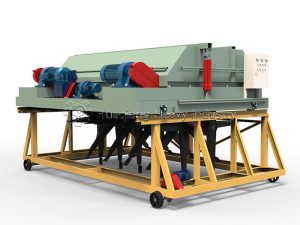
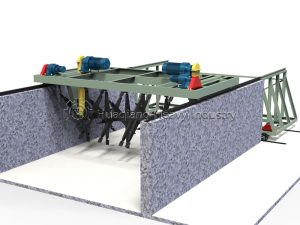
From equipment selection to process optimization, from energy consumption control to operation and maintenance management, there is no single “one-size-fits-all” approach to cost reduction and efficiency improvement in organic fertilizer fermentation, but rather a series of interconnected system solutions. Please contact our technical team to obtain an energy-saving turning equipment solution tailored to your raw material characteristics and production capacity requirements.
The path to reducing fermentation costs by 30% lies in the strategic application of fermentation composting turning technology. The key is matching the right equipment to the scale of operation. For large-scale bases processing over 300 tons per day, a large wheel compost turning machine offers the lowest cost per ton due to its immense single-unit capacity. For small to medium-scale operations, a chain-plate compost turner or a flexible windrow composting machine provides a more cost-effective balance of investment and operating expenses. For operations requiring maximum process control and minimal odor, a trough-type compost turner within a controlled environment is the optimal, though often higher-cost, solution. Scientific selection based on production capacity, combined with process optimizations like using variable frequency drives and intelligent control systems, directly tackles the main cost drivers: energy consumption, labor, and raw material utilization. A double screws compost turning machine offers a gentle yet efficient turning action, which can be particularly beneficial for preserving pile structure. Mastering the organic fertilizer fermentation process—from C/N ratio adjustment to temperature monitoring—is fundamental. This targeted approach to fermentation composting turning technology ensures that every dollar spent on turning equipment translates into maximum efficiency and the lowest possible cost per ton of high-quality compost.