
What is a Chicken Manure Fertilizer Granulator?
A chicken manure fertilizer granulator is a specialized piece of equipment that transforms fermented and decomposed chicken manure into granular organic fertilizer through physical extrusion, rolling agglomeration, or shearing molding processes. Unlike ordinary fertilizer granulation, chicken manure, due to its high fiber content, large initial moisture fluctuations, and viscosity between livestock manure and straw, places special demands on the adaptability of granulation equipment.
I. Raw Material Adaptability: Tolerances for Moisture Content and Fiber Content
The core variable of chicken manure raw material is its moisture content. Fresh chicken manure has a moisture content as high as 70% to 80%, and even after fermentation and decomposition, it still fluctuates around 40% upon exiting the granulator. Disc granulators have the most stringent requirements for the moisture content of raw materials—it needs to be controlled within a narrow range of 30% to 35%, otherwise the pelleting rate will drop sharply, which means that an additional drying process is necessary. In contrast, extrusion granulators can directly process wet materials with a moisture content of 40% to 45%, using strong extrusion to shape the material through die holes, eliminating the need for pre-drying investment. According to actual process measurement data, considering the high fiber characteristics of chicken manure, the die wear cycle of a roller extrusion granulator is approximately 60% of that for processing pure livestock and poultry manure, but its overall energy consumption is about 30% lower than the combination of disc granulation and pre-drying.
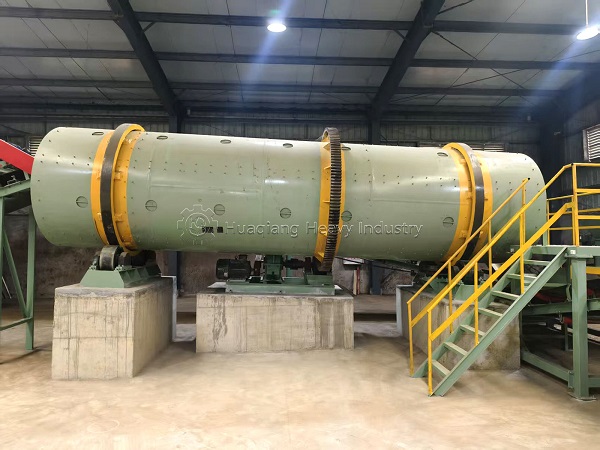
II. Particle Morphology and Product Premium The particle morphology produced by different granulators directly affects the final selling price. Disc granulators and drum granulators produce spherical particles with a rounded appearance and optimal marketability, suitable for the retail market and small packaging channels. Extrusion granulation produces cylindrical or irregular particles, which, although stronger and with lower pulverization, have a lower appearance score than spherical particles. Drum granulators can produce multi-faceted particles between these two types, and the particle size distribution can be continuously adjusted from 2 mm to 6 mm by adjusting the rotation speed and tilt angle. For high-value organic fertilizers like chicken manure, spherical pelleting is recommended as a priority, as farmers of cash crops are willing to pay a 10% to 15% premium for pellet appearance.
III. Key Differences in Operating Costs The long-term cost of a pelletizer extends beyond its purchase price. Disc pelletizers are simple in structure and have the lowest unit price, but require a high-precision moisture control system at the front end, and a pelletizing rate of approximately 70%, necessitating a large return material circulation system. Extrusion pelletizer dies are consumable parts; when processing chicken manure, the micro-cutting action of fibers on the die typically limits the lifespan of a single die to 800 to 1200 hours, requiring replacement costs to be included in the operating budget. Drum pelletizers use steam to regulate material viscosity, achieving a pelletizing rate of over 85% and reducing return material by nearly half, but their drum lining requires regular replacement of the anti-stick liner. For a chicken manure organic fertilizer project with an annual production capacity of 10,000 tons, comprehensive calculations show that the total cost of ownership for a drum pelletizer over five years is roughly the same as that of a disc pelletizer, but the drum pelletizer offers superior production line stability and yield.
Optimal Matching for Different Scales
For small-scale farm projects with a daily output of less than 5 tons, roller extrusion granulators are a practical choice due to their small footprint, lack of need for front-end drying, and simple operation. When daily output reaches the 10-30 ton range, drum granulators equipped with steam-assisted systems become the industry standard configuration—offering the best balance between pellet yield and pellet appearance. Disc granulators are more suitable for professional organic fertilizer plants with strong raw material moisture control capabilities; their low maintenance costs and flexible particle size adjustment capabilities remain irreplaceable in standardized raw material scenarios.
Three Essential Questions Before Choosing a Granulator
Before determining the best model, please answer the following questions: Can the moisture content of the fermented chicken manure be stably controlled below 35%? Is the premium for pellet appearance in the target market sufficient to cover the cost of process upgrades? Are there experienced operators capable of handling the adjustments made by disc granulators? The answers will directly point to the most suitable granulator.
Matching Granulation Technology to Chicken Manure Characteristics
Selecting the right granulator for chicken manure demands a holistic view that extends from fermentation preprocessing to final pellet morphology. The journey begins with robust aerobic decomposition, where a large wheel compost turning machine ensures thorough oxygenation and moisture reduction of high-nitrogen poultry waste before it enters the granulation stage. Within the broader organic fertilizer granulator series, each technology offers distinct trade-offs: a rotary drum granulator equipped with steam-assisted systems delivers spherical pellets with >85% yield and premium marketability for 10-30 ton/day operations; a fertilizer flat die pellet machine provides compact, low-intrusion extrusion for small farm projects under 5 tons/day; while roller extrusion variants handle 40-45% moisture without pre-drying. Modern fertilizer production machine technology continues to narrow these gaps through adaptive die designs and intelligent moisture compensation, making organic fertilizer production granulation increasingly forgiving of raw material variability. Ultimately, the ideal chicken manure fertilizer machine is not the one with the highest specification, but the one whose operating envelope—moisture tolerance, fiber resilience, and particle aesthetics—precisely overlaps with the producer’s raw material profile, market positioning, and operator skill level.
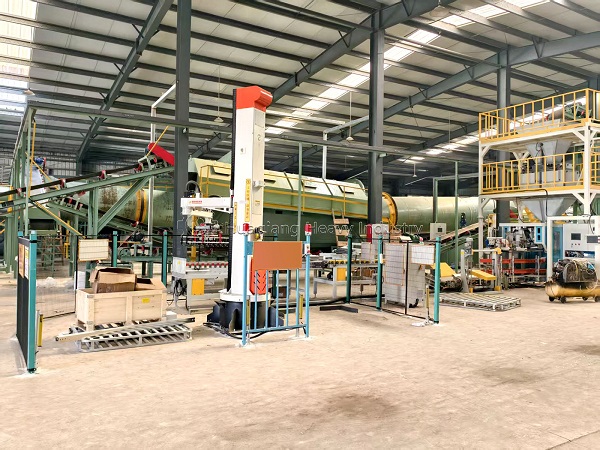
Our factory (Huaqiang Heavy Industry) offers a full range of chicken manure granulator models, providing customized solutions to meet specific needs. We offer one-stop service for production line equipment and after-sales support, helping customers achieve efficient production and revenue generation.