
With increasing global emphasis on green and sustainable development, farm waste—such as livestock manure, crop straw, and forestry residues—is no longer a burden on environmental governance, but rather a valuable asset for producing high-quality organic fertilizer. Through scientific conversion technologies, agricultural producers can achieve a remarkable transformation from “pollution expenditure” to “product added value,” which is the core appeal of the agricultural circular economy.
The Ecological Logic of Waste Utilization: The difficulty in treating agricultural waste lies in its large volume, high moisture content, and tendency to produce foul odors. The first step in the circular economy is “reduction and harmlessness.” By scientifically mixing nitrogen-rich animal manure with carbon-rich crushed straw, adjusting the carbon-to-nitrogen ratio (C:N) to between 25:1 and 30:1, an ideal environment can be created for subsequent microbial activity.
Core Technology for Organic Fertilizer Conversion: Currently, the most internationally recognized and effective conversion pathway is the “high-temperature aerobic fermentation process.” This involves using specialized turning machines or fermentation tanks for forced oxygenation and strictly controlling the fermentation pile temperature between 55-65 degrees Celsius for more than a week. This process not only completely kills pathogens, parasite eggs, and weed seeds, but also decomposes large organic molecules into humus that is easily absorbed by crops through the action of microorganisms. The fermented material, after crushing, granulation, and grading, becomes commercially available organic fertilizer that is selling well in the market.
Success Stories and Social Benefits: Globally, many leading ranches have introduced complete organic fertilizer production lines, completely solving the pressure of manure disposal on thousands of acres of surrounding land. The organic fertilizer produced is also sold to high-end fruit and vegetable bases at a price per ton higher than that of ordinary chemical fertilizers. This closed-loop model of “promoting fertilization through animal husbandry, nourishing agriculture through fertilizer, and reducing fertilizer and pesticide use” not only improves the quality of agricultural products but also brings additional financial benefits to farms through carbon trading and green subsidies.
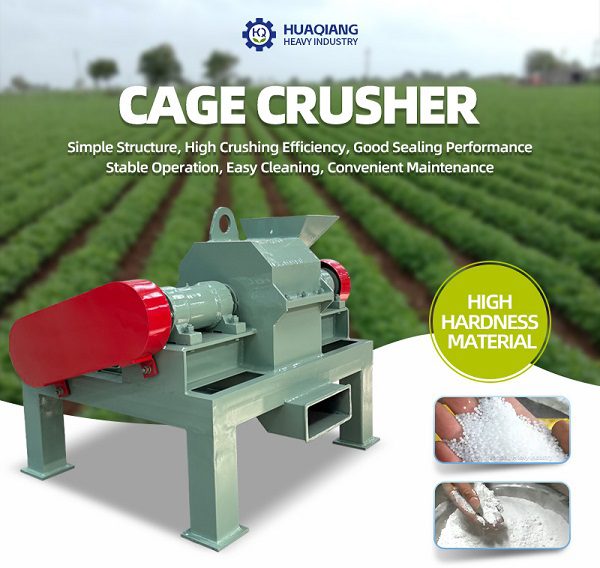
The agricultural circular economy transforms environmental liabilities into profitable assets through a seamless integration of biological conversion and mechanical processing. Once high-temperature aerobic fermentation produces stable, pathogen-free compost, the material enters a purpose-built production workflow where every piece of fertilizer equipment plays a mission-critical role. A rugged fertilizer crusher and mixer first homogenizes the fermented substrate, breaking clumps and blending functional additives to ensure uniform nutrient distribution. The conditioned material then feeds into an organic fertilizer disc granulator or alternative fertilizer granulator machine, forming spherical pellets with optimal flowability and mechanical strength for mechanized application. Post-granulation, a precision fertilizer dryer and cooler reduces moisture to shelf-stable levels while preserving microbial viability, followed by fertilizer screening equipment that separates qualified granules from undersized fines for return-material recycling. By configuring these interconnected systems as a unified valorization platform, agricultural enterprises can reliably convert livestock manure, crop residues, and forestry waste into certified organic fertilizers that command premium pricing in high-end produce markets—simultaneously eliminating pollution costs, generating carbon credit revenue, and closing the nutrient loop between animal husbandry and crop cultivation.