
Designing a modern fertilizer facility requires a strategic balance between raw material accessibility and advanced automation. By following this 10-step framework—centered on closed-loop granulation and thermal recovery—investors can reduce initial waste by 15% and ensure long-term scalability for complex nutrient formulas.
The 10-Step Engineering Roadmap
1.Site Selection and Logistics Optimization: Proximity to raw material sources (like livestock farms or chemical hubs) is the primary factor in reducing transportation overhead.
2.Raw Material Characterization: Conduct a chemical analysis to determine if you need specialized NPK fertilizer production components for chemical blending or fermentation tanks for organics.
3.Advanced Composting and Pre-treatment: For organic lines, selecting the right industrial compost turner technology is essential to accelerate decomposition from months to days.
4.Crushing and Homogenization: Ensuring a uniform particle size before granulation is critical; this requires a heavy-duty fertilizer crusher capable of handling varying moisture levels.
5.Precision Batching and Dosing: Implementing automated weighing scales ensures the final product meets international nutrient labeling standards.
6.Core Granulation Strategy: This is the heart of the plant. Choosing a high-pressure roller press granulator specification allows for dry processing, which significantly cuts energy costs compared to wet methods.
7.Thermal Processing (Drying and Cooling): Modern plants utilize an integrated rotary drum dryer that recaptures waste heat to pre-heat incoming air.
8.Screening and Recycling: A multi-stage screening system returns undersized particles back to the granulator, ensuring a 98% product consistency rate.
9.Protective Coating: Applying a thin polymer or oil layer prevents caking during long-term storage and sea freight.
10.Automated Packaging and Palletizing: Finalizing the line with high-speed bagging machines minimizes labor costs and ensures weight accuracy.
Critical Technical Benchmarks for New Plants
Instead of traditional layouts, 2026-standard plants should aim for these specific performance metrics:
Target Granule Uniformity: Over 95% within the 2mm-4mm range.
Energy Consumption Threshold: Less than 15 kWh per ton of finished product for dry granulation lines.
Environmental Compliance: Zero-liquid discharge (ZLD) systems integrated into the fertilizer production process.
Equipment Lifespan: Minimum 10-year operational window for heavy-duty fertilizer machinery using anti-corrosive coatings.
Internal Linking for Enhanced Authority
For a detailed blueprint on organic waste conversion, see our deep dive into large-scale organic fertilizer plant design.
To compare different mechanical configurations, review the latest fertilizer equipment technical parameters before finalizing your purchase.
From Roadmap to Resilient Production Reality
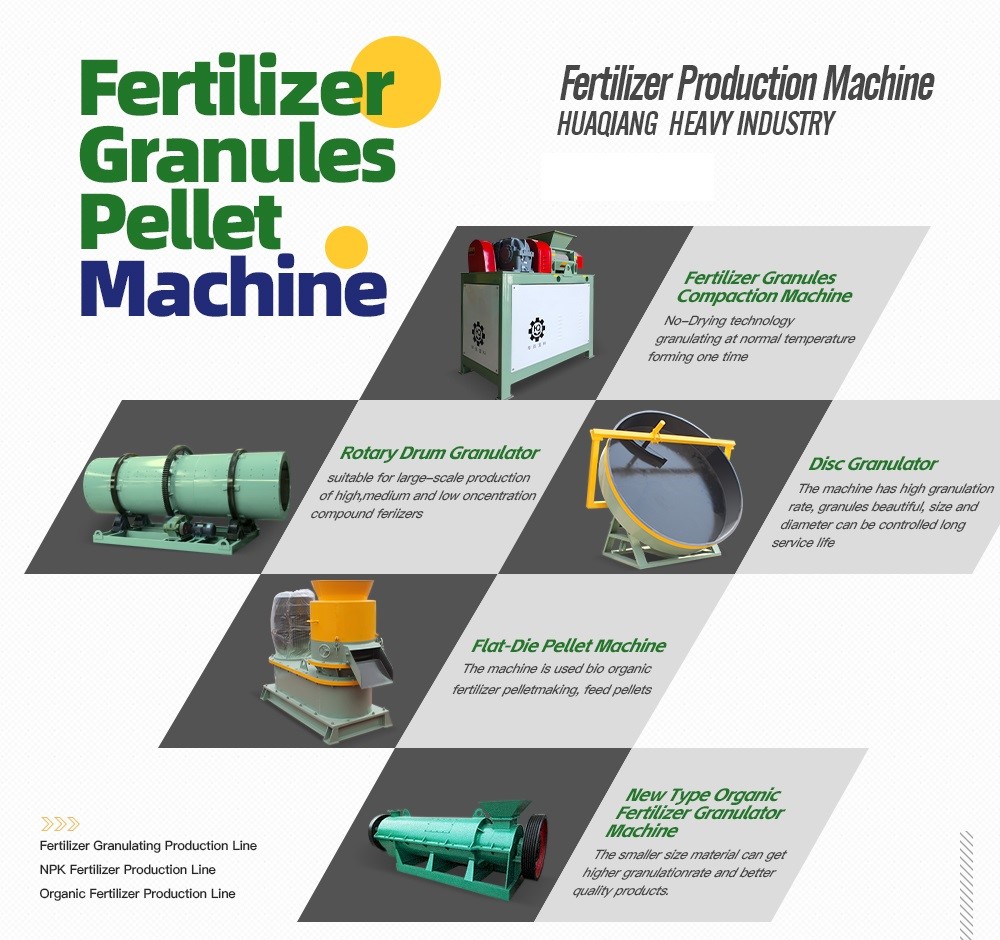
Executing this 10-step framework transforms facility design from speculative planning into engineered profitability. At the core of every successful npk fertilizer production line lies a granulation strategy calibrated to raw material chemistry: a fertilizer compactor or rotary drum granulator anchors the npk fertilizer manufacturing process, while fertilizer granules compaction via dry roller pressing delivers the sub-15 kWh/ton energy threshold that defines 2026 competitiveness. For organic and bio-organic streams, an organic fertilizer granulator series must accommodate low-temperature constraints—whether through gentle organic fertilizer production granulation on a disc system or compact cylindrical output from a flat die pelleting machine suited for pilot-scale or specialized feedstock formulations. The integration of waste heat recovery, closed-loop screening, and automated packaging ensures that every tonne leaving the facility meets the 95% granule uniformity and zero-liquid discharge benchmarks. Ultimately, the plants that thrive are those treating this roadmap not as a checklist but as an interconnected system where site selection, material characterization, and thermal discipline converge into a scalable, regulation-ready operation capable of serving both commodity bulk markets and premium specialty nutrient segments.