
Driven by the “dual carbon” goal, biochar-based organic fertilizers have become a new favorite in green agriculture. Biochar’s unique porous structure can lock in nutrients and improve soil, but how to add it evenly and efficiently to organic fertilizers involves many intricacies. This article analyzes the key control points of biochar addition processes from three dimensions: carbonization preparation, proportioning and mixing, and granulation.
What is Biochar and its Addition Process?
Biochar is a carbon-rich product made from agricultural waste such as straw, rice husks, and bamboo shavings through high-temperature pyrolysis (usually 450℃-500℃) under anaerobic conditions. It possesses a rich porous structure and a large specific surface area, enabling it to adsorb moisture and nutrients from the soil and reduce fertilizer loss.
The biochar addition process refers to the entire process of mixing biochar with fermented and decomposed organic materials in a certain proportion, followed by crushing, granulation, and drying to produce biochar-based organic fertilizer. According to patented technology, a typical biochar-based fertilizer formula is: 10%-15% biochar, 77%-87% organic fertilizer, and 2%-4% binder.
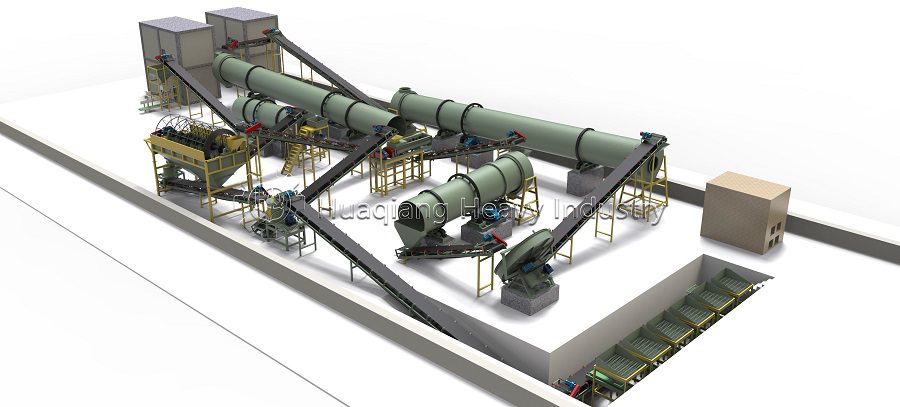
Control Point 1: Carbonization Process Determines Biochar Quality
2.1 Precise Control of Carbonization Temperature and Time
The quality of biochar depends on the carbonization process parameters. Taking tobacco straw as an example, researchers have determined through multiple experiments that continuous burning at 450℃ for approximately 2 hours yields ideal biochar. Too low a temperature leads to insufficient carbonization and poor pore structure development; too high a temperature results in significant nutrient loss and excessive carbon enrichment.
2.2 Raw Material Screening and Pretreatment
The properties of char prepared from different biomass raw materials vary—rice husk char and wheat straw char have a small porous structure, high carbon content, and superior adsorption performance compared to sludge char. Therefore, biochar-based fertilizer production requires selecting appropriate raw materials based on the target function. Pretreatment includes natural air drying (moisture content controlled below 30%) and mechanical crushing.
III. Control Point Two: Precision Control of Mixing Ratio
3.1 Scientific Ratio of Biochar and Organic Fertilizer
Patent literature shows that the addition amount of biochar in char-based fertilizers is typically 10%-30%, depending on the product positioning. Pot test data shows that a 5% addition of rice husk char has the best effect on promoting crop growth, while a 17% addition has the best nitrogen slow-release effect.
Process Recommendations:
Pulverize the biochar through a 1mm sieve to ensure uniform mixing with the organic fertilizer.
Adopt a two-stage mixing strategy: first premix in a small proportion, then scale up to the entire batch.
The moisture content of the mixed material should be controlled at 30%-35% to create conditions for subsequent granulation.
3.2 Compatibility Considerations for Functional Microbial Agents
High-end char-based fertilizer products often add functional microbial agents. Studies have shown that the combination of biochar and specific microbial agents can produce a synergistic effect—the porous structure of biochar provides a habitat for microorganisms, while microbial metabolites can further enhance fertilizer efficiency. The addition process must complete the uniform mixing of the microbial agent and the biochar-fertilizer mixture before granulation.
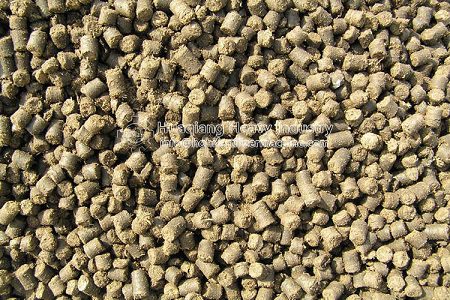
Control Point Three: Equipment Selection for Granulation
4.1 Selection of Granulation Method
The granulation of biochar-based fertilizers needs to balance the brittleness of biochar and the stickiness of organic fertilizers:
Roller Extrusion Granulator:Suitable for dry powders, producing high particle density and strength without additional drying, especially suitable for formulations with high biochar content (>15%).
Drum Granulator:Suitable for large-scale production, producing high particle roundness; steam regulation can further improve the granulation rate.
Disc Granulator:Suitable for small to medium-scale production, with low investment costs and uniform particle size.
4.2 The Influence of Material Fineness on Granulation Rate
Studies show that material fineness directly affects the granulation effect of biochar-based fertilizers. Biochar-based fertilizers prepared with an 80-mesh (0.18mm) sieve achieve an effective particle size granulation rate of up to 56.1%. Therefore, the mixed material should be thoroughly pulverized to ensure the fineness meets the requirements before entering the granulation stage.
Practical Recommendations
Priority for Configuring a Carbon-Based Organic Fertilizer Production Line:
Step 1 (Carbonization): Select a carbonization furnace with a temperature control system to ensure a stable carbonization temperature of 450℃-500℃ for approximately 2 hours.
Step 2 (Mixing): Mix biochar and organic fertilizer at a ratio of 10%-15%, pulverize the material to 80 mesh, and adjust the moisture content to 30%-35%.
Step 3 (Granulation): For formulas with high carbon content (>15%), prioritize using a roller extrusion granulator to avoid high-temperature drying that could damage the carbon structure.
Based on production practice, a carbon-based fertilizer production line configured with a scientific carbonization process, a precise mixing system, and suitable granulation equipment can achieve a 20%-30% reduction in chemical fertilizer use while improving soil structure and increasing soil carbon storage. For companies targeting the green agriculture market, this is an important direction for establishing product differentiation and technological barriers.
Biochar Integration as a Green Agriculture Differentiator
The 20-30% chemical fertilizer reduction and soil carbon sequestration gains from biochar-based fertilizers are not accidental—they are engineered through precise control of every stage in the fertilizer production process. The journey begins with fermentation composting turning technology and fermentation composting technology for organic fertilizer, where aerobic decomposition at 55-70°C transforms raw biomass into stable humus while inactivating pathogens. This matured organic substrate is then blended with 450-500°C pyrolyzed biochar at 10-15% ratio, pulverized to 80-mesh fineness, and conditioned to 30-35% moisture. For granulation, modern fertilizer granulation technology offers multiple pathways: a disc granulator within a disc granulation production line delivers uniform spherical granules ideal for precision agriculture; a rotary drum granulator handles large-scale steam-conditioned production with high roundness; while roller extrusion avoids thermal damage to biochar’s porous structure for high-carbon formulations. The plants that dominate the green agriculture market are those that treat biochar addition not as a simple mixing step but as a structured fertilizer production process—where carbonization quality, mixing uniformity, and granulation method are validated as an integrated system ensuring every granule locks nutrients, harbors beneficial microbes, and builds soil health for sustained yield intensity.