
Bio-organic fertilizer, a combination of organic nutrients and beneficial microorganisms, is gaining popularity in modern agriculture for its ability to improve soil fertility, promote crop growth, and reduce chemical fertilizer use. Unlike traditional organic fertilizer, its production requires a precise, step-by-step process to ensure the survival of beneficial microbes and the full decomposition of organic materials. For medium and small-scale producers, understanding the complete bio-organic fertilizer production line process is essential to create high-quality products. This blog provides a detailed, step-by-step explanation of the process, tailored to practical production needs and compatible with equipment from Huaqiang, a professional organic fertilizer equipment manufacturer.
Step 1: Raw Material Preparation and Preprocessing. The core raw materials for bio-organic fertilizer include organic wastes such as livestock manure (chicken, cow, pig manure), crop straw, edible fungus residue, and municipal organic waste. First, collect and sort raw materials to remove impurities (stones, plastic, metal) that could damage equipment. Then, use a half-wet material crusher to grind raw materials into 2-5mm powder—this increases the contact area between materials and microorganisms, accelerating fermentation. Adjust the moisture content of crushed materials to 50%-60% (ideal for microbial activity) and mix in a high-efficiency mixer to ensure uniformity.
Step 2: Adding Biological Agents and Fermentation. This is the key step that distinguishes bio-organic fertilizer from traditional organic fertilizer. Add professional biological agents (containing beneficial microbes like bacillus and yeast) to the mixed raw materials at a ratio of 0.1%-0.5%. Use a compost turner (chain plate or crawler-type, depending on production scale) to turn the mixture regularly—2-3 times a day in the first 3 days, then once a day afterward. The fermentation process takes 7-15 days, with the temperature rising to 55-65℃ to kill harmful bacteria, insect eggs, and weed seeds. When the temperature drops to room temperature and the material turns dark brown with a earthy smell, fermentation is complete.
Step 3: Secondary Crushing and Mixing. After fermentation, the material may form lumps, so it needs secondary crushing with a crusher to ensure uniform particle size. Then, transfer the material to a mixer and add appropriate auxiliary materials (such as humic acid, phosphate rock powder) to adjust nutrient content, ensuring the final product meets national bio-organic fertilizer standards. This step also helps mix beneficial microbes evenly throughout the material.
Step 4: Granulation. Choose a suitable granulator based on production scale—disc granulator or flat die granulator for small-scale (1-2T/H), rotary drum granulator for medium-scale (3-5T/H). The granulation process shapes the powdery material into uniform spherical or cylindrical particles, which are easy to store, transport, and apply. For bio-organic fertilizer, wet granulation (using new type organic fertilizer granulator) is recommended to protect beneficial microbes from high temperatures.
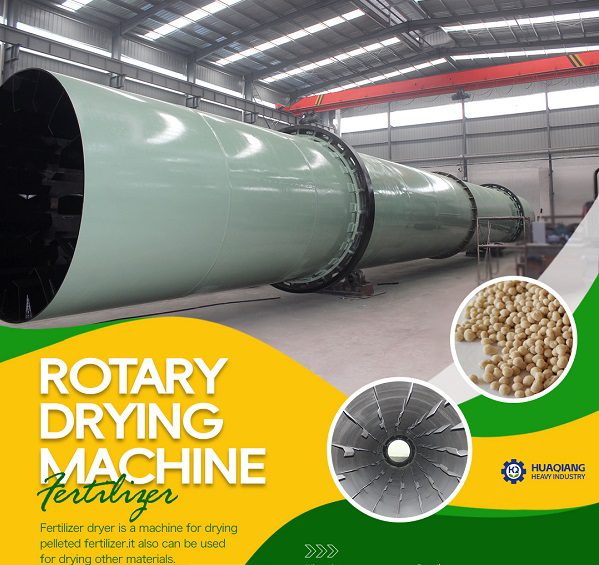
Step 5: Drying, Cooling and Screening. The granulated particles have high moisture content (30%-40%), so they are sent to a rotary dryer to reduce moisture to ≤15%—this prevents caking and microbial death. Then, a cooler lowers the particle temperature to room temperature. A linear or circular screener separates unqualified particles (too large or too small) for reprocessing, ensuring consistent product quality.
Step 6: Packaging and Storage. Finally, use an automatic packing machine to package the qualified particles into 25kg or 50kg bags, labeled with nutrient content, production date, and shelf life. Store the packaged products in a dry, well-ventilated warehouse to avoid moisture and microbial inactivation. Following these steps ensures a smooth, efficient bio-organic fertilizer production process, producing high-quality products that meet market demand. Huaqiang provides a complete set of customized equipment and technical support for the entire production line, helping producers simplify operations and improve efficiency.
The six-step process for bio-organic fertilizer integrates key fertilizer raw material processing machinery and equipment. After fermentation and secondary crushing, the material moves to the granulation stage. However, the post-granulation steps are critical for preserving microbial viability. The moist granules first enter a fertilizer dryer machine to reduce moisture to ≤15% at low temperatures, protecting the beneficial microbes. They are then cooled to room temperature in a fertilizer cooler machine. A rotary drum screening machine classifies the granules, ensuring uniform size. Finally, a fertilizer packing machine seals the product. This integrated finishing system, from drying to packaging, is the hallmark of a professional bio organic fertilizer production line. By carefully controlling temperature and moisture at each stage, the final product retains its high microbial count, providing the soil and crop benefits that define bio-organic fertilizer. The seamless integration of these post-granulation steps is essential for transforming raw organic matter into a stable, high-value commercial product.