
What is Specialized Fertilizer Equipment for Ecological Agriculture?
Specialized fertilizer equipment for ecological agriculture refers to fertilizer production equipment that focuses on the resource utilization of organic waste while considering soil health and environmental carrying capacity. Unlike conventional fertilizer equipment, ecologically oriented equipment emphasizes low-temperature processes, low-energy operation, and the positive regulatory function of products on the soil microecology. Its output includes organic fertilizer, bio-organic fertilizer, and organic-inorganic compound fertilizer, among other inputs that meet green planting standards.
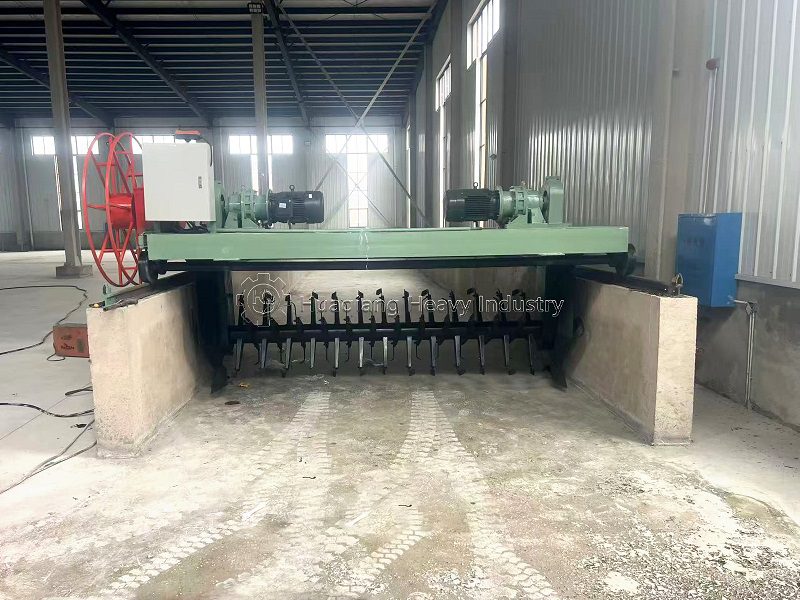
Trench Turning Machine: The Core of Low-Energy Aerobic Fermentation
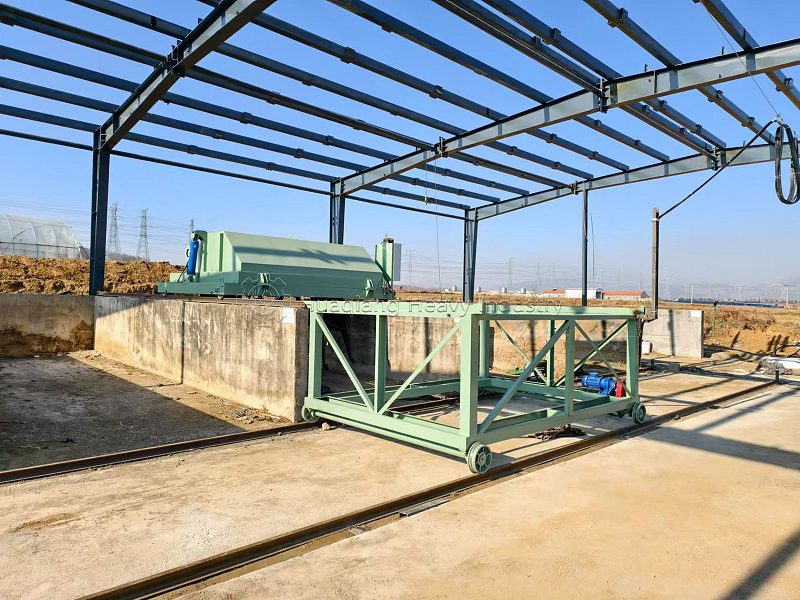
In the ecological agricultural system, aerobic fermentation is the bridge connecting livestock waste and planting needs. The trough turning machine, with its low energy consumption and high controllability, has become the standard configuration for this stage. Compared to the disc turning machine, the energy consumption per ton processed by the trough solution is only 0.8 to 1.2 kWh, approximately 60% to 70% of the former. A forced ventilation system is installed at the bottom of the fermentation tank, automatically adjusting the airflow according to the pile temperature—0.3 to 0.5 cubic meters per minute per cubic meter of material in the initial stage, increasing to 0.8 to 1.2 cubic meters per minute during the high-temperature period. This precise oxygen supply strategy can control ammonia volatilization loss to within 5%, significantly higher than the 15% to 25% nitrogen loss rate of natural composting. The fermentation cycle is 15 to 25 days, and the organic matter content after decomposition can reach over 45%.
Roller Extrusion Granulator: Additive-Free Dry Forming Ecological agriculture has strict restrictions on fertilizer additives. The roller extrusion granulator uses a purely physical forming principle, requiring no chemical binders or additional moisture, perfectly aligning with the ecological principle of “low input, low output.” Raw materials are compacted into granules under a linear pressure of 150 to 250 MPa, with a granule strength of 15 to 25 Newtons and a pulverization rate of less than 3%. More importantly, the extrusion process does not generate high temperatures—the particle temperature rises only 15 to 20 degrees Celsius above the ambient temperature, avoiding the inactivation of heat-sensitive microbial agents (such as Bacillus subtilis and phosphate-solubilizing bacteria). For bio-organic fertilizer products that need to simultaneously provide organic matter and functional bacteria, the survival rate of live bacteria after extrusion granulation can reach over 85%, while the survival rate of steam drum granulation is usually below 50%.
III. Low-Temperature Belt Dryer: Gentle Drying to Retain Nutrients Ecological fertilizers place new demands on the drying process: it must reduce moisture content to facilitate storage and transportation, while avoiding the destruction of organic matter and microbial activity due to high temperatures. The low-temperature belt dryer adopts a layered circulating hot air design. The material moves slowly on multiple layers of stainless steel mesh belts, with the hot air temperature controlled between 60 and 80 degrees Celsius, and the discharge temperature not exceeding 45 degrees Celsius. Compared to traditional rotary dryers (inlet temperature 300-400 degrees Celsius), the low-temperature belt dryer reduces organic matter loss from 12%-18% to 3%-5%, and increases microbial survival rate from less than 40% to over 70%. Although its energy consumption is 15%-20% higher than high-temperature drying, the resulting highly active organic fertilizer commands a 30%-50% premium, making it economically viable. A biomass hot air furnace or a solar-assisted system can be used as the heat source to further reduce the carbon footprint.
Comparison of Benefits between Ecological and Traditional Equipment: Based on a 10,000-ton-per-year organic fertilizer production line, the initial investment for an ecological equipment combination (trough turning + roller extrusion + low-temperature belt drying) is approximately US$120,000 to US$180,000, about 15%-25% higher than the traditional equipment combination (disc turning + drum granulation + rotary drying). However, in terms of operating costs, the eco-solution can save approximately $15,000 to $25,000 annually in chemical binder procurement costs (based on a 3% addition rate and $200 per ton), and approximately $8,000 to $12,000 in nitrogen loss costs. More importantly, the fertilizer produced by the eco-solution is eligible for organic certification, and the premium at the end-market price can contribute an additional $30,000 to $60,000 in annual profit. The payback period is typically 2.5 to 4 years, roughly the same as conventional solutions, but the long-term returns in soil health and brand value far exceed those of traditional pathways.
Engineering Soil Health Through Low-Impact Processing
Specialized fertilizer equipment for ecological agriculture represents a paradigm shift from conventional high-temperature, additive-intensive manufacturing to processes that preserve biological activity and minimize environmental footprint. At the fermentation stage, advanced fermentation composting turning technology—whether deployed through a precision trough-type compost turner with forced ventilation and ammonia control, or a flexible windrow composting machine for open-field operations—ensures that livestock waste decomposes aerobically with nitrogen losses below 5%. For nitrogen-dense poultry streams, a dedicated chicken manure fertilizer machine workflow optimizes thermophilic phases, while a versatile animal manure compost turner adapts to mixed dairy and swine substrates across varying scales. Once stabilized, the compost enters a low-impact fertilizer production process featuring roller extrusion granulation and low-temperature belt drying, which together retain >85% microbial viability and reduce organic matter loss to under 5%. Although the initial capital outlay for ecological equipment exceeds traditional alternatives by 15%–25%, the elimination of chemical binders, reduced nitrogen volatilization, and organic certification premiums generate annual savings and revenue uplift that compress payback periods to 2.5–4 years. Ultimately, this equipment architecture does not merely produce fertilizer—it cultivates soil microbiome resilience, closes agricultural waste loops, and delivers measurable long-term value that transcends short-term yield metrics.
We provide a complete set of eco-fertilizer equipment, including trough-type compost turners, roller extrusion granulators, and low-temperature belt dryers. We can also customize low-energy fermentation solutions and microbial activity retention processes free of charge according to your organic certification goals and soil remediation needs, helping you produce high-premium eco-fertilizer products that meet green planting standards.