
What are Liquid and Solid Fertilizer Production Lines?
A liquid fertilizer production line is a system that uses water as a solvent to dissolve or suspend nitrogen, phosphorus, potassium, and trace elements in a liquid, producing clear or suspended liquid fertilizers through processes such as stirring, reaction, filtration, and filling. Solid fertilizer production lines, on the other hand, produce powdered or granular fertilizers as the final product, encompassing processes such as crushing, mixing, granulation, drying, screening, and packaging. The two differ significantly in product form, investment intensity, and application scenarios.
Comparison of Process Complexity
A solid fertilizer production line typically requires 7 to 9 main processes: raw material crushing, batching and mixing, granulation, drying, cooling, screening, return material crushing, coating (optional), and packaging. Granulation and drying are the core processes, involving heavy equipment such as steam boilers, rotary drying drums, and cooling drums. The entire line typically consists of approximately 15 to 25 pieces of equipment, with a process length usually exceeding 80 meters.
Liquid fertilizer production lines are streamlined to 4-5 processes: weighing and feeding, dissolving/reaction, filtration, homogenization, and filling. The core equipment includes a reaction tank (with agitator and heating jacket), a filter, a homogenizer, and a filling machine. The entire line consists of approximately 8-12 pieces of equipment, and the process length can be reduced to 20-30 meters. However, liquid lines require a pure water preparation system (reverse osmosis or ion exchange), a step absent in solid fertilizer lines.
Differences in Investment and Operating Costs Based on an annual capacity of 10,000 tons, the equipment investment range for a solid granular fertilizer production line (approximately 5 tons per hour) is US$100,000 to US$180,000. The main costs are concentrated in the granulation unit (drum granulator or extrusion granulator) and the drying and cooling unit (rotary drum and hot air furnace), which together account for 50% to 60% of the total investment.
The equipment investment for a liquid fertilizer production line with the same capacity (based on clear liquid type) is US$40,000 to US$80,000, approximately 40% to 60% of that for a solid fertilizer line. However, the packaging cost for liquid fertilizer lines is significantly higher—each ton of liquid fertilizer requires approximately 40 to 60 20-liter plastic drums or 1000-liter bulk bags, with packaging material costs ranging from $80 to $150 per ton, while the cost of woven bag packaging for solid fertilizer is only $15 to $25 per ton. Furthermore, the transportation cost of liquid fertilizer is 2 to 3 times that of solid fertilizer (containing approximately 50% to 70% water by weight).
III. Formulation Flexibility and Production Switching Liquid fertilizer production lines have a natural advantage in formulation switching. The reaction tank can be cleaned before the next formulation is introduced, with cleaning taking 30 to 60 minutes, suitable for small-batch, multi-variety production—a 20-ton-per-day liquid line can manage 10 to 15 different formulations simultaneously. Formulation switching for solid fertilizer lines is much more complex: the granulation process requires 2 to 4 hours of stable operation to reach a steady state, and the silos must be emptied and the mixer and granulator cleaned before switching formulations, taking 2 to 4 hours. Therefore, solid fertilizer lines are more suitable for continuous production models with fewer varieties and larger quantities.
Applicable Crops and Application Scenarios
Solid fertilizers (especially granular fertilizers) are suitable for base fertilizer and top dressing of field crops. They can be applied mechanically or by sowing seeds with fertilizer, with large single application volumes and low labor costs. Their release rate in the soil is relatively slow, and their fertilizer effect lasts a long time.
Liquid fertilizers are more suitable for drip irrigation and sprinkler irrigation systems for cash crops (vegetables, fruits, and flowers), as well as foliar spraying. The nutrient utilization rate of liquid fertilizers can reach 80% to 90%, far exceeding the 30% to 50% of solid fertilizers, but they require drip irrigation facilities and timed application, resulting in higher frequency of field operations.
Comprehensive Selection Criteria
Liquid fertilizer production lines are recommended to be prioritized in three scenarios:
1) Intensive planting areas where drip irrigation facilities are already widespread;
2) High-value-added products with micronutrients or functional fertilizers as their core selling point;
3) Startup projects with limited initial capital but a desire for rapid production.
Solid fertilizer production lines are recommended as a priority in three scenarios: first, the target market primarily needs for field crops and base fertilizers; second, the transportation radius exceeds 200 kilometers and logistics costs are sensitive; and third, a longer shelf life is desired (liquid fertilizers typically have a shelf life of 6 to 12 months, while solid granular fertilizers can last 2 to 3 years).
The two are not mutually exclusive—some large fertilizer companies simultaneously operate both types of production lines: liquid lines for customized functional products and solid lines for conventional base fertilizers, sharing raw material and finished product warehouses to maximize complementary production capacity and market coverage.
Strategic Coexistence of Liquid and Solid Fertilizer Platforms
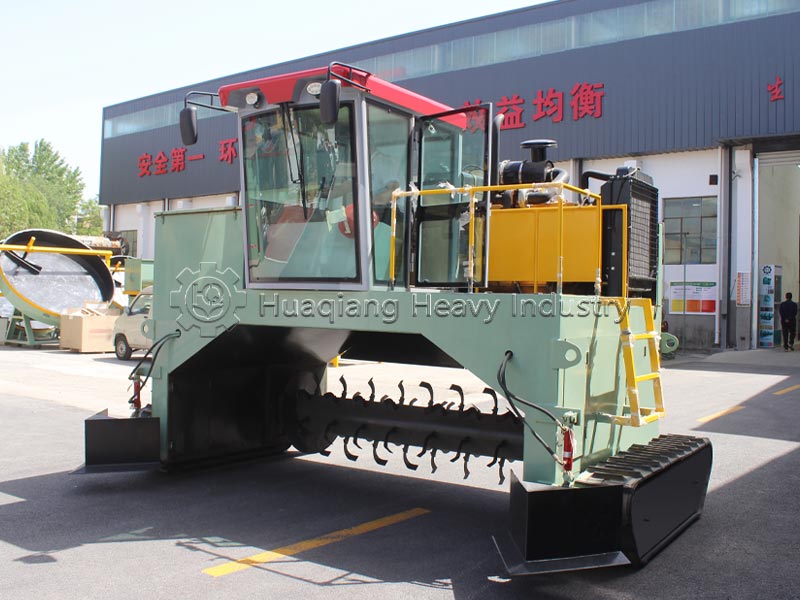
The choice between liquid and solid fertilizer production is not a binary decision but a strategic portfolio allocation calibrated to market infrastructure, crop value, and capital constraints. A solid fertilizer equipment train—encompassing a fertilizer crusher and mixer for feedstock preparation, an organic fertilizer disc granulator or rotary drum for agglomeration, a fertilizer dryer and cooler for thermal stabilization, fertilizer screening equipment for size classification, and an automatic fertilizer packing machine for bagging—delivers granular products with 2–3 year shelf life and low logistics costs, making it indispensable for field crop base fertilizers and long-radius distribution. While industrial fertilizer machine price for such lines ranges from $100,000 to $180,000, the per-ton packaging cost is only $15–$25. Conversely, liquid lines excel in drip-irrigated cash crop zones with 80–90% nutrient utilization rates and rapid formulation switching. For organic solid operations, a windrow composting machine upstream generates the stabilized compost that feeds into the same crushing-mixing-granulation sequence. Ultimately, leading producers deploy both platforms: solid lines for commodity scale and liquid lines for premium customization, sharing raw material warehouses and quality labs to maximize asset utilization and market coverage across the full agricultural value chain.