
What are the Chemical and Physical Methods of NPK Production?
Chemical NPK production refers to the process of converting basic raw materials into compound fertilizer through chemical reactions. Typical processes include the amino acid method, the nitrate-phosphate method, and the melt granulation method. Physical NPK production, on the other hand, refers to the process of combining different raw materials into granules solely through physical mixing and granulation, mainly including blending and extrusion granulation. The fundamental difference between the two is that the chemical method generates new compounds (such as ammonium phosphate and nitrate), while the chemical form of the raw materials remains unchanged in the physical method.
I. Reaction Mechanism and Process Essence In the chemical method, chemical reactions occur between the raw materials. Taking the amino acid method as an example: phosphoric acid and ammonia react in a tubular reactor to produce ammonium phosphate, releasing a large amount of heat of reaction. Simultaneously, urea and potassium salts co-melt with it to form a liquid phase, which then encapsulates the solid particles to form spheres. This process generates entirely new chemical bonds, and the forms of nitrogen and phosphorus in the product change. The physical method relies entirely on mechanical force—the blending method directly mixes pre-granulated large-particle urea, diammonium phosphate, and potassium chloride according to the formula ratio; the extrusion method uses high pressure to plastically deform and bind powdered materials, and the chemical form of the raw materials is exactly the same as before mixing.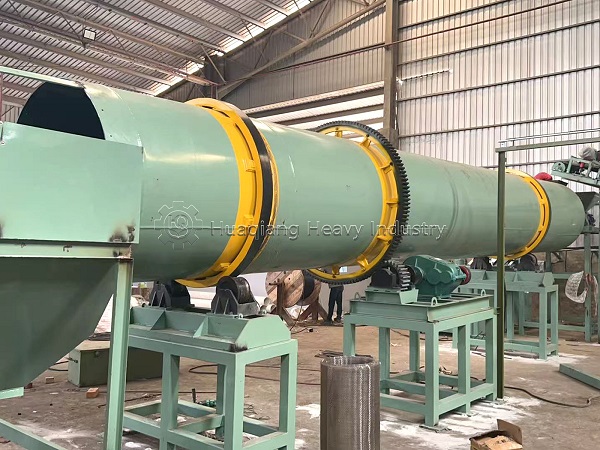
II. Particle Morphology and Product Characteristics: Particles produced by the chemical method have a homogeneous structure—the nutrient distribution within each particle is completely uniform, resulting in high particle strength (compressive strength 25 to 35 Newtons) and a smooth, rounded surface. Due to the formation of low-melting-point eutectics during the reaction, the particles have high density, low hygroscopicity, and good storage and transportation stability. In the physical method, blended fertilizer particles are composed of base fertilizer particles of different colors, resulting in microscopic inhomogeneity in nutrient distribution; extrusion particles are irregular polyhedrals with a strength of 20 to 30 Newtons, but the cross-section of the particles shows physical interlocking rather than chemical fusion of different raw materials.
III. Nutrient Content and Formula Flexibility: The chemical method has a high nutrient concentration (40% to 55% total nutrients), but formula adjustments require changes to reaction conditions or process routes, resulting in lower flexibility. For example, the raw material ratios and reaction temperatures for producing 15-15-15 and 20-20-20 formulations using the amino acid method differ significantly. Switching formulations requires shutdown and cleaning, taking 4 to 8 hours. The physical method offers extremely high formulation flexibility—the blending method allows for formulation switching within minutes, requiring only changes to the ingredient parameters; the extrusion method also allows for formulation switching in less than one hour. This makes the physical method particularly suitable for small-batch, multi-variety production.
IV. Raw Material Requirements and Scope of Application The chemical method has relatively relaxed requirements for raw material purity, allowing the use of low-grade phosphate rock (phosphorus pentoxide content 25% to 30%), with impurities removed through the reaction process. However, the chemical method is not suitable for raw materials containing organic matter (organic matter carbonizes during high-temperature reactions). The physical method requires high raw material purity (especially for the extrusion method, moisture content below 12%, and a fineness of 95% passing through 80 mesh), and the particle size and specific gravity of each raw material must be similar to avoid stratification after mixing. The physical method is particularly suitable for producing organic-inorganic compound fertilizers, humic acid compound fertilizers, and other products containing functional organic components.
V. Investment Scale and Energy Consumption Level Based on a production capacity of 10 tons per hour, the equipment investment for a chemical method (amino acid drum) production line is approximately US$450,000 to US$700,000, requiring a reactor, boiler, drying drum, cooling drum, and exhaust gas treatment system; the energy cost per ton of product is approximately US$12 to US$22 (including steam and drying fuel). In the physical method, the blending line has the lowest investment (US$150,000 to US$250,000), with an energy cost of only US$1 to US$3 per ton (electricity only for lifting and blending); the extrusion line requires an investment of approximately US$220,000 to US$350,000, with an energy cost of US$3 to US$6 per ton. The environmental protection investment (desulfurization, dust removal, wastewater treatment) for the chemical method is also significantly higher than that for the physical method.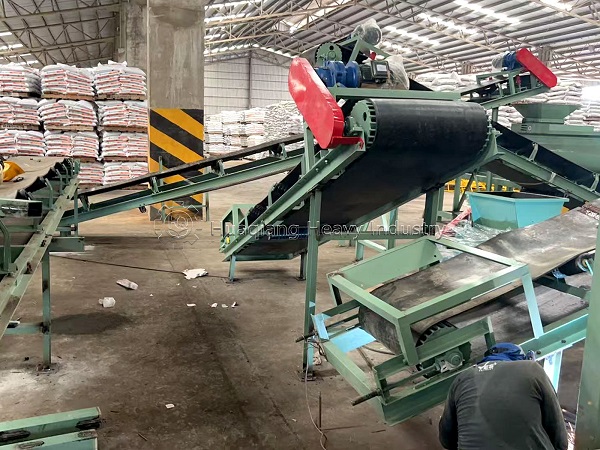
VI. Product Quality and Fertilizer Efficiency Characteristics Chemical method products have high nutrient uniformity and high particle hardness, making them suitable for mechanized application and long-distance transportation. Because some phosphorus is converted to citrate-soluble phosphorus (soluble in citric acid) during the reaction process, the effective phosphorus release period in acidic soils is longer. Physically processed fertilizers (especially blended fertilizers) may exhibit asynchronous nutrient release due to varying dissolution rates of their components after application to the soil. Extruded granules, due to their high density, tend to disintegrate more slowly in arid soils. However, physically processed products retain more intact bioactive components (such as humic acid and microbial agents), making organic certification easier to obtain.
Raw material type determines the processing route—chemical methods are chosen for products primarily composed of inorganic minerals and those seeking high concentrations; physical methods are chosen for those containing organic matter or functional components. Production mode determines flexibility—chemical methods are preferred for long-term, large-scale production with a single formulation, while physical methods are preferred for small-scale, multi-formulation production. Investment budget and environmental pressure—chemical methods have higher barriers to entry and stricter environmental impact assessments, while physical methods are faster to implement and easier to comply with. Some large enterprises adopt a dual-track strategy of “chemical-based base fertilizer + physical-based functional fertilizer,” balancing scale and flexibility.
The strategic choice between chemical and physical routes ultimately shapes the architecture of the entire NPK fertilizer production line and determines long-term operational competitiveness. Chemical processes leveraging a rotary drum granulator excel in producing high-density, uniform spherical granules with superior storage stability, while physical methods employing a double roller extrusion granulator or disc granulator machine offer unmatched formula agility for specialty and organic-inorganic blends. For operations prioritizing fertilizer granules compaction without thermal energy input, the fertilizer compactor delivers dense, irregular pellets ideal for regional distribution with minimal drying overhead. Regardless of the granulation modality selected, modern NPK fertilizer production technology demands seamless integration across preprocessing, reaction or mixing, granulation, and an automatic fertilizer packaging machine for traceable, retail-ready output. As a versatile fertilizer granulator machine, each system must be configurable to accommodate evolving raw material portfolios and regulatory standards. Moving forward, hybrid facilities that combine chemical base production with physical functional blending will dominate the market, delivering both economies of scale and the responsiveness required for precision agriculture and sustainable nutrient management worldwide.