
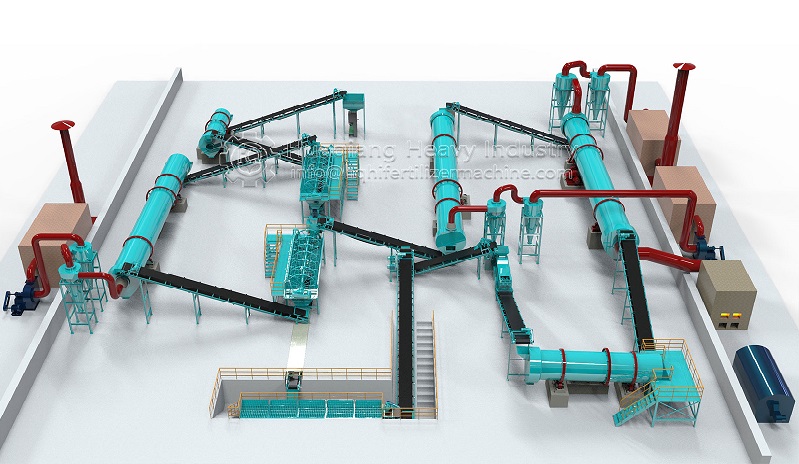
NPK fertilizer production lines typically have an industrial capacity range of 1-20 t/h. Core processes include automatic batching, crushing, mixing, granulation, drying and cooling, screening, and packaging. Raw materials can cover MOP, ammonium sulfate, DAP, urea, bentonite, and clay. Disc granulators can achieve a granulation rate of over 80%, suitable for stable and continuous production in small to medium-sized compound fertilizer projects.
I. What equipment constitutes a 1-20 t/h NPK fertilizer production line?
A complete NPK compound fertilizer production line can be divided into six functional sections according to the material flow direction.
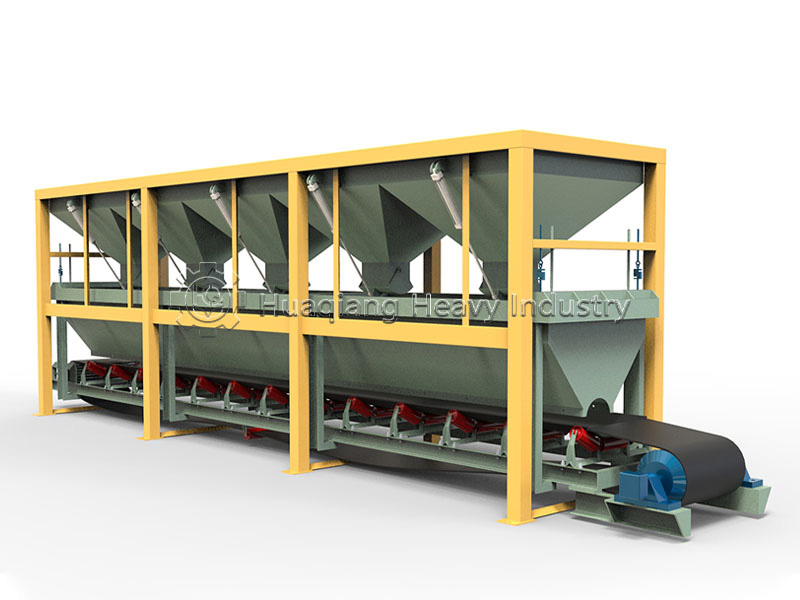
The first section is batching, with the core equipment being an automatic batching scale or PLC metering system to accurately proportion nitrogen, phosphorus, and potassium raw materials according to the formula. The second section is crushing, using a chain crusher or cage crusher to process agglomerated raw materials to a mixable particle size. The third section is mixing, with a twin-shaft gravity-free mixer achieving uniform mixing of materials within 3 minutes. The fourth stage is granulation, where a disc granulator or rotary drum granulator forms the powder into pellets, achieving a pelletizing rate of over 80%. The fifth stage is drying and cooling, where a rotary dryer and cooler work together to control the moisture content and temperature of the pellets. The sixth stage is screening and packaging, where a drum screen grades the qualified pellets, and an automatic packaging scale completes the quantitative packaging.
This configuration logic is scalable within the 1-20 t/h range: front-end batching and back-end packaging are linearly scaled up according to capacity, while the granulation stage is selected between disc and rotary drum granulators based on the characteristics of the raw materials.
II. Why are disc granulators frequently used in 1-20 t/h NPK lines?
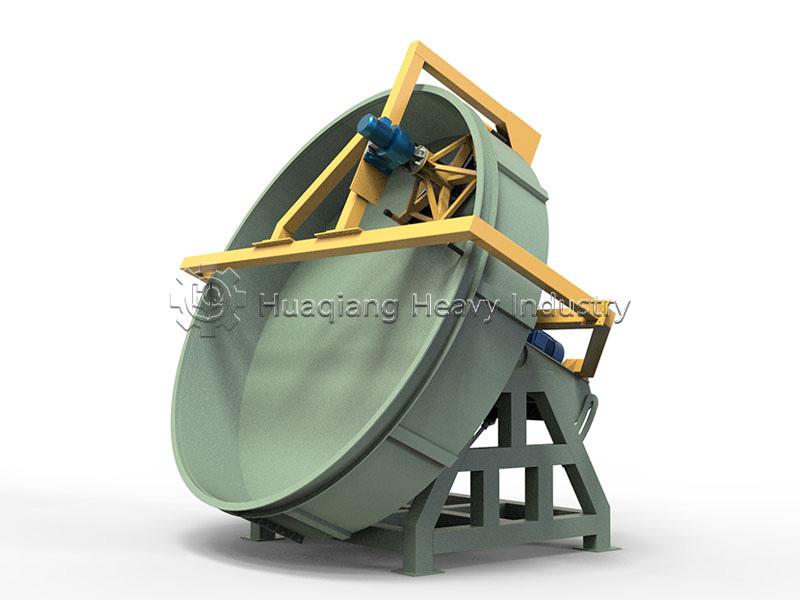
The disc granulator is an inclined disc granulation device. The reducer and motor use flexible belt drive, resulting in smooth start-up and minimal impact on the equipment. Its pelletizing rate can typically reach 80%-90%, with the decisive parameter being the disc inclination angle, which is conventionally adjustable from 35° to 55°. Under conditions of a rotation speed of 20-25 r/min and an inclination angle of 40°-45°, the pelletizing rate can be stably maintained above 85%, with a pellet sphericity of no less than 0.8.
From a cost perspective, the investment per ton of disc granulator can be as low as 8,000 RMB, with energy consumption of approximately 1.2-1.8 kW·h per ton, demonstrating a significant input-output advantage in small- to medium-scale NPK and organic fertilizer projects. This is why 1-20 t/h NPK fertilizer production lines generally use it as the default option for the pelletizing section.
III. Raw Material Compatibility: Which materials can enter the same NPK line?
Raw material compatibility is a key decision variable in the selection phase of an NPK fertilizer production line. Typical raw materials that can be processed include: potassium sources are mainly MOP (potassium chloride); nitrogen sources include urea and ammonium sulfate; phosphorus sources are represented by DAP (diammonium phosphate); and bentonite and clay are commonly used for filling and binding. After being metered according to the formula proportions in the batching section, these raw materials enter the crushing, mixing, and granulation process. Because disc granulation has a certain tolerance for the moisture and viscosity of raw materials, no modification to the main structure is required when changing formulas, making it suitable for multi-variety, small-to-medium batch compound fertilizer production.
IV. Frequently Asked Questions Regarding NPK Fertilizer Production Line Selection
Q1: What are the main differences between 1 t/h and 20 t/h NPK lines?
The main differences lie in the batching scale’s range, the mixer’s volume, the granulator’s disc or cylinder diameter, and the processing air volume of the dryer/cooler. The 1 t/h level typically uses single-disc disc granulation, while the 20 t/h level requires rotary drum granulation or a dual-disc parallel scheme. The downstream screening and packaging also need to be scaled up simultaneously.
Q2: How to choose between disc granulators and drum granulators on an NPK production line?
Disc granulators have lower investment, lower energy consumption, and better operational flexibility, making them suitable for the 1-10 t/h range. Drum granulators have higher single-machine capacity and higher particle strength, making them suitable for 10-20 t/h scenarios with high particle roundness requirements. Both can be used in series on an NPK fertilizer production line, with disc granulators pre-forming at the front and drum granulators shaping at the rear.
Q3: What are the requirements for raw material moisture content on an NPK line?
Disc granulation is suitable for powders with moderate to low moisture content. If the raw material moisture content is high, a drying or pre-mixing step needs to be added before batching. Roller granulation has a higher tolerance for moisture content, but the particle shape is irregular columnar or flattened round, requiring selection based on the finished product appearance standards.
In summary, configuring a 1-20 t/h NPK fertilizer production line hinges on matching equipment specifications to capacity and selecting the granulator type according to raw material characteristics. With its high pelletizing rate, low investment, and operational flexibility, the disc pelletizer is a practical choice for small and medium-sized NPK projects.