
In organic fertilizer production lines, a double-screw compost turner is often selected as a standalone piece of fermentation equipment, seemingly unrelated to the downstream fertilizer roller press machine or the roller press granulation production line. In practice, however, the uniformity of the turning process propagates along the material flow, ultimately manifesting as tangible energy consumption and material loss during the extrusion granulation stage.
Uneven turning essentially results in an uneven distribution of moisture. The function of a double-screw compost turner is to bring material from the bottom of the pile to the surface, allowing oxygen to penetrate the core while facilitating the release of moisture and heat. If the turning depth is insufficient, the travel speed is too high, or the screw blades are worn, moisture content across different parts of the pile will begin to diverge: material near the surface becomes too dry, while material in the core or along the edges remains too wet. This disparity does not disappear after fermentation; instead, the material enters the next stage with an “acceptable average moisture content” but significant localized deviations.
Uneven moisture first drives up energy consumption during the drying process. Fermented material typically requires crushing and drying before it can undergo extrusion granulation. If the moisture content fluctuates, the dryer must increase the hot-air temperature or extend the residence time to ensure that the wettest portions reach the target moisture level. Consequently, the driest material becomes over-dried—generating excessive fine dust—while the wettest material remains insufficiently dried, leading to roller sticking and slippage once it enters the extrusion granulator. In fertilizer production, energy consumption is often dictated not by the average moisture content, but by the wettest portions of the material.
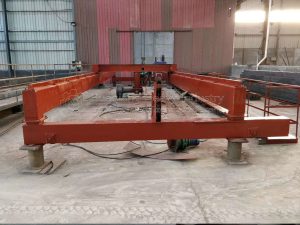
When the material reaches the extrusion granulation stage, moisture fluctuations directly impact the granulation rate. Fertilizer roller press machines require the incoming material to have a stable moisture content, typically between 8% and 15%. When the moisture content is too high, free water is squeezed out under high pressure, causing the material to adhere to the roller surfaces—a phenomenon known as “sticking”—which results in loose, poorly formed granules. Conversely, when the moisture content is too low, fine powder accumulates on the roller surfaces, hindering the “nip” (material intake) process and leading to insufficient granule strength. In either scenario, the granulation yield drops, and the volume of recirculated material (fines or undersized/oversized particles) surges. This recirculation consumes the production capacity of the roller press granulation line; the extruder, crusher, and screening equipment end up running idly while processing substandard material, driving up both electricity consumption per ton of product and the wear on roller shells.
The true value of an equipment manufacturer lies in their ability to integrate the composting (turning) and granulation processes into a cohesive system. An experienced manufacturer of fertilizer machinery will first assess the uniformity of the composting process and the expected range of moisture content fluctuations in the material, using this data to define the optimal operating parameters for drying and extrusion granulation. A fertilizer production line is not merely a collection of individual machines; it is a system for managing the state of the material from the composting stage through to granulation. Effective, uniform composting is essential for stable drying and granulation. Cutting corners on the composting equipment will ultimately prove costly, as the downstream processes will incur higher energy consumption, increased material recirculation, and accelerated wear on consumable parts.
When selecting a production line, it is worth asking: can the composting equipment—in terms of its working depth and uniformity—reliably supply the downstream extrusion granulation line with material that meets the necessary specifications?