
On March 17, 2026, the complete set of roller granulation production line equipment for East Malaysia was officially shipped to the project site in Sabah after completing factory quality inspection. This is the first roller extrusion granulation production line shipped by our company to East Malaysia in 2026, which will be used for the localized granulation production of compound fertilizer for oil palm plantations.
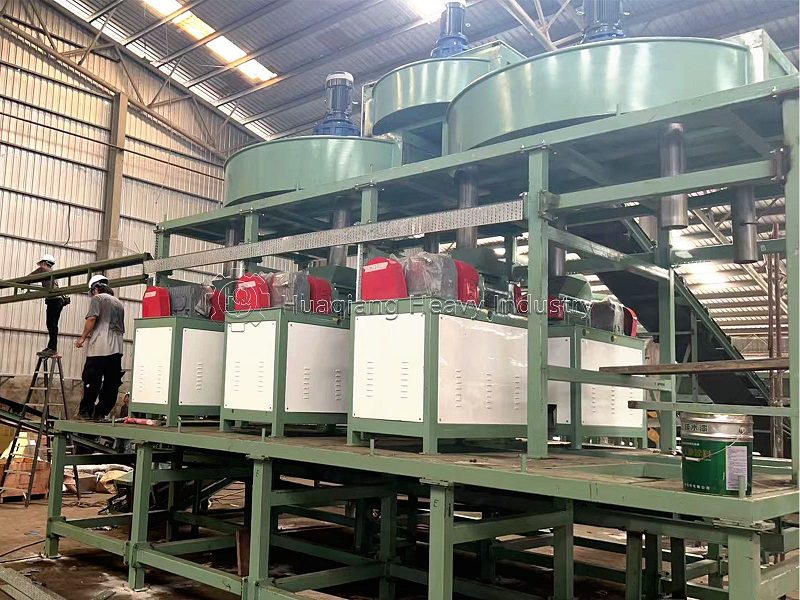
Project Background: East Malaysian Soil Characteristics Drive Granulation Demand
Malaysia’s annual fertilizer demand exceeds 4 million tons, with insufficient domestic production capacity, relying on imports for over 70%. Sarawak and Sabah in East Malaysia primarily cultivate oil palm and pepper. The local soils are mostly acidic peat soil and sandy soil, with poor fertilizer retention and severe magnesium loss, requiring priority to be given to magnesium-containing compound fertilizers during procurement. This East Malaysian customer owns a large area of oil palm plantations and previously used powdered fertilizers, which had low added value and were inconvenient to transport. To enhance product competitiveness, the client decided to introduce a roller extrusion granulation production line to convert organic raw materials such as oil palm residue and livestock manure into high-hardness granular fertilizer.
Equipment Configuration: Dry Granulation Suitable for Tropical Climate
This production line is centered around a roller extrusion granulator, complemented by an automatic batching system, a horizontal ribbon mixer, a vertical disc mixer, a drum screen, a cooler, and an automatic packaging machine. The roller extrusion granulator employs a room-temperature dry extrusion process, eliminating the need for drying or adding binders. Powdered materials are directly pressed into shape by two opposing high-pressure rollers. For Malaysia’s hot and humid climate, the equipment features moisture-proof and heat-dissipating treatments on key components such as the electrical control cabinet and motor bearings, effectively preventing material sticking to the rollers and downtime caused by equipment corrosion. The finished granules have high hardness and are resistant to pulverization, facilitating long-distance transportation and storage. The particle size can be adjusted within the range of 2–6 mm, with a granulation rate exceeding 85%.
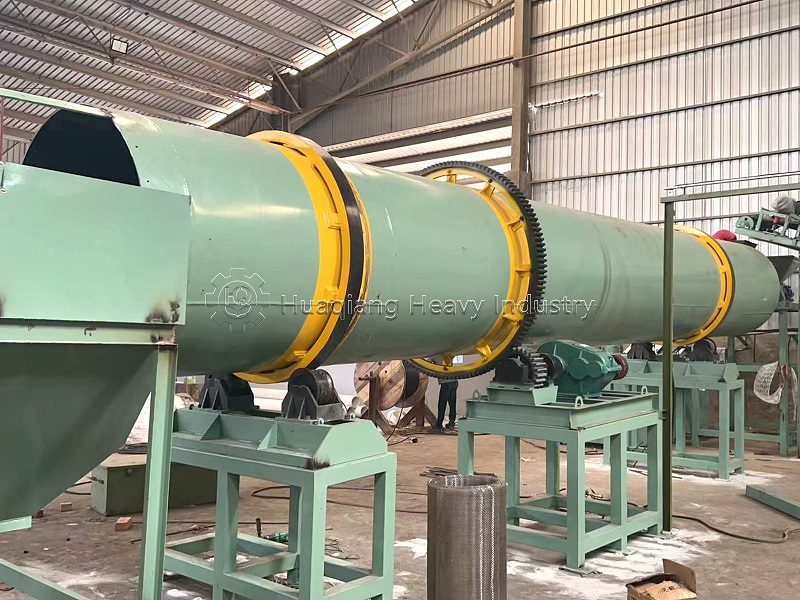
Installation Progress and Project Significance
At the installation site, the Chinese technical team has completed equipment placement, pipeline connection, and no-load commissioning, and is currently conducting load testing. After the project is put into operation, it can convert local organic waste such as palm oil residue and livestock manure in East Malaysia into commercial-grade granular compound fertilizer, meeting the fertilization needs of palm oil plantations in Sabah and Sarawak. For customers, this not only solves the waste disposal problem but also creates a sustainable source of income. For East Malaysia, the implementation of this production line will help reduce reliance on fertilizer imports and promote the transformation of local agriculture towards a green and low-carbon model.
The delivery of the East Malaysia double-roller granulation production line on March 17, 2026, marks a further establishment of Chinese double-roller extrusion granulation equipment in the Southeast Asian tropical agricultural market. As the equipment enters the commissioning phase, this production line will provide stable support for the localization of fertilizer supply for the East Malaysian palm oil industry.