
Fertilizer caking is a common headache for distributors and farmers. In the same warehouse, some fertilizers remain loose after three months, while others harden into solid lumps in less than a month. The issue lies not in the packaging, but in the inherent hygroscopicity of the granules—a property determined by the granulation method itself.
Blended Fertilizer (Bulk Blending): Raw material hygroscopicity is fully retained. The NPK blending process is purely physical; it involves no granulation, heating, or alteration of granule morphology. The moisture-absorbing characteristics of raw materials—such as urea, ammonium phosphate, and potassium chloride—are carried over intact into the finished product. Urea is the most hygroscopic, with a critical relative humidity of approximately 70%; in humid environments, it absorbs moisture and dissolves at the surface, then recrystallizes upon drying, creating “bridges” that cause caking. Consequently, blended fertilizers have the strictest requirements for packaging and storage: they must use composite bags with moisture-proof liners, and warehouse relative humidity must be kept below 60%.
Roller Press Granulation: High density results in low hygroscopicity. The roller press granulator compresses powdered material into dense sheets under high pressure, which are then crushed into granules. This forming method minimizes internal porosity, making it difficult for moisture to penetrate quickly. The granules feature smooth surfaces and dense structures, resulting in a significantly slower moisture absorption rate compared to powdered or disc-granulated products of the same formula. However, this dense structure presents another issue: a slower dissolution rate. While ideal as a basal fertilizer, it requires earlier application if used as a top-dressing. Stable production line operation hinges on controlling the roll gap and pressure: an excessive roll gap results in loose material sheets and increased hygroscopicity, while excessive pressure produces granules that are too hard and difficult to disintegrate.
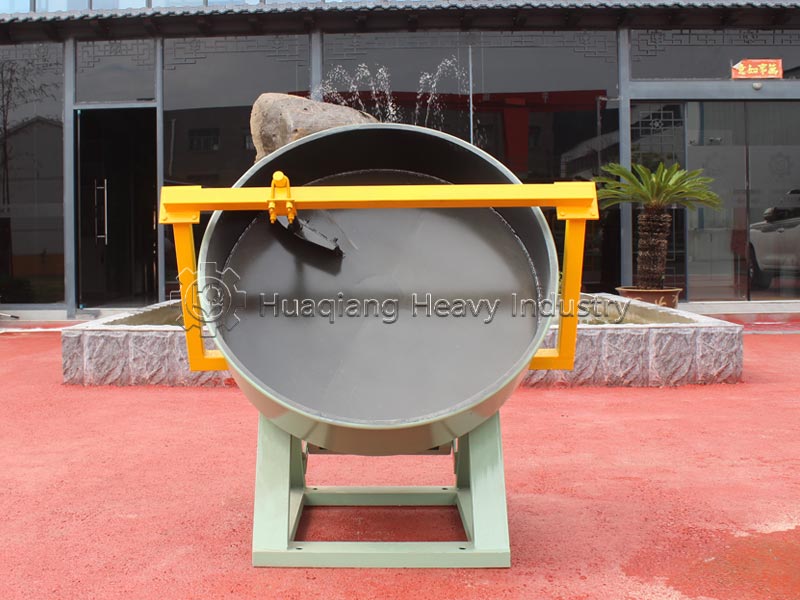
Bio-organic Fertilizer Disc Granulation: Porous structures present a dual challenge. Bio-organic fertilizer granulators utilizing the wet agglomeration method form granules by rolling material on an inclined disc, resulting in a structure rich in internal micropores. While these micropores facilitate rapid water penetration and granule disintegration—benefiting crop nutrient absorption—they also make the product prone to caking during storage by absorbing atmospheric moisture, a tendency compounded by the inherent hygroscopicity of organic matter. Consequently, post-granulation processing requires low-temperature drying to reduce moisture content to below 15%; drying temperatures must not exceed 60°C, or the functional microorganisms will suffer significant mortality. Packaging materials must strike a balance between breathability and moisture resistance: complete sealing leads to microbial oxygen deprivation, whereas excessive breathability allows moisture ingress.
A production line’s resistance to caking depends on three control points: internal granule porosity, finished product moisture content, and packaging moisture-barrier properties. Roller compaction reduces porosity through high pressure; disc granulation controls moisture via low-temperature drying; and blended fertilizers rely on moisture-resistant packaging to counteract the raw materials’ natural hygroscopicity. No single granulation method can simultaneously achieve rapid solubility, moisture resistance, and high live-microbe viability; the choice depends on product positioning and storage conditions.