
A common mistake in fertilizer line design is selecting the granulator first and the batching system second. The correct logic is the reverse: first determine the product form and raw material state, then select the granulation method, and finally match the batching precision to the granulation requirements. Get the sequence wrong, and even expensive equipment will fail to run smoothly.
Step 1: The granulation method is determined by the material’s moisture content. If the raw material is wet (e.g., fermented material with 25%–35% moisture), a disc granulation production line is suitable. Disc granulation relies on material rolling and agglomerating into spheres on an inclined disc; it achieves high pelletizing rates (85%–95%) and good sphericity but requires a subsequent drying stage. For bio-organic fertilizers containing functional microbes, the drying temperature must be kept below 60°C to prevent mass mortality of the live bacteria. If the raw material is dry powder (8%–15% moisture), double-roller press granulation technology is more appropriate. This method uses high pressure to compress powder into dense sheets, which are then crushed and screened into granules; it requires no water or drying, resulting in significantly lower energy consumption than wet processes. However, there are trade-offs: strict requirements for feed fineness (usually ≤0.6mm) and the fact that roller shells are wear parts—requiring replacement once the pattern depth wears down by more than two-thirds.
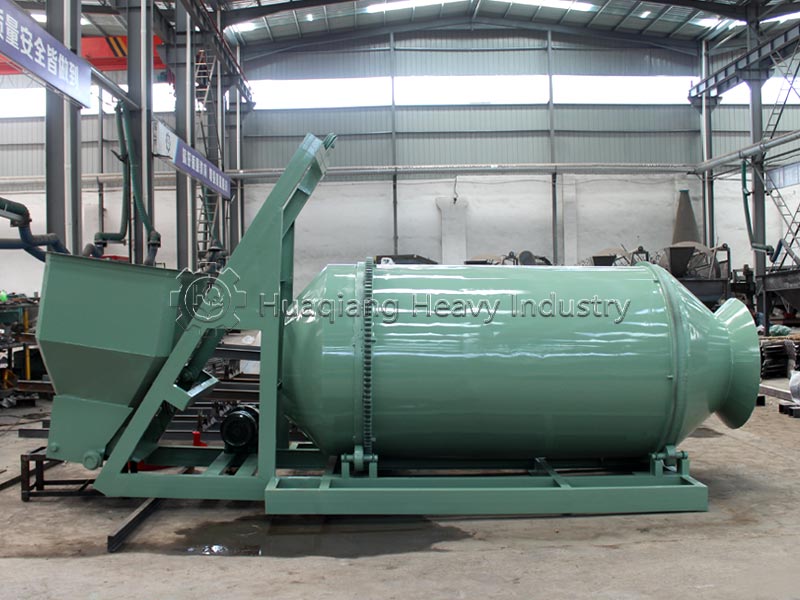
Step 2: Batching precision determines whether nutrient levels meet standards. Regardless of the granulation route chosen, formula accuracy is the bottom line. A multiple-silo, single-scale static batching system is suitable for mixing 3 to 8 types of materials; raw materials are discharged sequentially into a single weigh hopper, weighed statically one by one, and then conveyed together. Since each ingredient is weighed while completely stationary—unaffected by conveyor belt speed fluctuations—batching errors can be kept within ±0.2%. However, if pneumatic gates malfunction, sensors face interference, or material residue remains in the hopper, this precision advantage can be eroded by drift within a few weeks. Therefore, calibration using standard weights is required before each production run, and the inner walls of the weighing hopper must be cleaned regularly.
Step 3: The forming process and the ingredient preparation stage must be mutually compatible. Disc granulation lines require materials to be cohesive and have uniform moisture content; if moisture levels are not properly adjusted during the ingredient preparation stage, material will stick to the disc surface, or the granulation rate will plummet. Twin-roll extrusion lines require consistent powder fineness and low moisture content; if coarse particles are introduced or moisture levels exceed limits during ingredient preparation, the roll surfaces will slip or become fouled with material buildup. The same applies to the production process for BB (bulk blend) fertilizers: although they are not granulated, the precision of ingredient proportioning and the uniformity of the mixture determine whether the finished product undergoes segregation. Ideally, a buffer bin should be installed between the ingredient preparation system and the forming equipment to synchronize the timing of the batch-based ingredient preparation with the continuous forming process.