
What is the correct method for cleaning the die hole when the production line starts up and granules fail to form?
Die hole blockage during production line startup (i.e., machine start-up) is one of the most common and troublesome malfunctions in the granulation process. The main causes include: die hole blockage, die hole corrosion or poor surface finish, excessive gap between the die and pressure roller, improper material moisture content, and excessive coarse fiber content. This problem is particularly common in newly installed or newly replaced die granulators.
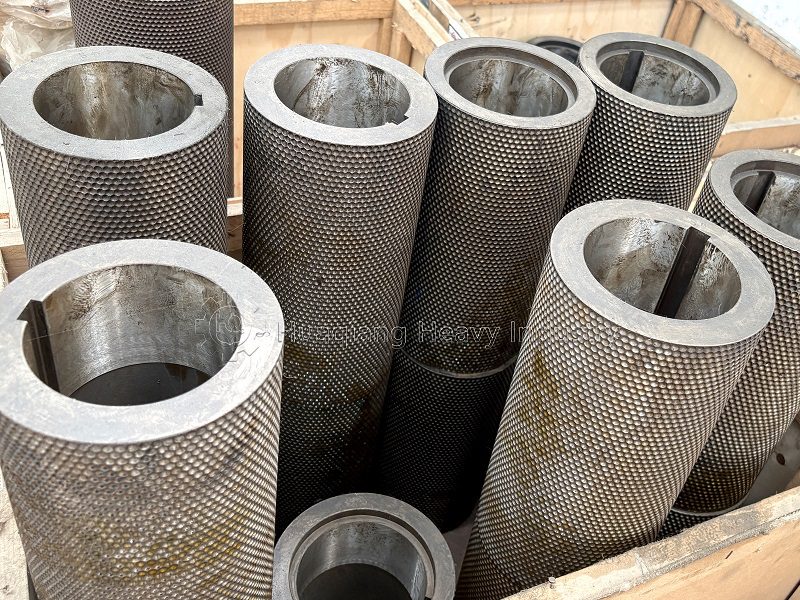
Cleaning Method for Mild Blockage
For mild blockage, immediately stop the machine and disconnect the power supply, ensuring safety. Then use the following methods: Special Tool Unblocking: Use a special cleaning tool (such as a copper needle or steel nail) with a diameter slightly smaller than the die hole to clean the dried material inside each die hole one by one. Apply even pressure during operation to avoid damaging the inner wall of the die hole. For example, a φ4mm die hole can be manually unblocked with a φ3.8mm drill bit.
Backwashing: Use a high-pressure water gun (pressure above 10MPa) to backwash the die holes, using water pressure to flush out the blockage.
Backventing: For die heads that are difficult to disassemble, high-pressure airflow or high-temperature steam can be introduced in reverse, using impact force and heat to dislodge the blockage.
Cleaning Methods for Severe Blockages
If the blockage is severe, conventional unblocking methods are ineffective, and more thorough cleaning methods should be adopted:
Disassembly and Soaking: After disassembling the die head, soak it in 50℃ hot water for about 1 hour to fully soften the dried material. For oily or chemical blockages, a suitable special cleaning agent can be used for soaking.
Hole-by-Hole Cleaning: After the material softens, use a special tool to clean each die hole one by one, ensuring that the inner wall is smooth and free of residual material.
Grinding Treatment: New or cleaned dies can be ground with oily feed or an oil-sand mixture to improve the smoothness of the die holes and facilitate subsequent pelleting.
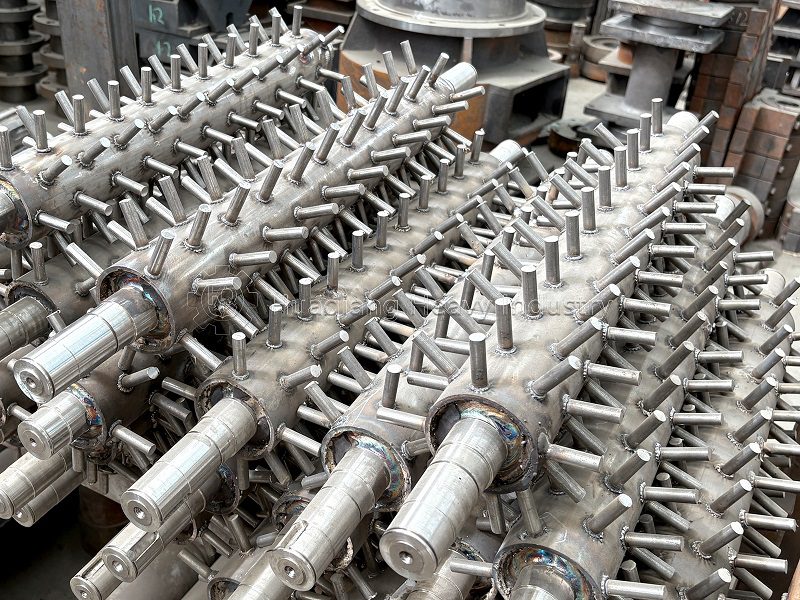
Key Measures to Prevent Die Hole Blockage
Prevention is better than cure. The following points should be observed in daily production:
Strict Moisture Control: High moisture content (>30%) in raw materials easily leads to adhesion and blockage of the pores; low moisture content results in poor material flowability and accumulation. The moisture content should be controlled within the process requirements.
Strictly Prohibit Stopping the Machine with Material: Before stopping the machine, the material inside the die holes must be thoroughly cleaned. Otherwise, the dried material will easily cause die blockage upon restarting. Before each shift’s shutdown, oily material can be added to the granulation chamber to force it into the die holes, facilitating smooth granulation the next time.
Filtering Impurities: Before feeding, use a vibrating screen (5mm mesh) to filter large impurities and long fibers.
Regular Maintenance: When the machine is not in use for an extended period, apply anti-rust oil to the die surface to prevent corrosion of the die holes. Regularly check the gap between the pressure roller and the die plate (normally 0.3-0.5mm). If the gap is too large, the material cannot be effectively squeezed into the die holes.