
In the production of compound fertilizers and organic fertilizers, the appearance of the granules directly affects the product’s marketability and the customer’s first impression. Many manufacturers find that granules that appear round and plump after granulation become dull, rough, or even powdery after drying. The problem often lies in two easily overlooked stages: cooling and polishing. This article analyzes from a process perspective how to give fertilizer granules a “natural shine.”
The Role of the Cooler: The First Line of Defense for Gloss Fertilizer granules fresh from the granulator reach temperatures as high as 60-80℃, and their moisture content is uneven. If directly stacked or packaged, the residual heat will cause internal moisture to continuously seep out, forming fine “sweat”-like crystals on the granule surface. Simultaneously, thermal stress causes surface cracking—this is the root cause of dullness and powdering.
A rotary cooler, through counter-current air heat exchange, can reduce the granule temperature to room temperature (≤40℃) within 5-8 minutes. Its core value lies in three aspects:
Rapid surface solidification:Sudden cooling hardens the outer shell of the granules instantly, locking in internal nutrients and moisture and preventing crystallization.
Reduced adhesion:At low temperatures, the surface stickiness of the granules decreases, preventing them from rubbing against each other and scattering powder during subsequent sieving.
Paving the way for polishing:Only when the temperature reaches the required level will the mechanical action of the polishing machine avoid damaging the fragile hot surface.
In practice, insufficiently cooled fertilizer crumbles easily when gently squeezed, while fully cooled granules feel firm and have a fine cross-section.
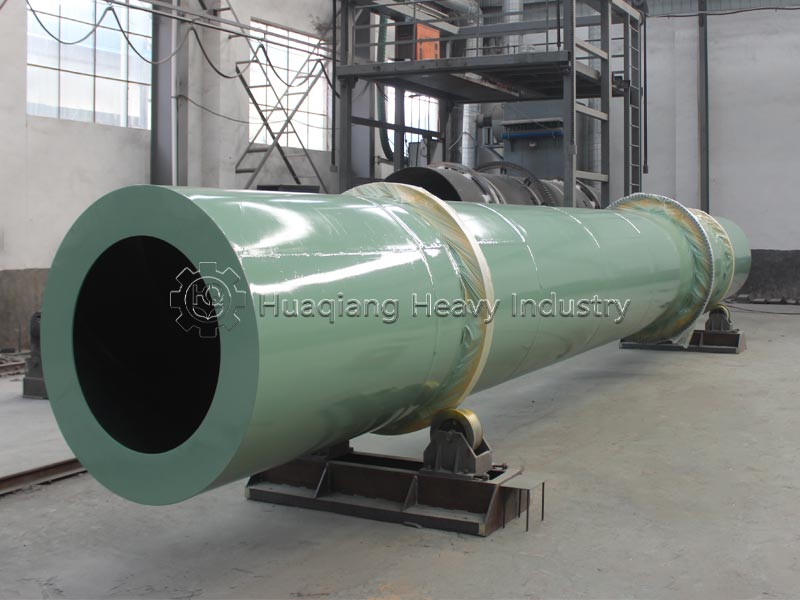
Polishing Machine Principle: From “Frosted” to “Mirror Finish”
Polishing machines typically employ a cylindrical polishing structure with angle adjustment. Its working principle is not complex: cooled granules enter an inclined, rotating polishing cylinder lined with wear-resistant rubber or polyurethane. As the cylinder rotates, the granules are carried to a certain height and then roll down, forming a continuous “material curtain.” During this process, micro-friction and compression occur between the granules and between the granules and the cylinder wall, smoothing the fine powder adhering to the surface and compressing the surface micropores, gradually revealing a glossy finish.
More advanced models will have atomizing nozzles at the front of the polishing drum, spraying in a small amount of water or polishing agent (such as 0.1%-0.3% vegetable oil). The liquid forms an extremely thin lubricating film, changing the friction method from “cutting” to “polishing,” increasing gloss by more than 60%. It is important to note that the polishing time should not be too long (usually 2-4 minutes), otherwise excessive rounding of the particles will negatively affect their disintegration properties.
III. Appearance Enhancement Strategy: Three-Step Collaboration
To obtain consistently bright particles, relying on a single piece of equipment is insufficient. The following combined strategy is recommended:
Front-end Powder Control:Minimize the proportion of returned powder during granulation, as excessive powder will directly contaminate the particle surface.
Sufficient Cooling to Room Temperature:Ensure the outlet temperature of the cooler is ≤40℃. In summer, a cooling air system can be used.
Post-stage Polishing Additives:Add 0.2%-0.5% mineral oil or polyethylene glycol at the polishing machine inlet using a micro-pump. This enhances brightness and prevents clumping.
Grading and Screening Protection: Immediately after polishing, the granules are sieved, and the separated fine powder is returned to granulation to prevent the finished products from rubbing against each other.
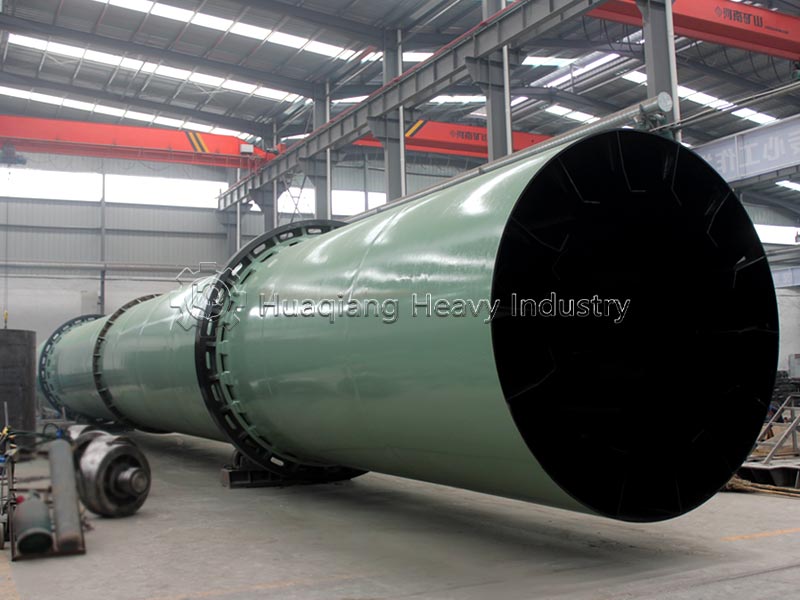
Orchestrating Upstream Excellence for Downstream Granule Brilliance
While cooling and polishing command the final aesthetic impression, the root cause of dull granules often originates far upstream in the production chain, making holistic equipment selection equally critical to surface quality. At the raw material preparation stage, a robust half-wet material crusher machine ensures fermented substrates achieve uniform fineness below 0.5mm, eliminating coarse fibers that would otherwise create surface irregularities impossible to polish away. For enterprises evaluating organic fertilizer equipment price, investing in corrosion-resistant 304 stainless steel construction across the entire organic fertilizer manufacturing plant pays dividends not only in longevity but also in preventing metallic contamination that degrades granule luster. A precision fertilizer drying and cooling machine with counter-current airflow design remains indispensable for rapidly solidifying granule shells and arresting thermal stress before polishing begins. The core granulator machine for organic fertilizer must deliver consistent spherical geometry with minimal surface powder generation, as excessive fines directly undermine polishing efficiency regardless of downstream equipment sophistication. For facilities processing livestock waste, integrating a versatile Animal manure processing machine—such as a chicken manure fertilizer machine with two-stage fermentation protocols—ensures that raw materials enter the granulation stage with optimal moisture, reduced ammonia content, and homogeneous texture, laying the foundational conditions upon which cooling and polishing can perform their transformative roles. Ultimately, granule brilliance is not merely a finishing touch but the cumulative result of disciplined process engineering from manure reception to polished packaging.
Conclusion: Dull fertilizer granules are often not a problem with the raw materials, but rather a disconnect between cooling and polishing processes. By treating the cooling machine as a “shaping guardian” and the polishing machine as a “beautician,” supplemented by additives and a closed-loop sieving system, even dull, rough granules can become glossy and shiny. This not only improves product quality but also increases market premium.