
With the increasing demands for fertilizer granule appearance and quality in modern agriculture, older plants often face the dilemma of choosing between disc granulators and drum granulators when expanding or upgrading their facilities. While both fall under the category of agglomeration granulation, they differ significantly in their technical logic, finished product morphology, and energy consumption.
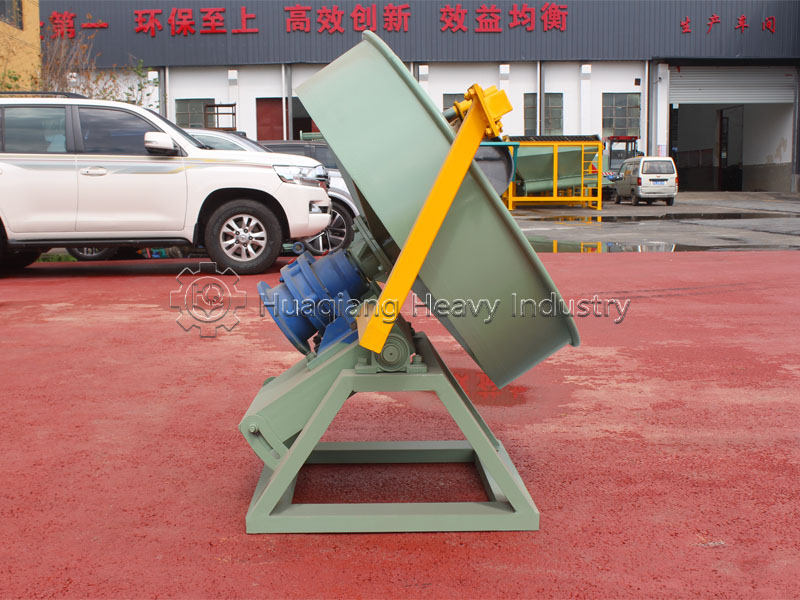
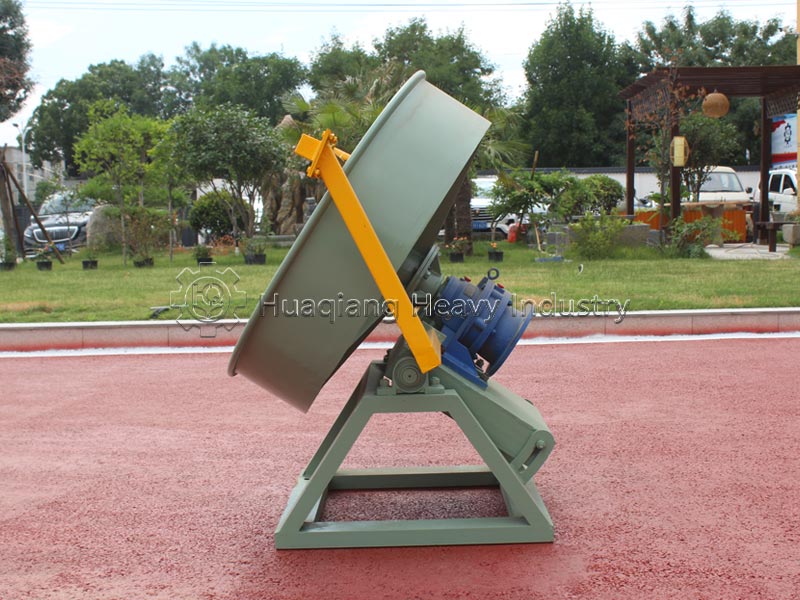
From a technical logic and operational flexibility perspective, disc granulators employ a typical grading granulation principle. Material in an inclined disc is subjected to centrifugal force and gravity; larger particles float to the surface and overflow first, while smaller particles remain at the bottom to continue growing. This “automatic grading” characteristic makes disc granulation highly intuitive; operators can adjust water volume and rotation speed visually, making it ideal for producing multiple varieties of small-batch organic or compound fertilizers.
In terms of finished granule morphology and strength, drum granulators demonstrate stronger industrial advantages. Because the material undergoes prolonged compression and rolling within a sealed drum, the resulting granules exhibit higher roundness, a denser internal structure, and significantly superior crushing resistance compared to disc granulation. For large-scale production lines requiring long-distance transportation or mechanized fertilization, the high-strength granules produced by drum granulation significantly reduce pulverization during distribution.
Energy efficiency and production scale are key dividing lines in decision-making. While a single disc granulator has a lower initial cost and smaller installed power, its capacity limit is significant. In contrast, a single drum granulator line can achieve an annual capacity of tens of thousands or even hundreds of thousands of tons. Although drum equipment itself consumes more energy, its economies of scale and high degree of automation result in lower labor and maintenance costs per ton of fertilizer. Furthermore, drum granulation offers irreplaceable safety when handling high-concentration chemical reactions (such as spray granulation in tubular reactors).
The decision between upgrading to a disc granulator machine or a rotary drum granulator ultimately hinges on a facility’s production scale, formula diversity, and target market positioning rather than inherent equipment superiority. For operators prioritizing visual process control, rapid formula changeovers, and lower capital entry barriers, the intuitive grading mechanism of disc granulation remains unmatched in organic fertilizer production granulation, where raw material variability demands frequent operator intervention. Conversely, facilities scaling toward industrial-grade throughput and requiring superior granule integrity for long-distance distribution will find that a rotary drum granulator delivers the density and crush resistance essential for mechanized application systems. In certain high-pressure compaction scenarios, integrating a complementary fertilizer compactor alongside wet granulation equipment can further expand product portfolio flexibility, enabling the production of both standard granules and compacted flakes from identical raw material streams. As fertilizer production machine technology continues to evolve toward intelligent automation and energy optimization, manufacturers must recognize that modern npk fertilizer production technology increasingly favors hybrid configurations—combining the operational agility of disc systems with the throughput efficiency of drum lines—to capture diversified market segments simultaneously. Ultimately, the most resilient upgrade strategy is one that treats granulator selection not as an isolated procurement decision, but as an integral component of a forward-compatible manufacturing ecosystem aligned with both current operational constraints and emerging precision agriculture demands.


For upgrading existing plants, if your goal is to achieve the best particle appearance, high output, and longer operating cycles, rotary drum granulation is undoubtedly a better choice; if you prioritize flexible formula adjustments, low initial investment, and adaptability to specific materials, disc granulation offers better cost-effectiveness. Clearly defining your production scale and end-market positioning is the core basis for selecting an upgrade model.