
In the context of modern agriculture’s pursuit of sustainable development, fertilizer production is undergoing a paradigm shift from single chemical synthesis to a synergistic approach of bio-organic processes. Whether processing organic waste such as empty fruit bunches (EFB) from oil palm or constructing high-yield fertilizer production lines, understanding the technological differences between equipment and the logic of raw material conversion is key to improving factory efficiency.
Core Definition: Differences between Bio-Organic Fertilizer Equipment and Chemical Fertilizer Equipment
What is bio-organic fertilizer equipment? It refers to a collection of machines specifically designed to process organic matter such as animal and plant residues and household waste, converting it into fertilizer through physical and biological means such as fermentation, deodorization, and granulation. In contrast, chemical fertilizer production equipment focuses on the physical mixing and chemical granulation of inorganic salts such as nitrogen, phosphorus, and potassium.
The core differences between the two are:
Corrosion Resistance: Organic fertilizer equipment needs to withstand acid and alkali corrosion during fermentation, typically employing higher-level anti-corrosion linings.
Process Focus: Chemical fertilizer equipment focuses on precise ingredient proportioning and particle strength; organic fertilizer equipment prioritizes material moisture regulation and maintaining microbial activity.
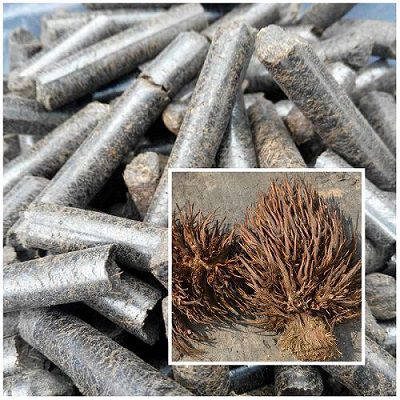
Raw Material Transformation: Application of Empty Fruit Bunches and Powder Production Lines in Oil Palm
The resource utilization of empty fruit bunches (EFB) from oil palm has become a focus of attention in tropical agriculture in Southeast Asia and globally. This fibrous waste is rich in potassium, making it an ideal organic fertilizer substrate. After the long fibers are crushed by a crusher, deep fermentation using a compost turner transforms it into a high-value soil conditioner.
For startups or small and medium-sized farms, organic fertilizer powder production lines offer a more cost-effective option. This production line eliminates complex granulation processes and mainly consists of a crusher, mixer, and automatic packaging scale. It not only maximizes the preservation of biological activity but also significantly reduces energy consumption, making it ideal for processing raw materials with fluctuating moisture content, such as straw and livestock manure.
Key to Intelligent Manufacturing: How to Build an Authoritative Production Process Chain
Raw Material Pretreatment: Using a heavy-duty crusher to process empty fruit bunches from oil palm can increase the efficiency of subsequent fermentation by more than 30%.
Mixing Precision: When processing fertilizer raw materials, the intervention of a frequency converter control system in modern horizontal mixers ensures that the material uniformity reaches over 95%.
Moisture Balance: Whether using a powder or granular production line, strictly controlling the moisture content of the raw materials within the golden range of 20%-30% is a key parameter to ensure that the final product does not clump or become powdery.
Conclusion: From discarded empty bunches of oil palm fruit to high-quality fertilizer, the selection of production equipment directly determines the conversion rate. Integrating the advantages of bio-fermentation technology with traditional fertilizer machinery to build differentiated powder or granular production lines not only achieves environmental compliance but also enhances the economic resilience of agricultural production through technological premiums.
In conclusion, the transition from conventional chemical synthesis to bio-organic fertilizer production represents a fundamental paradigm shift in sustainable agriculture, where the strategic selection of each organic fertilizer machine directly determines resource conversion efficiency and product quality. For operations targeting granular outputs, the granulator machine for organic fertilizer serves as the critical bridge between fermented substrates and marketable products, with roller extrusion or disc granulation technologies preserving microbial viability while achieving uniform particle integrity. When evaluating the organic fertilizer equipment price, investors must adopt a holistic lifecycle perspective that encompasses corrosion-resistant materials, fermentation system durability, and energy consumption patterns, rather than focusing solely on initial capital outlay. A well-configured organic fertilizer manufacturing unit integrating heavy-duty crushers, frequency-controlled horizontal mixers, and precision moisture regulation systems can achieve material uniformity exceeding 95% while maintaining the golden moisture window of 20%–30%. Particularly for tropical agricultural ecosystems, the valorization of Oil palm empty fruit bunch (OPEFB) through systematic crushing, deep fermentation, and controlled granulation transforms this abundant fibrous waste—rich in potassium and organic carbon—into premium soil conditioners that enhance soil structure and nutrient retention. Ultimately, by synergizing bio-fermentation technology with intelligent manufacturing processes, producers not only achieve environmental compliance and waste reduction but also capture significant technological premiums, strengthening the economic resilience of agricultural value chains across Southeast Asia and global palm oil-producing regions.