
What is Granulation Rate?
Pelletization rate refers to the percentage of particles that meet the target particle size range (typically 2 to 4.75 mm) after screening, out of the total output mass of the granulator (excluding return material). It is a core indicator for measuring the efficiency of the granulation process, directly determining the production line’s capacity utilization and energy consumption level. Industry benchmarks are: disc granulation 60% to 75%, drum granulation 70% to 85%, and double-roller extrusion granulation 80% to 90%.
I. Raw Material Pretreatment: Dual Control of Moisture and Fineness
The physical state of the raw materials is the first hurdle for granulation rate. Regarding moisture control, drum granulation requires an input moisture content between 25% and 35%, disc granulation requires 30% to 35%, and double-roller extrusion requires 8% to 12%. Exceeding this range results in a 3% to 5% decrease in granulation rate for every 1 percentage point deviation. Regarding fineness control, over 90% of the material should pass through an 80-mesh sieve before granulation. The presence of coarse particles disrupts the structural integrity of agglomerates—particles larger than 0.5 mm act as “balls” rather than “binders” during rolling, resulting in loose particles. It is recommended to install a vertical chain crusher after the batching system to increase the fineness of the mixture to 95% passing through the 80-mesh sieve.
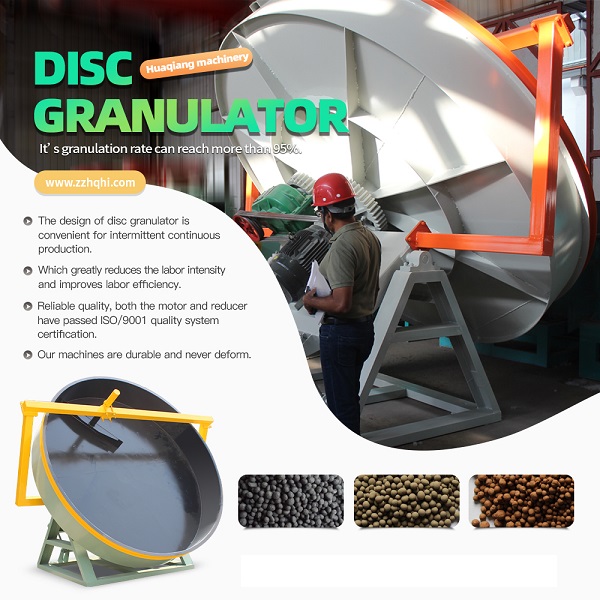
II. Fine-tuning of Granulator Operating Parameters The optimization path for key parameters differs depending on the granulator model. In drum granulators, the inclination angle is recommended to be set between 2 and 4 degrees—too small an angle results in a longer material residence time but a thicker material layer, affecting agglomeration; too large an angle causes the material to pass through too quickly, preventing granulation. The rotation speed should be controlled between 12 and 18 revolutions per minute. For every 2 revolutions per minute increase, the centrifugal force increases by approximately 15%, increasing the proportion of small particles ejected. In a steam-assisted system, the steam pressure is stabilized at 0.2 to 0.3 MPa, raising the material temperature to 55 to 65 degrees Celsius. For every 10 degrees Celsius increase in temperature, the surface viscosity of the material increases by approximately 20% to 30%. In a disc granulator, the recommended disc inclination angle is 45 to 55 degrees, the edge height is 25 to 35 cm, the rotation speed is 15 to 25 revolutions per minute, and the residence time of each batch of material in the disc is controlled to be 5 to 8 minutes.
III. Return Material Ratio and Seed Granulation Strategy Return material refers to the fine powder and oversized particles that fail screening and are returned to the granulator after crushing. A reasonable return material ratio is a key lever for improving the granulation rate. The fine powder in the return material acts as a “seed”—providing nucleation sites for new particles. For drum granulation, a return material ratio (return material mass to new raw material mass) of 0.5:1 to 1:1 is recommended; for disc granulation, 0.3:1 to 0.6:1 is recommended; and for double-roller extrusion, 0.4:1 to 0.8:1 is recommended. When the return ratio is too low, there are insufficient nucleation sites, resulting in fewer newly formed particles with larger particle sizes. When the return ratio is too high, there is an excess of fine powder in the system, leading to slow particle growth and the formation of multi-layered encapsulation structures. It is recommended to control the amount of return material by adjusting the screen aperture—increasing the lower screen aperture from 1.5 mm to 1.8 mm can reduce the amount of return material by approximately 15% to 20%.
IV. Selection and Dosage of Binders When the raw materials themselves lack viscosity (such as in high-phosphorus formulations and high-fiber organic fertilizers), adding binders is a direct and effective way to improve it. Commonly used binders include bentonite (3% to 8%), lignin sulfonate (2% to 5%), and sodium humate (2% to 4%). The mechanism of action of binders is to form a bridging membrane between particles, enhancing cohesion. Experimental data shows that adding 4% bentonite in diammonium phosphate granulation can increase the granulation rate from 65% to 78%. However, it’s important to note that excessive addition can dilute the effective nutrients—for every 1% increase in binder, the total nitrogen, phosphorus, and potassium content of the finished product decreases by approximately 0.8 to 1.2 percentage points. Prioritizing materials that combine binding and nutrient functions (such as sodium humate) can mitigate this conflict.
V. The Interaction Between Drying and Screening The wet granules exiting the granulator have relatively low strength and require a “curing” process before entering the dryer—naturally resting on a belt conveyor for 1 to 3 minutes to allow surface moisture to evaporate and form a hardened shell. The dryer inlet temperature should not be too high. For wet granules after drum granulation, a three-stage temperature control is recommended: preheating stage 150 to 200 degrees Celsius, drying stage 250 to 300 degrees Celsius, and cooling stage 80 to 120 degrees Celsius. A sudden temperature increase will cause the granule surface to dry rapidly, forming a hard shell, and the pressure generated during internal moisture evaporation will cause the granules to crack. The screening process employs a double-layer sieve—the upper sieve aperture is 1.1 times the upper limit particle size (4.5 mm if the target is 4 mm), and the lower sieve aperture is 0.8 times the lower limit particle size (1.6 mm if the target is 2 mm). This asymmetric screening can further increase the yield by 3% to 5%.
Comprehensive Benefits of Improved Granulation Rate: Increasing the granulation rate from 65% to 80% means that, with the same raw material input, the output of qualified finished products increases by approximately 23%, while reducing the amount of recycled material, lowering drying energy consumption, and reducing screening load. For a production line with an hourly output of 10 tons, a 15 percentage point increase in granulation rate translates to an annual increase of approximately 3,600 tons of finished product (based on 300 working days). After deducting electricity consumption and maintenance costs, the net profit increases by approximately US$100,000 to US$150,000. Of these five key aspects, the highest priority and zero-cost implementation is the optimization of operating parameters and adjustment of sieve aperture, while the optimization of the recycled material ratio and binder testing require a 2-3 day process verification period.
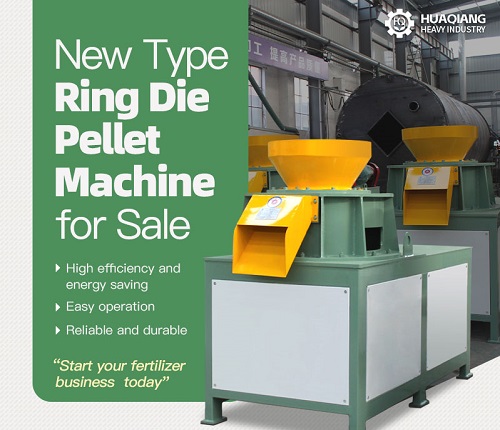
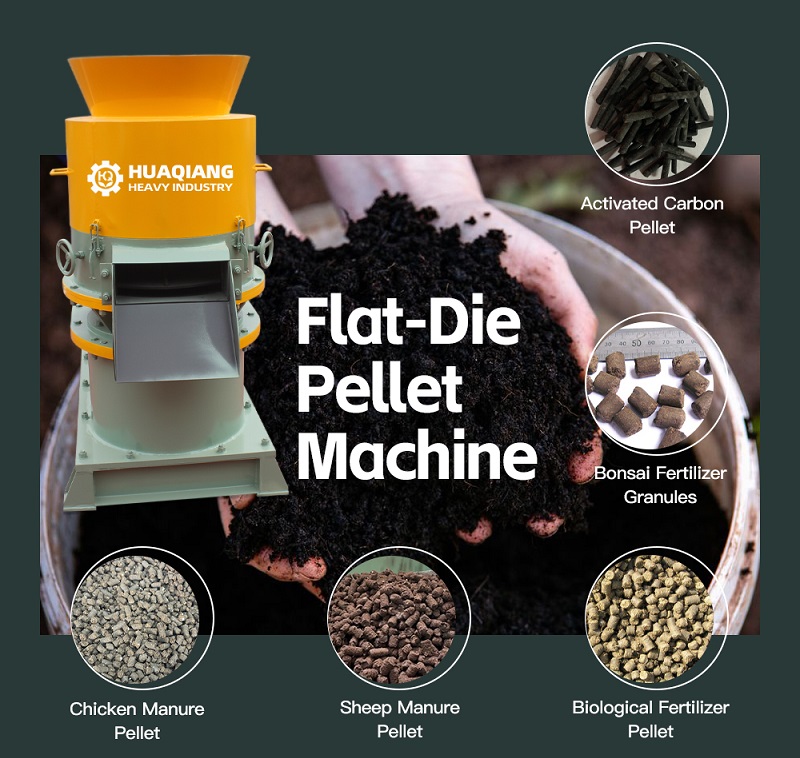
Elevating granulation rate from industry benchmarks to optimal ranges demands not only meticulous parameter control—moisture, fineness, return ratio, and binder dosage—but also astute alignment between raw material characteristics and granulation platform architecture. Within the diverse organic fertilizer granulator series, each technology offers distinct advantages: a rotary drum granulator achieves 70%–85% yield through steam-assisted agglomeration, ideal for high-volume compound formulations; a disc granulator machine delivers spherical aesthetics with adjustable tilt and speed for premium retail markets; while a fertilizer flat die pellet machine or specialized poultry manure pellet machine provides compact, low-intrusion extrusion for small farm operations processing high-fiber manure. For applications demanding maximum density without thermal drying, fertilizer granules compaction via a high-pressure fertilizer compactor eliminates moisture addition entirely, achieving 80%–90% yield with superior particle strength. Ultimately, the most effective fertilizer granulator machine is the one whose operating envelope—moisture tolerance, particle morphology, and energy footprint—precisely intersects with the producer’s raw material profile, scale constraints, and market price sensitivity, transforming granulation from a mechanical process into a calibrated profit engine.
We offer a full range of equipment including roller granulators, disc granulators, and double-roll extrusion granulators. We can also customize moisture control, return ratio settings, and binder ratio schemes free of charge according to your raw material characteristics and target pelleting rate, helping you improve your pelleting rate from the industry benchmark to the optimal range, achieving a double leap in capacity and profit.