
In the fertilizer industry, traditional factory construction often involves one-time design and customized construction, resulting in long cycles, large investments, and high modification costs. Faced with rapidly changing market demands, a new approach is emerging—modular production lines. Like building blocks, these lines break down crushing, batching, granulation, drying, screening, and packaging into independent standard units, which can be flexibly combined according to capacity and process requirements.
What is Modular Design for Fertilizer Production?
Modular design refers to dividing the entire fertilizer production line into several independent, standardized process units (modules) according to function. Each module has complete input/output interfaces, can be pre-manufactured and tested in the factory, and then transported to the site for rapid assembly. Unlike the traditional on-site casting and piecemeal installation model, the core characteristics of modular design are standardized interfaces, independent functions, and rapid deployment.
Three Core Advantages of Modular Design
2.1 Shortened Construction Cycle, Seizing Market Opportunities
Traditionally, a 50,000-ton-per-year compound fertilizer production line typically takes 8-12 months from civil construction to commissioning, with equipment installation and commissioning taking approximately 3-4 months. With modular design, equipment is prefabricated and pre-commissioned in the factory, requiring only foundation construction and module assembly on-site. According to industry data, the installation and commissioning cycle of a modular production line can be reduced to 4-6 weeks, shortening the overall construction time by 30%-40%. For companies hoping to start production before the peak fertilizer season, this translates to market opportunities worth hundreds of thousands to millions of yuan.
2.2 Reduced On-Site Construction and Modification Costs
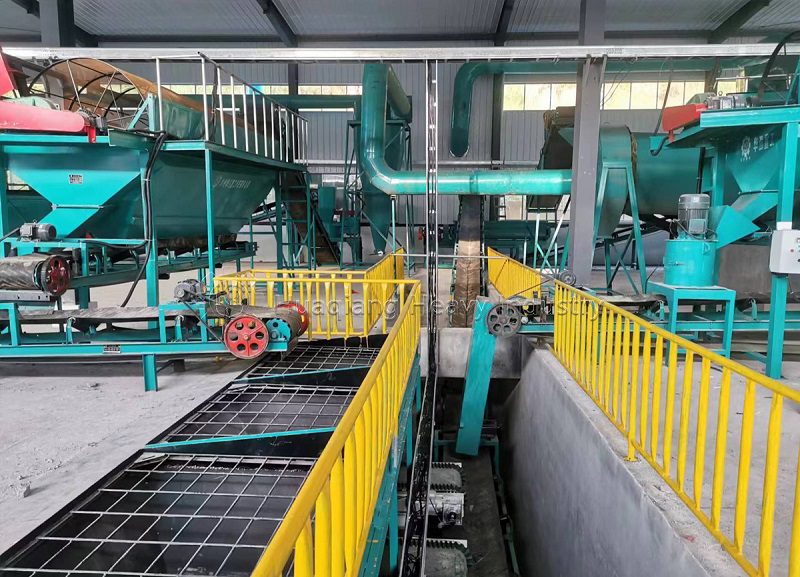
In the traditional model, on-site installation requires extensive riveting, hoisting, and civil engineering coordination, resulting in high labor and management costs. Modular design transfers over 95% of the manufacturing work to the factory workshop, requiring only module hoisting, bolt connections, and water, electricity, and gas pipeline connections on-site. Statistics show that on-site installation labor costs for modular production lines can be reduced by 40%-60% compared to the traditional model. More importantly, when expansion or process adjustments are needed (e.g., switching from chlorine-based compound fertilizer production to sulfur-based compound fertilizer production), modular production lines only require the replacement or addition of specific modules (such as corrosion-resistant granulation modules or exhaust gas treatment modules), eliminating the need for shutdown and complete line modifications, reducing modification costs by approximately 50%-70%.
2.3 Standardization Brings Quality and Maintenance Convenience
Each module undergoes a trial run with materials before leaving the factory to ensure that interface parameters and operating indicators meet standards. This prefabricated production method avoids quality fluctuations during on-site construction. Simultaneously, due to standardized module interfaces, vulnerable parts are interchangeable across modules, reducing spare parts inventory by 30%-50%. When a module fails, it can be directly replaced with a spare module, reducing downtime from several days to several hours.
III. Applicable Scenarios for Modular Design
New medium-sized production lines (annual capacity 30,000-100,000 tons): This is the most cost-effective range for modular design. Investment is moderate, and expansion interfaces can be reserved, allowing for direct parallel connection when adding granulation or screening lines later.
Technical Upgrades for Existing Production Lines: This involves reintegrating existing loose equipment into modular units or replacing high-energy-consuming modules (such as replacing them with high-efficiency drying modules). Other modules can maintain production during the upgrade.
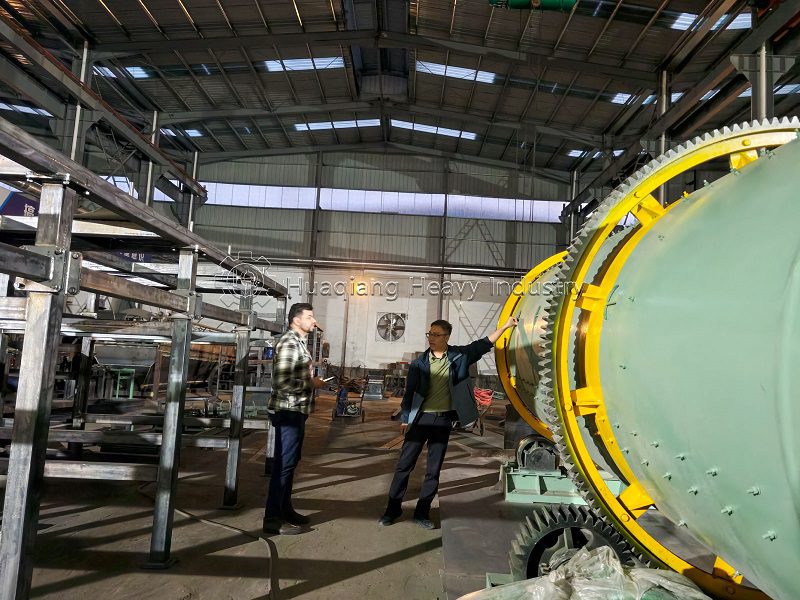
Overseas or Remote Area Projects: Modular transportation and installation offer significant advantages in areas with poor on-site construction conditions and a shortage of skilled workers.
Practical Selection Recommendations
Before deciding to adopt a modular design, please assess the following key points:
Transportation Conditions: Module width is typically no more than 3.5 meters (road transport width restrictions). If the site is located in a remote mountainous area, the feasibility of transporting large components needs to be confirmed.
Process Stability: Modular design is best suited for production lines with mature processes and high levels of standardization. If the process is still in the verification stage, traditional customized models are more flexible.
Supplier Capabilities: Modular design requires suppliers to have full-line integration capabilities and pre-commissioning conditions. It is recommended to examine their similar case studies and factory testing capabilities.
According to industry observations, modular design has become the mainstream choice for compound fertilizer and organic fertilizer production lines with an annual output of 30,000-100,000 tons. Its core value is not only “faster construction” but also “more economical upgrades and longer service life.” For companies that want to achieve rapid production with lower capital expenditures and retain flexible expansion space in the future, modular production lines are a direction worth exploring.
As the global demand for sustainable agriculture intensifies, modular design stands out as a transformative strategy for modern fertilizer facilities. Beyond accelerating project timelines, this approach seamlessly integrates with advanced organic fertilizer production equipment, enabling manufacturers to deploy complete systems—from organic fertilizer raw material processing equipment such as the half-wet material crusher machine to precision organic fertilizer granulator series units—within remarkably compressed schedules. For instance, an organic fertilizer disc granulation production line can be pre-assembled and pre-commissioned off-site, then rapidly installed to achieve full operational capacity.
Furthermore, the modular framework naturally accommodates process evolution: facilities can initially incorporate a chain compost turner for efficient aerobic fermentation during the organic fertilizer fermentation process, then progressively upgrade to a new type organic fertilizer granulator as market requirements shift toward higher-value specialty products. This plug-and-expand architecture eliminates the costly downtime and structural overhauls inherent in traditional fixed installations. Ultimately, modular production lines empower enterprises to respond agilely to regulatory changes, crop diversification trends, and sustainability mandates—positioning them not merely as equipment adopters, but as resilient, future-ready partners in the agricultural value chain.