
In the fertilizer granulation process, the liner material of the granulator directly determines the equipment’s lifespan, product quality, and maintenance costs. Faced with a granulation environment characterized by high wear, strong corrosion, and high humidity, how do you choose the most suitable liner material? This article conducts a systematic comparative study of three mainstream liner materials—rubber liners, stainless steel liners, and ceramic liners—providing data support for equipment selection.
I. What is a Granulator Liner? Why is it so crucial?
A granulator liner is a protective layer installed on the inner wall of equipment such as rotary drum granulators and disc granulators. Its main functions are:
Isolation and Protection:Preventing direct wear and corrosion of the equipment cylinder by fertilizer raw materials.
Enhancing Pellet Formation:Promoting material tumbling and particle growth through the liner’s surface structure.
Preventing Adhesion to the Wall:Reducing the adhesion of wet materials to the cylinder wall, extending continuous operation time.
According to statistics from the fertilizer equipment industry, granulators equipped with high-quality liner materials can have their cylinder lifespan extended by 3-5 times, and annual maintenance costs reduced by 40%-60%.
II. Performance Comparison of Three Types of Lining Materials
2.1 Rubber Liners: Advantages and Limitations of Elasticity
Rubber liners are currently the most widely used lining material in organic fertilizer and compound fertilizer granulators.
Core Advantages:
Excellent Wear Resistance:The blend of natural rubber and butadiene rubber exhibits excellent wear resistance and remains stable in environments below 80℃.
Strong Corrosion Resistance:The rubber does not rust and effectively resists corrosion from salt and moisture in fertilizers.
Shock Absorption and Anti-sticking:The elastomer absorbs material impact, reducing noise; wet materials do not easily adhere to the surface.
High Granulation Rate:Combined with the overall rounded corner structure, the granulation rate can reach over 93%.
Key Limitations:
Poor Temperature Resistance:Ordinary rubber liners should not be used above 80℃; exceeding this limit will accelerate aging and cracking.
Easily Deformed Under High Pressure:Under high load and high pressure conditions, excessive elasticity may cause the liner to deform, affecting equipment stability.
Applicable Scenarios:Temperature-controlled organic fertilizer granulation, medium- and low-temperature compound fertilizer granulation lines.
2.2 Stainless Steel Liners: High-Strength and Corrosion-Resistant “Steel Guardians”
Stainless steel liners are primarily used to address the granulation needs of highly corrosive fertilizer raw materials. Core Advantages:
Extremely Strong Corrosion Resistance:Exhibits excellent corrosion resistance to high-salt raw materials such as potassium sulfate and potassium chloride.
Smooth Surface:Materials do not easily adhere, facilitating cleaning and maintenance.
High Structural Strength:Withstands high impact and high load conditions without deformation.
Environmentally Friendly and Safe:Does not release harmful substances into fertilizers, meeting food-grade standards.
Key Limitations:
High Brittleness:Prone to cracking or breakage in environments with large load fluctuations.
Heavy Weight:Increases equipment load and energy consumption.
Higher Cost:Stainless steel liners have significantly higher material and processing costs than rubber liners.
Applicable Scenarios:Highly corrosive formulations (such as potassium sulfate-based compound fertilizers), high-temperature granulation conditions.
2.3 Ceramic Liners: The “King of Wear Resistance” with Ultra-High Hardness
Ceramic liners are mainly used in extreme wear conditions and are currently a high-end choice in fertilizer granulation.
Core Advantages:
Ultra-high Hardness:Alumina ceramics have a Mohs hardness of 9 (HRA 88-92), second only to diamond.
Excellent High Temperature Resistance:Pure ceramics can withstand temperatures above 1600℃, suitable for high-temperature granulation processes.
Good Chemical Stability:Resistant to acid and alkali corrosion, does not contaminate materials.
Long Service Life:Wear-resistant life is 5-10 times that of ordinary metals.
Key Limitations:
High Brittleness:Poor impact resistance, unsuitable for high-vibration conditions.
Complex Construction:Requires bonding or casting, high requirements for substrate flatness.
High Cost:High-end ceramic materials and installation costs are high.
Applicable Scenarios:Extreme high-temperature, high-wear conditions, ultra-fine grinding requirements.
III. Performance Comparison Core Data:Based on industry test data, the key performance indicators of the three types of materials are compared as follows:
Wear Resistance Ranking (from highest to lowest):
Ceramic Liner > Stainless Steel Liner ≥Rubber Liner
Temperature Resistance:
Ceramic Liner: >1600℃
Stainless Steel Liner: 600-800℃ (Oxidation Resistant)
Rubber Liner: ≤80℃
Impact Resistance:
Rubber Liner > Stainless Steel Liner > Ceramic Liner
Cost Ranking (Low to High):
Rubber Liner < Stainless Steel Liner ≤ Ceramic Liner
Particle Formation Rate Influence:
Rubber liners, with optimized design, can achieve over 93% particle formation; stainless steel and ceramic have smooth surfaces, and particle formation rate depends on cylinder structure and rotational speed.
IV. Selection Decision Tree
Based on actual working conditions, the following logic is recommended:
Step 1: Assess Operating Temperature
Temperature > 80℃ → Eliminate rubber liners, proceed to stainless steel or ceramic liner selection
Temperature ≤ 80℃ → All three types can be considered
Step 2: Assess Corrosivity
Highly corrosive materials (e.g., potassium sulfate) → Stainless steel liner is preferred
Generally corrosive materials → Both rubber and stainless steel liners are acceptable
Step 3: Assess Impact and Wear
High impact, high vibration → Preferred Rubber Liners (Cushioning and Shock Absorption)
Pure Wear, Low Impact → Ceramic Liners Can Be Considered
Step Four: Budget Considerations
Limited Budget, Controllable Temperature → Rubber Liners Offer High Cost-Effectiveness
Long-Term Operation, Required Lifespan → Stainless Steel or Ceramic
V. Practical Recommendations
For most organic fertilizer and compound fertilizer production lines, rubber liners are the most balanced choice—they achieve a good balance between wear resistance, corrosion resistance, cost, and granulation rate. If handling highly corrosive raw materials (such as potassium sulfate-based formulations), SS304 stainless steel liners should be upgraded. For production lines requiring ultra-long lifespan or operating under extreme high temperatures, ceramic liners are worth considering, but their impact resistance limitations should be noted.
In routine maintenance, the wear condition of the liners should be checked regularly: rubber liners should be replaced when cracks appear or the thickness is reduced by more than 1/3; stainless steel liners should be checked for loose welds and bolts; ceramic liners should be checked for detachment or breakage. Choosing the right liner and diligent maintenance are key to ensuring the long-term stable operation of the granulator.
Liner Intelligence as a Production Economics Lever
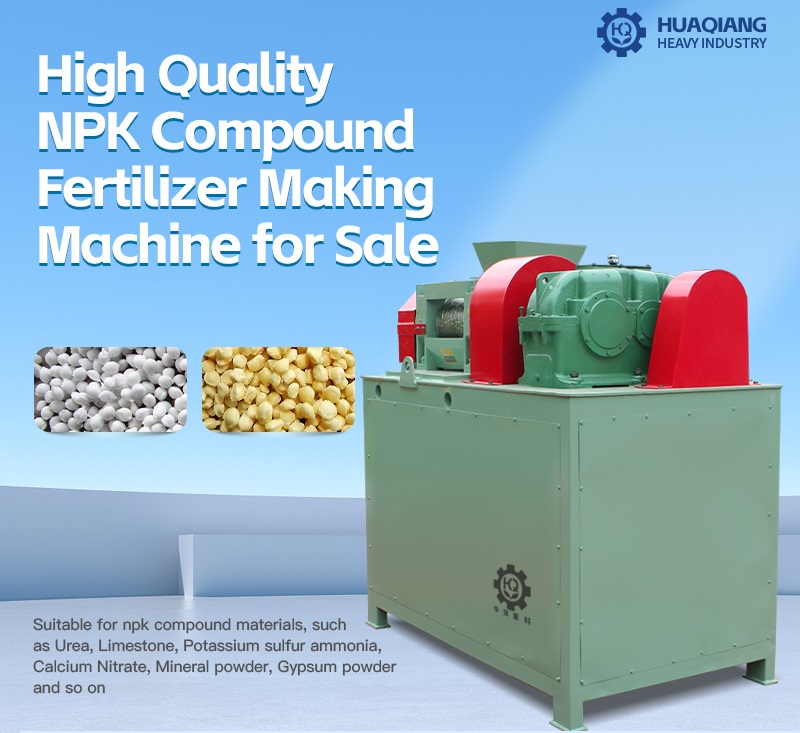
The 3-5x cylinder lifespan extension and 40-60% maintenance cost reduction achieved through optimal liner selection are not isolated material decisions—they are strategic levers that determine the total cost of ownership across the entire npk fertilizer production line or organic fertilizer granulator series. In the npk fertilizer manufacturing process, where corrosive salts and high thermal loads dominate, a rotary drum granulator equipped with 304 stainless steel liners withstands the chloride-rich environment of potassium sulfate formulations, while ceramic-lined drums handle extreme-temperature urea-ammonium phosphate blends without thermal degradation. For organic fertilizer production granulation operating below 80°C, rubber liners deliver the superior shock absorption and anti-adhesion properties that sustain 93%+ pelletizing rates while minimizing noise and wall buildup. In fertilizer granules compaction workflows, where a fertilizer compactor or flat die pelleting machine generates high mechanical stress rather than tumbling friction, liner selection shifts from wear resistance to structural integrity and corrosion management. Ultimately, aligning liner material—rubber, stainless steel, or ceramic—with the specific temperature, chemistry, and mechanical loading of each granulation platform transforms what appears to be a consumable component choice into a decisive factor for equipment uptime, product quality consistency, and long-term plant profitability.