
In short: The key to choosing between stainless steel and alloy steel for granulating rollers lies in one operational variable: the corrosivity of the raw materials. For NPK formulations containing phosphates, chlorides, or high moisture content (e.g., ammonium-based NPK and fermented organic fertilizers), 316L stainless steel rollers can extend service life from 3-5 years to 8-15 years, more than doubling uptime. For applications with high mechanical requirements and low corrosivity (e.g., compacting organic granules), alloy steel (including 40CrNiMo) or high-chromium cast iron offers superior wear resistance at a lower initial cost, and hardness typically exceeds HRC 55.
Core Difference: Corrosion Resistance vs. Mechanical Durability
The choice of roller material is essentially a balance between two conflicting failure modes. The first is chemical corrosion: fertilizers themselves contain corrosive compounds such as phosphoric acid, potassium chloride, and residual ammonia, which chemically erode the roller surface, especially under the high temperatures generated during high-pressure compaction. Secondly, there is wear: the mechanical friction of compacting granular materials gradually erodes the roller surface, reducing dimensional accuracy and particle quality over time.
Stainless steel (304/316L) sacrifices some hardness in exchange for excellent chemical inertness. 316L stainless steel contains at least 12% chromium and adds molybdenum, thus resisting pitting and intergranular corrosion that easily occur in carbon steel in acidic or chloride-rich fertilizer formulations. This material can achieve a hardness of HRC 50-54 through vacuum heat treatment, sufficient for most organic and compound fertilizer (NPK) applications while maintaining dimensional stability. However, its disadvantages include poor machinability and a cost 120-150% higher than carbon steel.
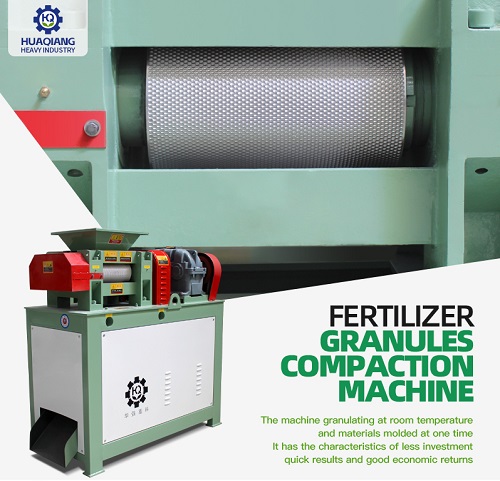
Alloy steels (40CrNiMo, 20CrMnTi, high-chromium cast iron) prioritize mechanical toughness and surface hardness. Through carburizing heat treatment, these materials can achieve surface hardness values exceeding HRC 58-61, with a hardened layer depth of 1.2 mm or deeper. This extremely high surface durability resists the abrasive forces encountered when processing hard, dry, or silicon-containing organic materials. However, the carbon content that imparts its high hardness also introduces vulnerability: corrosive fertilizer compounds can penetrate along grain boundaries, accelerating wear once the hardened surface layer is damaged.
Applying Specific Selection Logic
For highly corrosive environments, stainless steel is the optimal choice. The production of NPK compound fertilizer involves direct contact with ammonium phosphate, potassium chloride, and trace amounts of sulfates—all electrochemically corrosive substances. Under these conditions, ordinary carbon steel rollers will fail within 2-3 years due to pitting corrosion, which causes surface irregularities, affects particle uniformity, and increases the generation of fine powder. 316L stainless steel rollers reinforced with molybdenum offer excellent resistance to chloride stress corrosion cracking, maintaining surface integrity for 8-15 years under the same conditions.
For high-abrasion, low-corrosion environments, alloy steel rollers offer better economic benefits. While organic fertilizer particles derived from compost, crop residues, or biochar exhibit minimal chemical erosion, silica particles and fibrous materials can cause significant abrasion. In this context, high-chromium cast iron rollers with a hardness of HRC 55+ or carburized 40CrNiMo alloy steel rollers offer optimal wear resistance at approximately half the cost of stainless steel rollers. Boron-bainitic ductile iron technology further enhances performance in this area; the self-lubricating properties of graphite reduce friction and improve particle release—something steel rollers cannot achieve.
For mixed production lines processing both organic and compound fertilizers, a segmented approach may be more ideal: using stainless steel sleeves on chemically intensive NPK lines and alloy steel sleeves on dedicated organic fertilizer lines. While this increases inventory complexity, it ensures performance matching and longer service life for each loop.
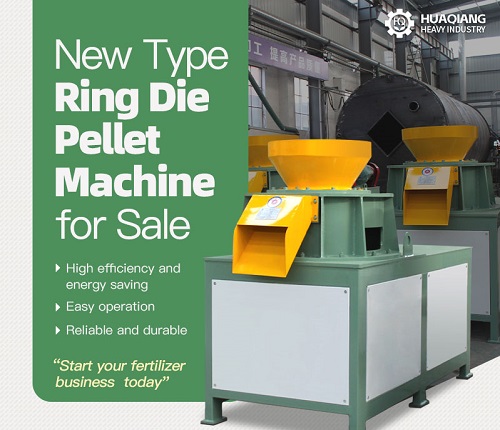
Other selection parameters besides the base material: The choice of material grade is closely related to manufacturing quality. Heat treatment uniformity determines whether the specified hardness is achieved throughout the working layer; for stainless steel, vacuum quenching produces more consistent results than atmospheric pressure heat treatment. Surface finish (measured by the smoothness of the die cavity inner wall, with an accuracy of up to 0.8 microns) directly affects granulation release characteristics, clumping tendency during storage, and the uniformity of compressive strength that distinguishes premium fertilizers from ordinary fertilizers. When evaluating the specifications of high-pressure roller granulators for corrosive applications, ensure that the supplier provides lifecycle data for the specific chemical composition of the raw materials processed by your operation, rather than generic industry averages.
The choice of granulation roller material (stainless steel or alloy steel) can be simplified to a simple diagnostic: if your raw material contains soluble chlorides, phosphates, or has a moisture content exceeding 15%, specify 316L stainless steel and consider the purchase premium as a lifecycle investment. If your material is dry, organic, and mechanically abrasive, choose high-hardness alloy steel or high-chromium cast iron and reinvest the savings in other parts of the production line. For operations producing two fertilizers simultaneously on a large scale, equipping each production cycle with a dedicated roller set can achieve the lowest total cost of ownership over a 10-year equipment lifespan.
Roller material selection is not an isolated procurement decision—it is a strategic lever that shapes the entire fertilizer production machine technology ecosystem. Within a modern npk fertilizer production line, the choice between 316L stainless steel and alloy steel rollers directly determines whether the rotary drum granulator or fertilizer compactor downstream operates at design capacity or suffers accelerated wear-induced downtime. For dry fertilizer granules compaction workflows handling organic substrates, pairing high-hardness alloy rollers with an organic fertilizer granulator series optimized for low-corrosion, high-abrasion feedstocks delivers superior cost efficiency over a 10-year lifecycle. Conversely, corrosive NPK formulations demand 316L sleeves on the fertilizer compactor to prevent chloride-induced pitting that would otherwise propagate into the organic fertilizer production granulation loop during mixed-facility campaigns. Smaller operations or pilot-scale R&D lines may leverage a flat die pelleting machine with interchangeable roller sets to test material compatibility before committing to full-scale roller investments. Ultimately, aligning roller metallurgy with raw material chemistry, production volume, and equipment architecture transforms material selection from a maintenance afterthought into a competitive advantage—delivering consistent particle quality, minimized unplanned shutdowns, and the lowest total cost of ownership across every granulation platform.