
The integration of increasingly stringent environmental regulations and advanced closed-loop fermentation technology makes 2026 a pivotal year for the livestock industry’s transition from open manure pits to high-temperature aerobic fermentation tanks. Modern systems reduce manure conversion to fertilizer from 90 days to 7-15 days and eliminate odor complaints through sealed design and biofiltration, achieving a deodorization rate of over 98%. Equipment equipped with IoT PLC control and waste heat recovery devices can reduce energy consumption by 22-30%, meeting the requirements of the newly promulgated Ecological and Environmental Protection Law and complying with national equipment subsidy standards, covering up to 50% of capital costs.
The Inevitability of Regulation: Why Change is Needed in 2026
China’s newly approved Ecological and Environmental Protection Law integrates ten existing environmental laws into an enforceable framework, fundamentally changing compliance requirements for the livestock industry. Under the relevant regulations, open manure pits and traditional windrow composting are subject to stricter scrutiny due to the risks of ammonia volatilization and groundwater seepage. Meanwhile, the National 14th Five-Year Plan for Bio-Economy Development explicitly prioritizes the resource utilization of agricultural waste, creating a regulatory environment where inaction results in increasing fines, while active investment in equipment yields substantial subsidies.
Closed-loop fermentation: The core technology of 2026. High-temperature aerobic fermentation tanks represent the best control technology in manure management this year. These systems employ a three-stage operating principle: first, source sealing using 304 stainless steel tanks eliminates fugitive emissions; second, forced aeration maintains oxygen levels at 10-15% to inhibit anaerobic putrefaction; and finally, end-of-pipe purification is achieved through a three-stage washing system combining water washing, biological filtration, and activated carbon adsorption. This architecture achieves ammonia emissions below 8 ppm, fully complying with the GB 14554 odor pollutant emission standard.
The process includes: solid-liquid separation (reducing moisture by 30-40%), adjusting the carbon-to-nitrogen ratio to 25:1-30:1 using straw amendments, high-temperature fermentation at 55-70°C for 5-7 days, and post-fermentation for 7-15 days. The final product has an organic matter content exceeding 45%, meeting the NY 525-2021 organic fertilizer standard. The fermentation cycle is shortened from the traditional 60-90 days to a minimum of 7-15 days, a 70% reduction, significantly improving operational efficiency.
2026 Compliance Equipment Selection Standards
Sterilization Guarantee: Verify that the system can maintain a temperature of 55-70°C for at least 5 consecutive days, ensuring the inactivation of pathogens, parasite eggs, and weed seeds without the use of chemical additives.
Deodorization Performance: Requires a sealed tank design and a dedicated biological filtration system with a deodorization rate of 98% or higher; ammonia emission concentration should not exceed 8 ppm.
Energy Efficiency: Select a system equipped with a waste heat recovery device for the exothermic fermentation process and a double-layer insulation system; the goal is to reduce energy consumption by 22-30% compared to a non-recovery design.
Automation Architecture: Requires integrated PLC control and IoT connectivity for remote monitoring of temperature, oxygen, and humidity; one operator should be able to manage 3-5 units simultaneously, reducing labor costs by up to 70%.
Subsidy Eligibility: Confirm that the equipment is listed in the provincial agricultural machinery subsidy catalog; current subsidy rates can reach up to 50% of the purchase price, meaning the net cost of a typical RMB 850,000 vertical fermenter will be reduced to approximately RMB 595,000.
The fermentation industry landscape in 2026 will reward companies that are pioneers in adopting sealed aerobic systems, intelligent control, and energy recovery technologies. In addition to meeting regulatory requirements, these systems can transform waste management burdens into profitable organic fertilizer production lines, while national green agriculture subsidies accelerate the return on investment for the equipment.
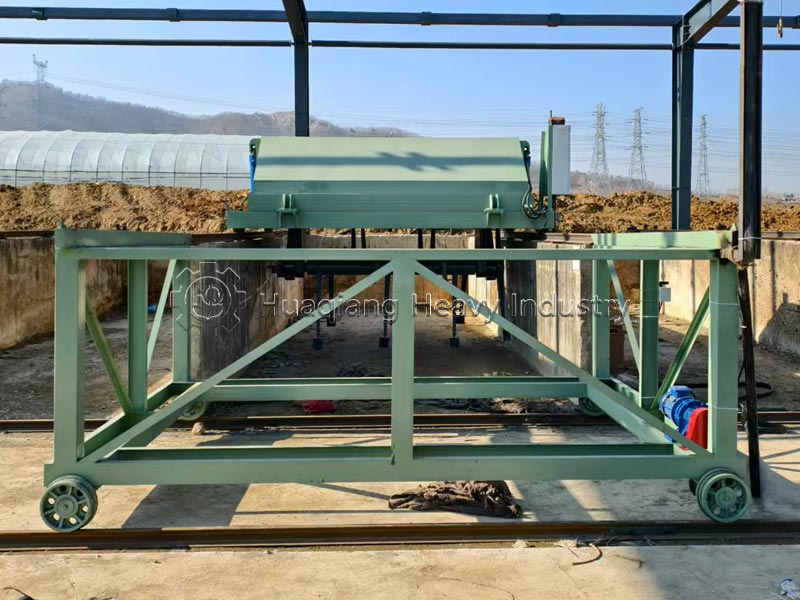
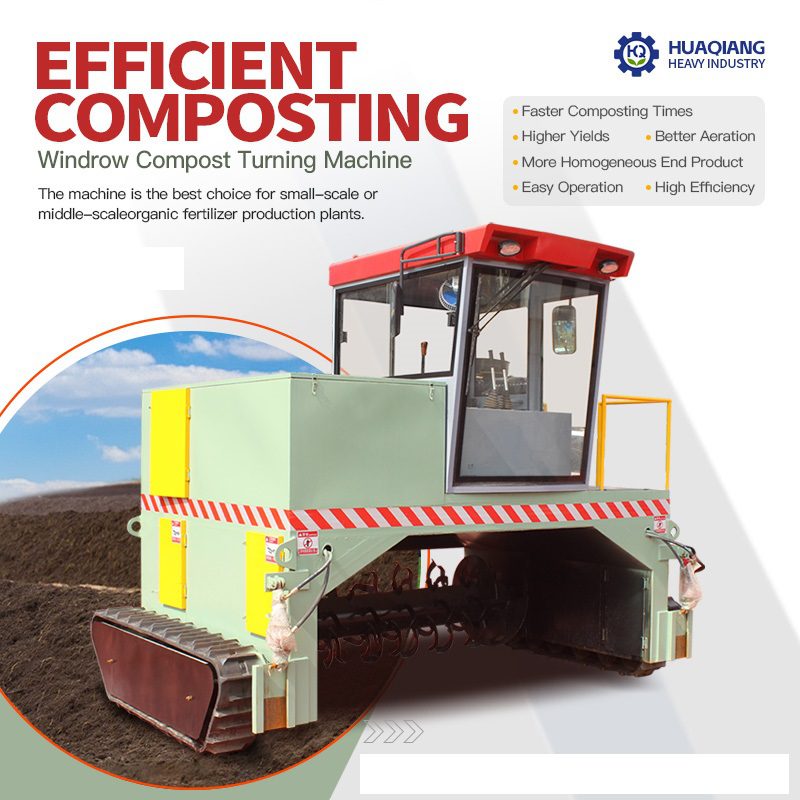
The 2026 regulatory pivot is not merely a compliance deadline—it is a strategic inflection point to re-engineer the entire manure-to-fertilizer value chain. While sealed high-temperature aerobic tanks dominate new greenfield installations, existing operations can still achieve dramatic efficiency gains and odor compliance by upgrading their turning infrastructure. Implementing modern fermentation composting turning technology—whether through a high-capacity large wheel compost turner for expansive open windrow sites or a precision-engineered trough-type compost turner for channel-based systems—ensures uniform oxygen distribution, eliminates anaerobic pockets, and accelerates thermophilic phases by 30-40% compared to static pile methods. For facilities transitioning gradually or managing seasonal volume fluctuations, a mobile windrow composting machine offers capital-light operational flexibility while maintaining throughput and compliance. Advanced trough-type aerobic fermentation composting technology pairs automated channel turning with forced aeration, biofiltration, and real-time temperature telemetry, delivering near-tank deodorization performance and pathogen inactivation without the full capital burden of stainless-steel enclosure. Once stabilized compost reaches maturity with organic matter exceeding 45%, integrating a disc granulation production line downstream transforms raw organic matter into market-ready spherical granules with uniform particle size, controlled nutrient release, and extended shelf stability—completing the circular economy loop from waste liability to revenue-generating organic fertilizer. The farms and agricultural cooperatives that act decisively now, combining subsidy-backed tank investments with intelligent turning upgrades and downstream granulation, will define the competitive landscape of sustainable, regulation-compliant agriculture for the next decade.
Frequently Asked Questions: Fermentation Equipment and Environmental Policies in 2026
Question 1: Does the new Ecological Environment Law require existing farms to immediately replace their open composting systems? Existing farms typically have a transition period, with full compliance deadlines varying by province. However, farms located near residential areas or water conservation areas may need to expedite the compliance process. The law mandates immediate compliance for new projects, while existing facilities generally must meet compliance standards by 2028.
Question 2: How can I verify that the deodorization system of the fermenter meets regulatory requirements?
Please request third-party testing data, including outlet ammonia concentration and deodorization rate. A compliant system should demonstrate that the ammonia concentration at the biofilter vent is below 8 ppm and that it completely removes odors by more than 98%. The equipment should include a complete three-stage washing system: water washing, biofiltration, and activated carbon refining.
Question 3: Can the fermentation equipment simultaneously process poultry manure and pig manure with high bedding content?
Yes, but adjusting the carbon-to-nitrogen ratio is crucial. Poultry manure with high sawdust content provides structural porosity and a carbon source; mixing it with high-nitrogen pig manure in a calculated ratio to achieve a carbon-to-nitrogen ratio of 25:1-30:1 optimizes the thermophilic fermentation process. When the moisture content is adjusted to 55-60%, the hydraulic stirring mechanism in the vertical fermenter can effectively handle this mixed raw material.