
With the normalization of environmental inspections, fertilizer production enterprises face increasing scrutiny. For organic fertilizer production lines, odor emissions, dust pollution, and wastewater leakage are the three major “red line issues.” This article provides a practical odorless and pollution-free solution from two dimensions: source control and end-of-pipe treatment.
Source Control: Closed-Loop Fermentation and Process Optimization
- Closed-Loop Fermentation System
Traditional open-air composting is a major source of odor. Upgrading to a closed-loop fermentation chamber or a trough-type fermentation system with a gas collection hood can fundamentally control the unorganized diffusion of odors.
Fermentation Chamber Solution: Materials enter a fully enclosed vertical or horizontal fermentation chamber, maintaining a slight negative pressure (-50 to -100 Pa). Odors are forcibly drawn into the treatment system through pipelines. The fermentation cycle is shortened to 7-10 days and is unaffected by rain or snow.
- Trough-type Gas Collection Hood Solution: A movable, transparent PC panel hood is installed above the turning machine track. It automatically closes during turning operations, using negative pressure suction. The investment is approximately 1/3 of that of a sealed chamber, and the deodorization efficiency can reach 80%.
- Optimized Turning Strategy: Odor production is directly proportional to the turning frequency. Through intelligent oxygen supply control (automatically starting and stopping the aeration fans based on pile temperature and oxygen concentration), the number of turnings can be reduced from once a day to once every two days, while maintaining an aerobic state. Reducing turning directly lowers the peak emission concentrations of ammonia and hydrogen sulfide.
- End-of-Pipe Treatment: Three-stage deodorization and high-efficiency dust removal.
- First Stage: Water Washing Spray (Pretreatment): Fermentation tail gas first enters the acid washing spray tower, where it is sprayed with a dilute sulfuric acid solution (pH controlled at 2-3) in a circulating manner. Ammonia is highly soluble in acidic aqueous solutions, achieving a removal rate of 90%-95%. The washing wastewater can be reused for auxiliary material conditioning, achieving zero discharge.
Second Stage: Biological Filtration (Core Treatment) The pre-treated exhaust gas enters the biological filter. The filter media, composed of bark, sawdust, volcanic rock, etc., is 1.2-1.5 meters thick. A large number of obligate microorganisms (such as nitrifying bacteria) adhere to the filter media surface, degrading remaining ammonia and hydrogen sulfide into nitrates, sulfates, and water. The biological filter treatment cost is extremely low, requiring only periodic spraying for moisture retention and replenishment of nutrient solution. The overall deodorization efficiency can reach 95%-98%.
Third Stage: Activated Carbon Adsorption (Safety Assurance) For factories located in environmentally sensitive areas (e.g., less than 200 meters from residential areas), an activated carbon adsorption tower can be installed after the biological filter as a “safety net.” The activated carbon needs to be regenerated or replaced every 3-6 months.
Dust Control: Pulse-jet bag filters are installed at dust-generating points such as crushing, screening, granulation, and packaging. The filtration velocity is controlled at 0.8-1.2 m/min, using oil- and water-resistant filter media. The outlet dust concentration can be below 10 mg/m³, far below the national standard limit of 120 mg/m³.
Closed-loop recycling of water and solid waste:
Zero discharge of process wastewater:
Spray tower acid washing wastewater: After adjusting the pH to neutral, it is mixed as an auxiliary material into the fermentation material (50-100 liters of wastewater can be accepted per ton of material). The water evaporates with fermentation, and the inorganic salts remain in the organic fertilizer.
Equipment cleaning wastewater: After removing suspended solids in the sedimentation tank, it is reused in the front-end batching.
Solid waste resource utilization:
Fine powder collected by the dust collector: Directly returned to the granulation process.
Used filter media from the biological filter: After composting, it can be used as an auxiliary material for organic fertilizer.
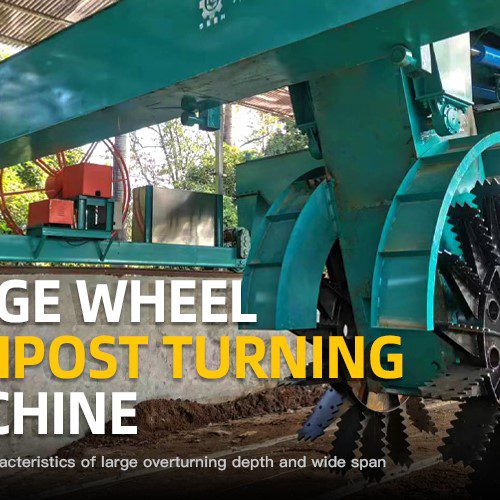
The closed-loop fermentation system (chamber or trough with gas collection hood) and three-stage deodorization (water washing + biological filtration + activated carbon) are essential for odor control. The upstream fermentation process, managed by a chain compost turning machine (trough system) or a large wheel turner, must be integrated with these systems. After successful fermentation, the mature material is processed through organic fertilizer raw material processing equipment, such as a half-wet material crusher machine. This prepared material is then ready for granulation. Within the organic fertilizer granulator series, options include a new type two in one organic fertilizer granulator (combining mixing and granulation) or a disc granulator for spherical granules. For a complete organic fertilizer disc granulation production line, the disc granulator is the core. The organic fertilizer production equipment set includes crushers, mixers, granulators, and screens. Dust control: pulse-jet bag filters at crushing, screening, granulation, and packaging points (filtration velocity 0.8-1.2 m/min, outlet dust <10 mg/m³). Zero wastewater discharge: spray tower acid washing wastewater (pH neutralized, mixed into fermentation material, 50-100 L/ton) and equipment cleaning wastewater (sedimentation tank, reused in batching). Solid waste recycling: dust collector fine powder returned to granulation; used biological filter media composted as organic fertilizer auxiliary material. This integrated approach—from closed-loop fermentation and optimized turning to end-of-pipe deodorization and dust control—ensures an odorless, pollution-free organic fertilizer production line that meets stringent environmental standards.