
In the core process of fertilizer production—granulation—rotary drum granulators and extrusion granulators are two mainstream and technologically distinct types of high-efficiency equipment. For companies planning to invest in or upgrade their production lines, making a wise choice between these two directly impacts future product positioning, operating costs, and market competitiveness. These two types of equipment are not simply a matter of one being superior to the other, but rather each serves different production logics and market demands.
Core Differences: The Fundamental Distinction Between Chemical Reaction and Physical Forming
Understanding the essential differences between the two is fundamental to making the right choice.
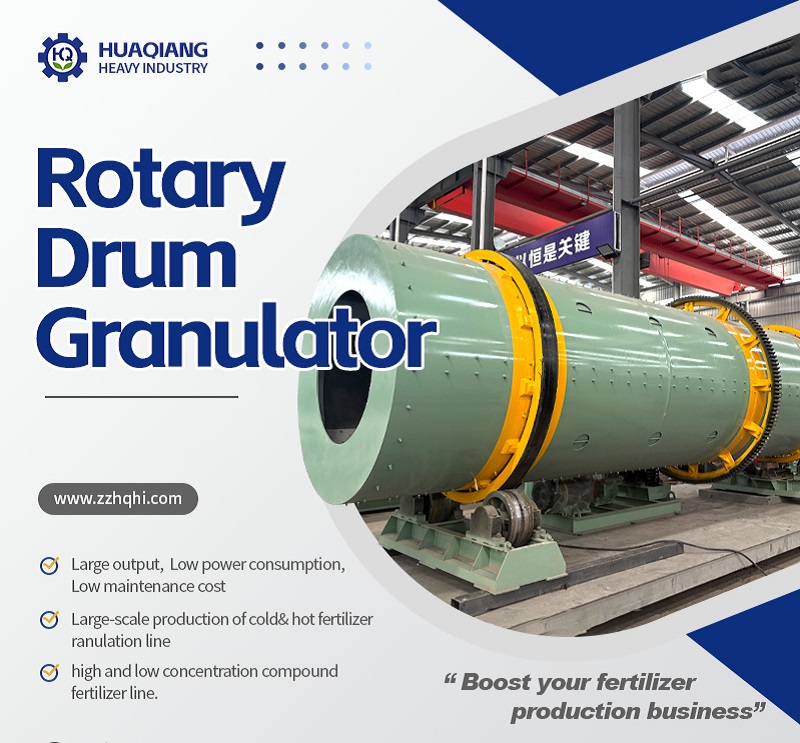
Rotary drum granulators, usually referring to drum granulators, have a core process of “wet agglomeration and chemical reaction.” Powdered raw materials are placed in a slowly rotating large drum, where steam or liquid binders are sprayed in. The “liquid phase” generated by chemical reactions acts as a medium, causing the fine powder particles to collide, adhere, and coat each other during rolling, gradually growing into spherical granules like a snowball. This process requires the raw materials to have chemical reactivity, and is especially suitable for producing mainstream NPK compound fertilizers, resulting in round granules with moderate strength and good dissolution characteristics.
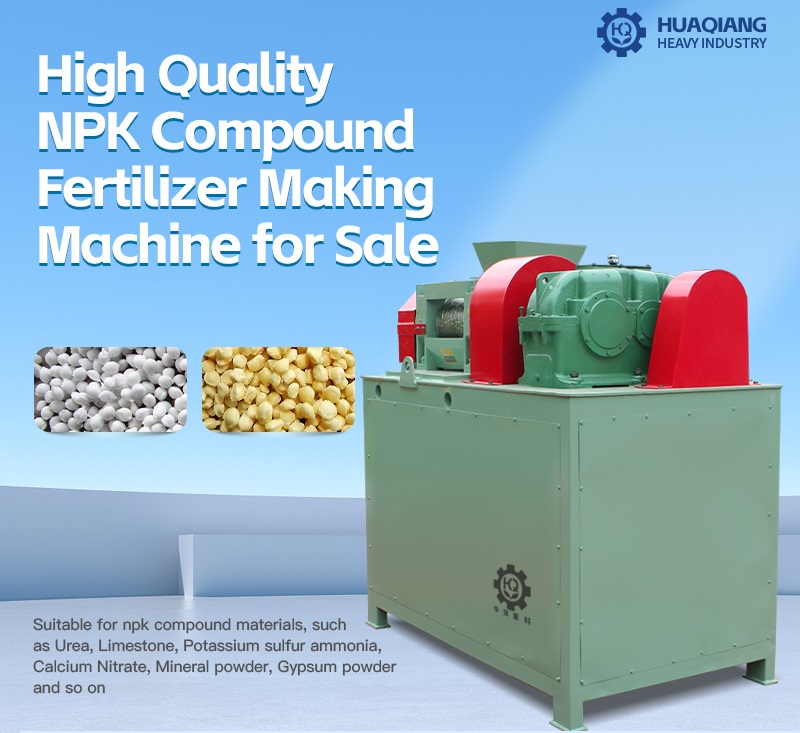
Extrusion granulators, on the other hand, represent the “dry physical forming” technological route. They feed completely dry powdered raw materials between a pair of high-precision pressure rollers. Under tens to hundreds of tons of linear pressure, the material is forcibly extruded through the die holes on the roller surface, forming dense, regular flat or pillow-shaped granules. The entire process does not require the addition of water or heat, making it particularly suitable for materials that are heat-sensitive or prone to adverse chemical reactions when exposed to water. It is an ideal choice for producing organic-inorganic compound fertilizers, bio-organic fertilizers, and some special fertilizers.
Multi-dimensional Comparison: Capacity, Energy Consumption, and Applicable Scenarios
Choosing which equipment to use requires a comprehensive assessment from the following key dimensions:
1. Capacity and Scale Adaptability
Rotary drum granulators are a prime example of large-scale continuous production. Large drum granulators have extremely high single-line capacity, easily matching large-scale compound fertilizer production lines with an annual output of hundreds of thousands of tons, offering significant economies of scale. The capacity increase path for extrusion-type granulators is different, usually achieved by increasing the roller width or using multiple units in parallel. Although they may not match the absolute peak capacity of large rotary drums, their fast start-up and flexible product switching make them ideal for multi-variety, small-batch, or medium-scale production, especially suitable for regions with diverse market demands.
2. Energy Consumption and Environmental Costs
This is one of the most significant areas of difference between the two.
Extrusion granulators have a disruptive advantage in energy consumption. Due to their “room temperature molding” characteristics, they completely eliminate the high-energy-consuming drying step after granulation, saving up to 30%-50% in fuel consumption, and producing almost no process exhaust gas, resulting in less environmental pressure and significantly lower operating costs.
Rotary drum granulators, on the other hand, require a large steam boiler, dryer, and cooling system. The thermal energy consumption of the entire system accounts for a high proportion of the total cost, which is the price they must pay to achieve high capacity.
3. Maintenance Difficulty and Core Costs
Maintenance of rotary drum granulators focuses on the transmission system, drum lining, and supporting thermal equipment (such as hot air furnaces and dryers), making the system relatively complex.
Maintenance of extrusion granulators is highly focused on its core component—the roller assembly. The rollers and dies, as wear parts that directly withstand high pressure, are the main ongoing cost, but replacement and maintenance are relatively modular and straightforward.
Selection Recommendations: Match your strategy, not just equipment parameters
The final decision should come down to your raw material characteristics, product strategy, and factory scale.
If you are a large NPK compound fertilizer manufacturer, primarily using chemical powders as raw materials, pursuing maximum scale output under a single formula, and have a stable steam supply, then the mature, high-yield, and commercially viable product appearance of rotary drum granulators remains your most reliable basic choice.
If you are one of the following types of companies, extrusion granulators may be a better option:
Organic fertilizer or specialty fertilizer manufacturers: Raw materials include heat-sensitive components such as organic matter and microbial agents.
Medium-sized compound fertilizer plants or start-ups: Focusing on investment efficiency and sensitive to energy consumption and product differentiation.
Companies facing strict environmental requirements: Hoping to reduce exhaust gas emissions and overall energy consumption at the source.
In short, rotary drum granulators are the “capacity cornerstone” for achieving standardized and large-scale production, while extrusion granulators are the “efficiency tool” for energy saving, flexibility, and differentiated innovation.
Against the backdrop of global efforts to promote green manufacturing and achieve “dual carbon” goals, choosing extrusion granulators not only means lower production costs in the present but also represents a forward-looking strategy for future product structure and sustainable development capabilities. The wisest decision is often not to seek a “one-size-fits-all” device, but rather to conduct a rigorous pilot test using your own core raw materials to verify which technological route can more efficiently and economically realize your product vision. Let actual data guide you to the best path for efficient production.
The choice between a rotary drum granulator and an extrusion granulator is a strategic decision in the npk fertilizer production line. The rotary drum granulator is the workhorse of large-scale wet granulation, producing spherical granules through chemical reactions, ideal for high-volume npk fertilizer manufacturing process. In contrast, an extrusion granulator (a fertilizer compactor) achieves fertilizer granules compaction through high mechanical pressure, offering a dry, energy-efficient alternative. This fertilizer compaction technology is a key member of both the organic fertilizer granulator series and NPK lines, especially for organic fertilizer production granulation of heat-sensitive materials. A complete roller press granulator production line eliminates the drying step, saving 30%-50% fuel compared to wet processes. Key decision factors: capacity (drum for large-scale, >100,000 t/year; extrusion for medium-scale, flexible production), energy consumption (extrusion saves 30%-50%), raw material moisture (extrusion requires <5%), product appearance (drum produces rounder granules), and sensitivity to heat (extrusion preserves bio-activities). For NPK compound fertilizer with standard formulations, a rotary drum offers economies of scale. For organic-inorganic blends, bio-fertilizers, or specialty products, an extrusion line provides superior energy efficiency and process flexibility. The optimal choice requires a strategic alignment of equipment capabilities with market positioning—whether prioritizing capacity and appearance or energy efficiency and product differentiation. Conducting pilot tests with your raw materials is recommended to validate the best technological path.