
Microbial succession during fermentation
The aerobic fermentation of bio-organic fertilizer is not the action of a single microorganism, but a complex process of microbial community succession. Different temperature stages are dominated by different groups of microorganisms: In the low-temperature stage (ambient temperature to 40℃), psychrophilic bacteria and some mesophilic bacteria (such as Pseudomonas and Enterobacter) first decompose easily degradable organic matter such as soluble sugars and starch, releasing heat and raising the temperature of the compost pile; in the mesophilic stage (40-55℃), thermophilic bacteria (Bacillus and Actinomyces) become the main force, decomposing more complex organic matter such as cellulose and hemicellulose, accelerating the temperature rise of the compost pile; in the high-temperature stage (55-70℃), thermophilic bacteria (Bacillus thermophilus and Actinomyces thermophilus) are active, efficiently decomposing lignin, crude fiber, and other recalcitrant substances, while simultaneously killing pathogens and parasite eggs; in the cooling and maturation stage (below 40℃ to ambient temperature), mesophilic bacteria regain dominance, further converting the small-molecule organic matter produced in the previous decomposition into humus, and functional bacteria (such as Bacillus subtilis and Bacillus mucilaginosus) can regain their ecological niche at this time.
Key Control Parameters: Microbial fermentation efficiency depends on four adjustable parameters: temperature, oxygen, moisture, and carbon-nitrogen ratio. The pile temperature should be controlled at 55-65℃ and maintained for 5-7 days. If it exceeds 70℃, immediately turn the pile to cool it down (high temperatures will form endophytes, but continuous overheating will cause the spores to lose activity). The oxygen concentration should not be lower than 10%, regulated by the frequency of turning. The moisture content should be 55%-65% (it should clump together when squeezed but crumble easily when dropped). Too dry a moisture content inhibits activity, while too wet a moisture content blocks oxygen channels. The carbon-nitrogen ratio should be 25-30:1. If the carbon-nitrogen ratio is too high, microorganisms will lack nitrogen and ferment slowly; urea or composted materials can be added. If the carbon-nitrogen ratio is too low, nitrogen will be lost through volatilization as ammonia; carbon-rich auxiliary materials such as straw need to be added—this step is directly related to saving nitrogen: increasing the carbon-nitrogen ratio from 15:1 to 25:1 can reduce ammonia volatilization loss by 30%-50%, and reduce nitrogen loss by approximately 3-5 kg per ton of chicken manure. The suitable pH range is 6.5-8.0, which can be adjusted by adding lime (for excessive acidity) or gypsum (for excessive alkalinity).
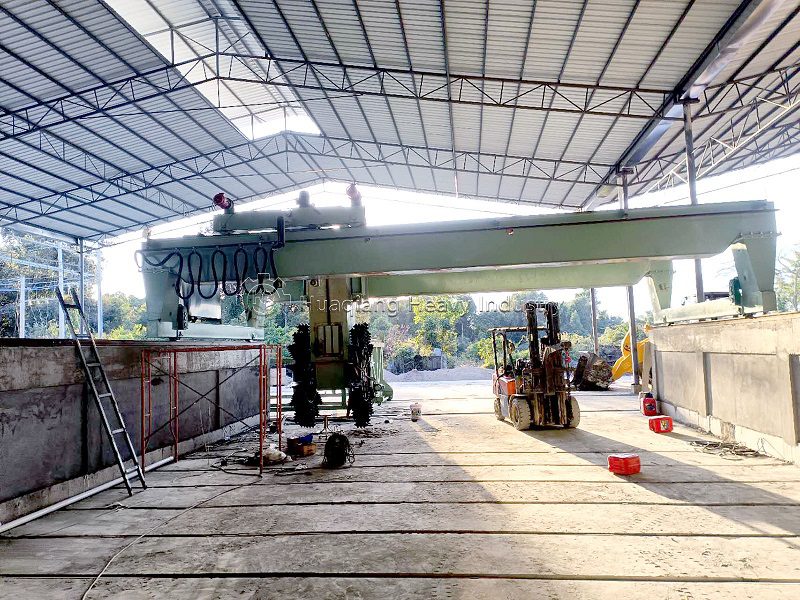
Microbial Inoculant Inoculation Strategies: Commercial bio-organic fertilizer production typically requires inoculation with functional microorganisms. The timing and method of inoculation directly affect the survival rate of the microorganisms. Substrate inoculation (during composting): The inoculant is mixed evenly with the raw materials. This is suitable for heat-resistant strains (such as certain Bacillus species), with an addition amount of approximately 0.05%-0.1%. However, most non-spore-forming bacteria will die during high-temperature periods. Post-ripening inoculation (after cooling to below 40℃): A suspension of the inoculant is sprayed during turning and turning. This is suitable for heat-sensitive functional bacteria, with a survival rate exceeding 70%. Finished product inoculation (before granulation and packaging): Added during the coating or mixing process, this yields the highest survival rate (over 90%) and is the standard process for bio-organic fertilizer production. When selecting inoculants, it is important to consider whether the strain is suitable for the target raw materials, as different strains have different abilities to decompose cellulose, lignin, or proteins.
Control Measures for Suppressing Contaminating Microorganisms and Diseases: Aerobic fermentation itself is a form of biological control. Maintaining temperatures above 60℃ for 3 days can kill pathogens such as roundworm eggs, E. coli, and Salmonella; maintaining this temperature for 7 days can inactivate most weed seeds. However, if the material is not evenly distributed or the external temperature of the pile is too low, the edge material may become a “refuge” for pathogens. Solutions include using a forklift to moderately compact the edge material during pile construction to reduce cold zones; and turning the edge material into the core during distribution to ensure that every part experiences the high-temperature period.
Tips for Judging the Fermentation Process
Besides instrumental testing, sensory evaluation and simple methods can be used on-site to aid in judgment: pH test paper method—mix a small amount of material with distilled water and measure the pH. The suitable range is 6.5-8.0. A strong ammonia smell indicates a high pH, while a sour smell indicates a low pH; Temperature gradient—insert a thermometer at midday; the temperature difference between different locations in the pile should be less than 10℃; Hand-squeezing method—judge moisture content; the material should become increasingly loose in the later stages of fermentation; Seed germination test—cultivate vegetable seeds (such as bok choy) in the extract of the fermented material. A germination rate exceeding 85% and normal, undamaged root system indicate successful fermentation.
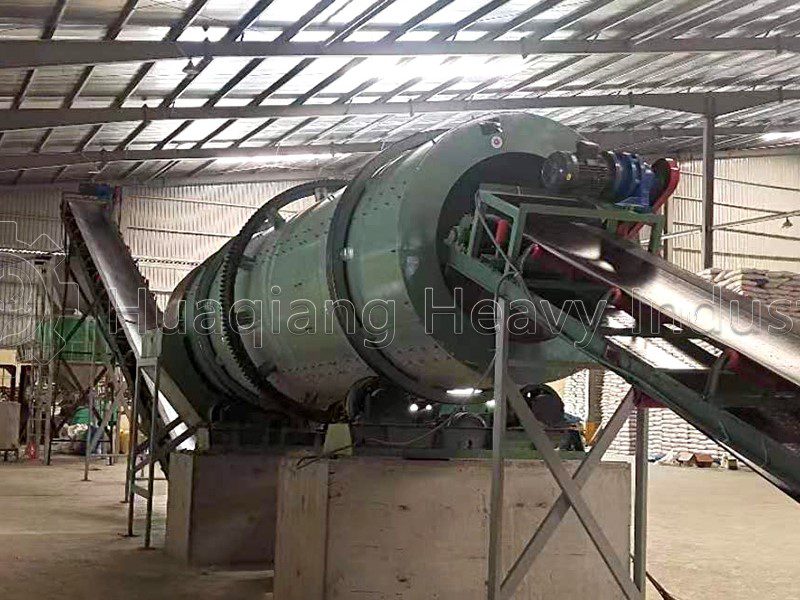
Understanding microbial succession is key to mastering fermentation composting technology for organic fertilizer. The four stages—low-temperature (psychrophilic bacteria), mesophilic (thermophilic bacteria), high-temperature (thermophilic bacteria, 55-70°C), and cooling/maturation (mesophilic bacteria, functional microbes)—are managed through specific fermentation composting turning technology. The choice of turning equipment—a large wheel compost turner (or large wheel compost turning machine) for large-scale windrows, a windrow composting machine for flexible operation, a trough-type compost turner for controlled environments, or a double screws compost turning machine for gentle, deep turning—directly impacts oxygen supply, temperature regulation, and moisture removal. Key control parameters: temperature (55-65°C for 5-7 days), oxygen (>10%), moisture (55%-65%), C/N ratio (25-30:1), and pH (6.5-8.0). Proper turning ensures uniform conditions, preventing localized overheating or cold zones. Inoculation strategies—substrate inoculation (for heat-resistant strains), post-ripening inoculation (<40°C), and finished product inoculation (for bio-organic fertilizers)—are critical. For bio-organic fertilizer, post-ripening or finished product inoculation yields the highest survival rate (>90%). After successful composting, the mature material becomes the ideal feedstock for a disc granulation production line. Mastering the art and science of fermentation composting technology for organic fertilizer—understanding the “needs” of microorganisms—is the essence of producing high-quality, bio-active organic fertilizer. By creating the optimal environment, beneficial microbes thrive, pathogens are suppressed, and the final product is rich in nutrients and beneficial microorganisms.
The fermentation of bio-organic fertilizer is the result of the synergistic effect of beneficial microorganisms and controlled conditions. Creating a suitable environment (temperature, water, air, material) for microorganisms allows them to work efficiently; conversely, poor control leading to anaerobic conditions or overheating allows pathogens and putrefactive bacteria to dominate. Understanding the “needs” of microorganisms is the essence of mastering the fermentation process.