
In organic fertilizer production, granulation is a crucial step in converting composted powder into marketable pellets. Based on whether water or steam is added, granulation processes are divided into two main categories: wet granulation and dry granulation. The two differ significantly in equipment configuration, energy costs, and pellet characteristics. Choosing the right process requires a comprehensive consideration of raw material characteristics, production capacity, and product positioning. This article analyzes the advantages, disadvantages, and applicable scenarios of both processes.
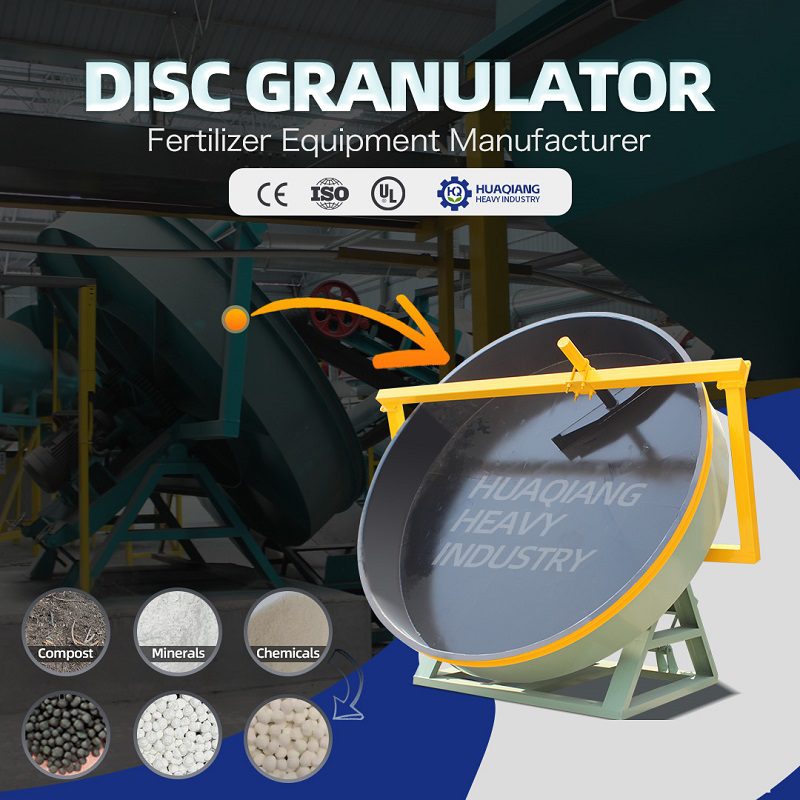
Wet Granulation: A Traditional and Mature Mainstream Process
The core principle of wet granulation is to wet the surface of the material by adding water or steam, causing it to agglomerate into pellets through rolling or stirring. Representative equipment includes rotary drum granulators and disc granulators. Rotary drum granulators use steam conditioning, achieving a single-machine hourly output of 8-15 tons, a pelletizing rate of 85%-90%, and high pellet sphericity. Disc granulators use atomized water spraying, offering lower investment and more flexible operation, making them suitable for small to medium-scale production.
The advantages of wet granulation are: round granules with good market acceptance; wide raw material adaptability, capable of processing materials with a moisture content of 15%-25%; mature technology and a wide range of equipment options. However, its disadvantages are equally obvious: it requires a boiler or hot water system, resulting in high energy consumption (25-30 kWh per ton of product); it generates wastewater and exhaust gas, leading to higher environmental protection costs; and the drying process may damage the activity of beneficial microorganisms.
Dry granulation: An energy-efficient and modern choice. Dry granulation uses high pressure to directly compact dry powder into granules, without adding water or steam. A representative piece of equipment is the roller extrusion granulator, where the material undergoes plastic deformation under 10-25 MPa high pressure to form high-density granules.
The core advantages of dry granulation are: no drying required, power consumption per ton of product is only 8-12 kWh, saving more than 60% energy compared to wet granulation; no wastewater or exhaust gas emissions, reducing environmental pressure; low-temperature processing protects organic matter and the activity of beneficial bacteria; high granule strength (20-30 N); and low pulverization rate during storage and transportation. The disadvantages are: the raw material moisture content must be ≤8%, requiring pre-treatment and drying; the granules are oblate or pillow-shaped, with lower sphericity than wet-process products; and it has weaker adaptability to high-viscosity and high-fiber materials.
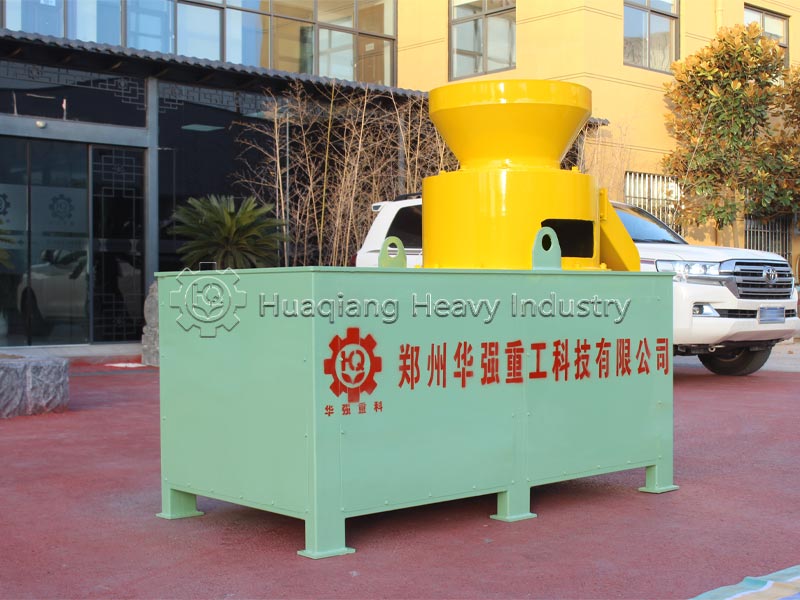
Selection Recommendations: Choose the appropriate process based on the material and production volume.
Raw material moisture content is the primary consideration. If the moisture content of the material after fermentation is stable at 15%-25%, and a drying system is already in place, wet granulation is the natural choice. If the raw material itself is relatively dry (such as humic acid, dry fermented material), or if the drying process is to be omitted, dry extrusion is more cost-effective.
Production capacity also influences the decision. For small to medium-sized production lines with an annual output of 10,000-30,000 tons, dry extrusion has lower investment, lower energy consumption, and a simpler process. For large-scale bases with an annual output of over 50,000 tons, wet drum extrusion offers better economies of scale, and the market premium brought by the sphericity of the granules can cover energy costs.
Product positioning is also crucial. The export-grade or high-end organic fertilizer market prefers rounded granules, making wet-processed products more competitive. However, for bulk agricultural use or scenarios where granule appearance is less critical, dry-processed products offer significant advantages in terms of high strength and low cost.
The choice between wet and dry granulation is a central decision in organic fertilizer production granulation. Both processes rely on upstream organic fertilizer raw material processing equipment, such as a half-wet material crusher machine, to prepare the feedstock. Within the organic fertilizer granulator series, a wide array of technologies exists. For wet granulation, a complete organic fertilizer disc granulation production line is a classic choice for producing high-quality, spherical granules. For dry granulation, a roller extrusion granulator is the core of an energy-efficient line. An innovative hybrid is the new type two in one organic fertilizer granulator, which integrates functions for a compact workflow. The selection of the right organic fertilizer production granulation equipment must be based on raw material moisture content and production scale. High-moisture feedstocks (15-25%) are suited for wet processes like disc or drum granulation. Dry materials (≤8%) are ideal for roller extrusion. The decision also involves a trade-off: wet granulation produces more spherical, marketable granules but has higher energy costs and a larger environmental footprint; dry granulation is more energy-efficient and preserves microbial activity, but the granules are less spherical. Understanding the strengths of each technology in the organic fertilizer granulator series is essential for building a production line that transforms organic waste into a consistent, high-value granular product efficiently and cost-effectively.
Wet and dry processing are not inherently superior or inferior, but rather different application scenarios. Understanding the characteristics of both processes, combined with your own raw materials and production capacity, is crucial for making the optimal choice. We welcome your raw material list and product positioning to receive personalized granulation process advice.