
As a patented product co-developed by Huaqiang and the Agricultural Machinery Research Institute, the new type two in one organic fertilizer granulator(new type stirring tooth-drum granulator) has become a game-changer for small and medium-sized fertilizer plants. Adopting advanced wet continuous push rod granulation technology, it integrates two core processes into one machine, solving the pain points of traditional granulation equipment and bringing efficiency and convenience to organic fertilizer production. This blog explores its key features and practical usage tips to help you make the most of this innovative equipment.
The most distinctive feature of this granulator is its “two-in-one” integrated design, which combines mixing and granulation functions in a single machine. Unlike traditional production lines that require separate mixing and granulation equipment, it eliminates the material transfer process, reducing material loss and energy consumption while significantly improving production efficiency. Its compact structure occupies less space, making it perfect for plants with limited workshop area and tight budget.
Another key feature is its strong adaptability and high granulation quality. It can handle a variety of fermented organic raw materials, including livestock manure, crop straw, edible fungus residue, and municipal sludge, without changing equipment settings. The wet continuous push rod technology ensures uniform particle formation, producing smooth, hard particles that are easy to store and transport, with a granulation rate of up to 95%. Additionally, it requires no additional binders, retaining the original nutrients of organic materials to maximize fertilizer value.
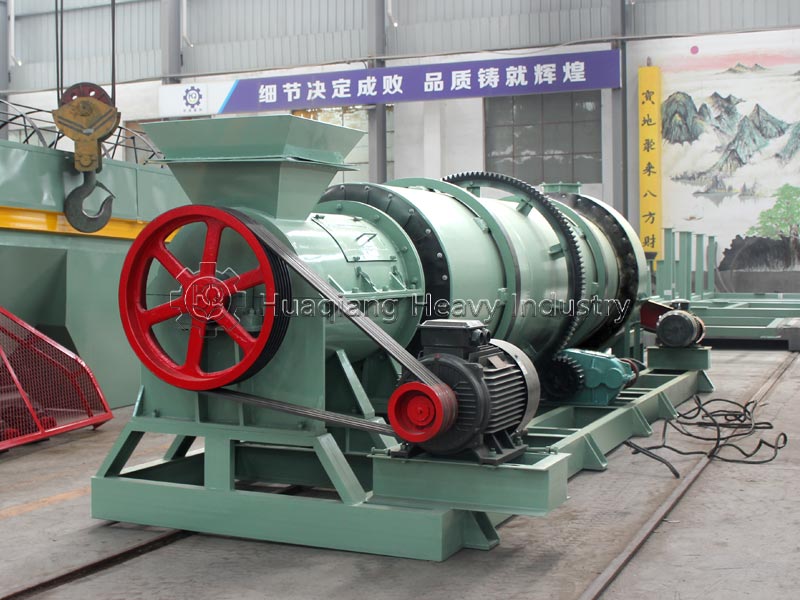
To ensure optimal performance, follow these practical usage tips. First, preprocess raw materials: crush them to 2-5mm, adjust moisture content to 50%-60%, and remove impurities to avoid equipment blockage. Second, start with no-load operation for 3 minutes to check for abnormal noise, then adjust feed speed and granulation parameters according to raw material characteristics. Third, clean the granulation chamber and push rod after use to prevent material caking and extend equipment service life.
The new type two in one organic fertilizer granulator represents a significant innovation in fertilizer production machine technology. Its integrated design streamlines the process for small to medium producers. This machine is a key member of the organic fertilizer granulator series, offering a compact alternative to larger, multi-machine systems. While it focuses on wet granulation for organic materials, it’s important to understand its place in the broader technology landscape. For dry compaction applications, a fertilizer compactor (such as a double roller press granulator) is used to achieve fertilizer granules compaction. A rotary drum granulator remains the workhorse for large-scale npk fertilizer production lines. For very small-scale or specialty applications, a flat die pelleting machine offers a simple, low-cost entry point. The new type two in one organic fertilizer granulator carves its own niche by integrating mixing and granulation, making it ideal for plants with limited space and budget, and for producers who value a simplified workflow. Its strong adaptability and high granulation rate make it a versatile tool for transforming a wide range of organic wastes into high-quality granular fertilizer. Mastering its usage tips—from raw material pre-processing to post-operation cleaning—is the key to maximizing its efficiency and lifespan.
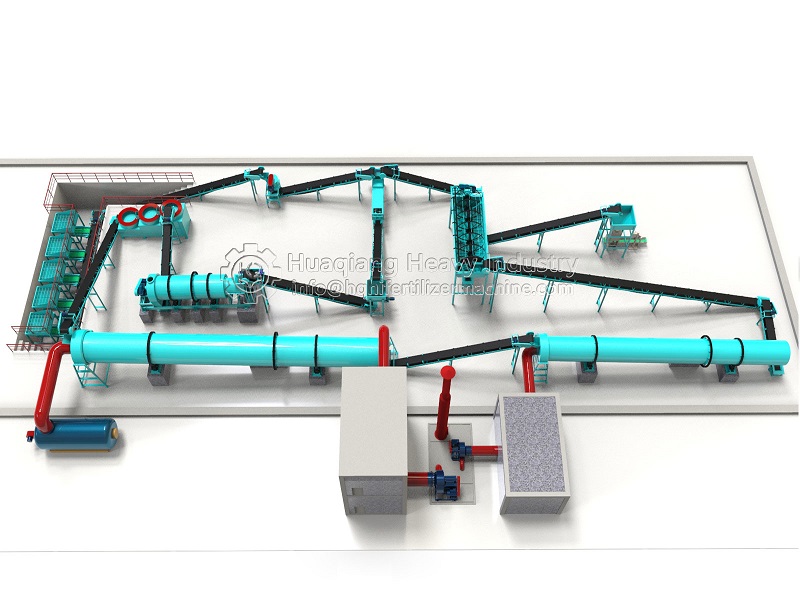
In summary, the new type two in one organic fertilizer granulator stands out with its integrated design, high adaptability, and superior granulation quality. By following the usage tips, you can fully leverage its advantages to simplify production processes and reduce operational costs. Huaqiang’s patented granulator, backed by professional manufacturing experience, provides reliable performance and custom solutions to meet the diverse needs of organic fertilizer producers worldwide.